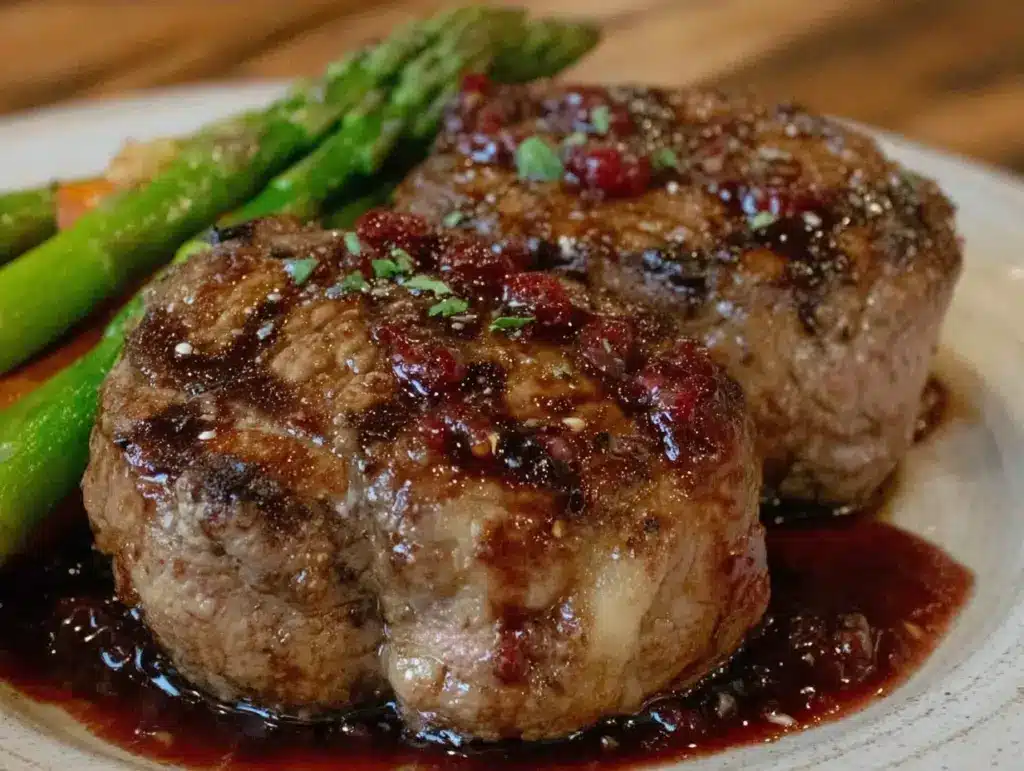
It was one of those rare, quiet evenings when I found myself standing in a nearly empty kitchen, the kind of silence that invites reflection. Honestly, I wasn’t planning anything fancy that night—just a simple dinner to wind down. But then I spotted a small, beautifully marbled filet mignon tucked into the fridge, leftover from a special occasion. I figured, why not try something a little different? I had a bottle of red wine left unopened, and on a whim, I decided to make a reduction sauce to go with it. At first, I was skeptical—would this “fancy” sauce actually turn out well? Turns out, it did more than just turn out; it transformed the whole meal.
The aroma of the seared filet mingling with the deep, glossy red wine sauce filled the kitchen and brought back a cascade of memories from an old French bistro I once visited. But unlike that pricey night out, this recipe is approachable, honest, and something you can whip up without a fuss. The tender filet, kissed with a caramelized crust, paired with that silky, rich red wine reduction, created a dish that felt both luxurious and comforting.
That night marked the start of me making this perfect filet mignon with rich red wine reduction on repeat. It’s become my go-to whenever I want to impress without stress. And here’s the thing: there’s something quietly satisfying about mastering such a classic pairing in your own kitchen, knowing you can pull it off with confidence. This recipe stuck with me not because it’s flashy, but because it’s reliable and deeply satisfying—like a little secret you’re happy to share.
Why You’ll Love This Recipe
- Quick & Easy: Ready in about 30 minutes, perfect for a special weeknight dinner or an unplanned celebration.
- Simple Ingredients: Uses everyday pantry staples and a good bottle of red wine you probably already own.
- Perfect for Impressing: Ideal for dinner parties, date nights, or when you want to treat yourself without the fuss.
- Crowd-Pleaser: The rich, buttery tenderness of filet mignon combined with the deep, savory wine sauce gets rave reviews every time.
- Unbelievably Delicious: The sauce’s velvety texture and bold flavor perfectly complement the mild, melt-in-your-mouth steak.
- This isn’t just another steak recipe—it’s a balance of technique and timing that makes all the difference. For example, resting the steak after searing locks in the juices, while slowly reducing the wine sauce ensures a glossy, rich finish without bitterness.
- Every bite invites you to slow down and savor the moment—a comforting yet elegant experience that feels like a mini escape right at your dinner table.
What Ingredients You Will Need
This recipe uses simple, wholesome ingredients to deliver bold flavor and a satisfying texture without the fuss. Most are pantry staples, while a few fresh elements bring the whole dish to life.
- Filet Mignon Steaks – about 6 oz (170 g) each, preferably 1.5 to 2 inches thick for that perfect sear and tender center.
- Salt and Freshly Ground Black Pepper – for seasoning, applied generously to bring out the natural beef flavor.
- Olive Oil – 1 tablespoon, for searing (I trust brands like Colavita for a balanced flavor).
- Unsalted Butter – 2 tablespoons, adds richness to both the steak and sauce.
- Shallots – 1 small, finely minced (adds subtle sweetness to the sauce).
- Garlic – 1 clove, minced (for aromatic depth).
- Dry Red Wine – 1 cup (240 ml), something you’d enjoy drinking; I’ve had great results with Cabernet Sauvignon or Merlot.
- Beef Stock or Broth – 1/2 cup (120 ml), preferably low sodium to control seasoning.
- Fresh Thyme – 2 sprigs, for a gentle herbal note in the sauce.
- Optional: Dijon Mustard – 1 teaspoon, whisked in at the end for a subtle tangy layer.
If you need to swap anything out, almond flour can be used as a light coating if you want a bit of crust without gluten. For a dairy-free twist, replace butter with a neutral oil like avocado or grapeseed. And if fresh thyme isn’t on hand, a pinch of dried thyme works just fine.
Equipment Needed
- Heavy-Bottomed Skillet or Cast Iron Pan: Essential for a good sear on the filet mignon. I prefer cast iron because it retains heat evenly and creates that coveted crust.
- Saucepan or Small Sauté Pan: For reducing the red wine sauce without burning it.
- Tongs: For flipping the steaks gently without piercing the meat.
- Instant-Read Meat Thermometer: Helps nail the perfect doneness—especially if you’re not used to cooking filet mignon.
- Wooden Spoon or Silicone Spatula: For stirring the sauce gracefully.
If you don’t have a cast iron skillet, a heavy stainless steel pan will do, but keep an eye on the heat to avoid hot spots. For budget-friendly options, a non-stick pan can work, but the sear won’t be quite as deep. Also, keeping your tools clean and seasoned (especially cast iron) will greatly improve your results over time.
Preparation Method
- Bring the Steaks to Room Temperature: Take the filet mignon out of the fridge about 30 minutes before cooking. This helps them cook evenly and prevents a cold center. Pat dry with paper towels to remove any excess moisture—this is key for a good sear. (10 minutes prep)
- Season Generously: Sprinkle both sides of each steak with a pinch of salt and freshly ground black pepper. Don’t be shy here; the seasoning forms a flavorful crust.
- Heat the Skillet: Place your cast iron or heavy-bottomed pan over medium-high heat. Add the olive oil and let it shimmer—you want it hot enough so the steak sizzles as soon as it hits the pan.
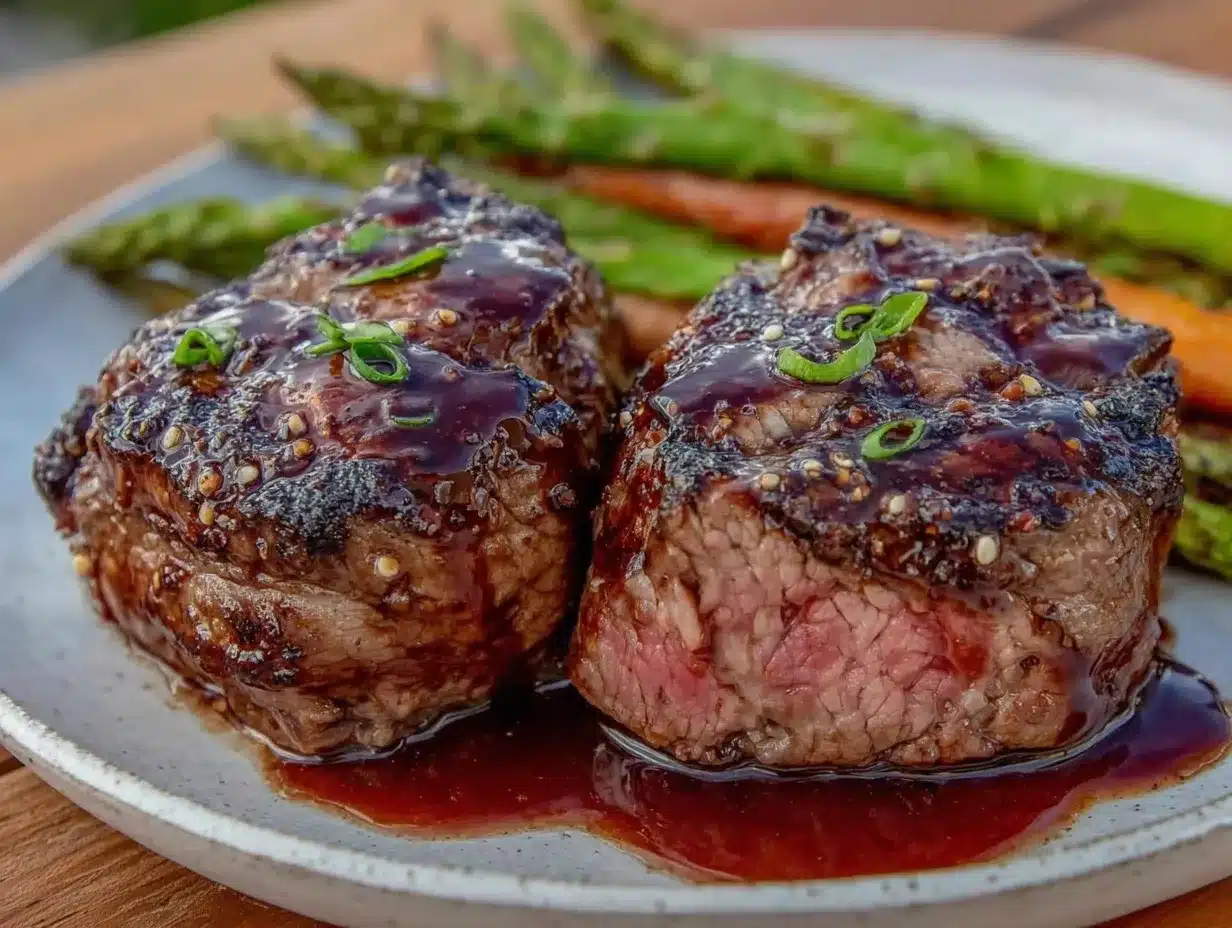
- Sear the Filets: Carefully place the steaks in the pan, laying them away from you to avoid splatters. Sear for about 3-4 minutes on the first side without moving them. Flip gently with tongs and sear the other side for another 3 minutes for medium-rare. Adjust time slightly if your steaks are thicker or thinner. (Use an instant-read thermometer aiming for 130°F/54°C for medium-rare.)
- Add Butter and Baste: Toss in the butter, then tilt the pan and spoon the melted butter over the steaks repeatedly for about 1 minute. This adds richness and helps build flavor.
- Rest the Meat: Transfer the steaks to a warm plate and loosely cover with foil. Let them rest for 8-10 minutes—this step is crucial to redistribute juices.
- Prepare the Sauce Base: In the same skillet (wipe out excess fat if needed), reduce heat to medium. Add minced shallots and garlic, sautéing until softened and fragrant, about 2 minutes.
- Deglaze with Red Wine: Pour in the red wine, scraping up any browned bits from the pan. Add the fresh thyme sprigs. Let it simmer gently until the wine reduces by half—this usually takes about 8-10 minutes. Watch carefully to avoid burning.
- Add Beef Stock: Stir in the beef stock and continue simmering the sauce until it thickens slightly and coats the back of a spoon, about 5 more minutes. If you like, whisk in a teaspoon of Dijon mustard now for extra depth.
- Strain and Finish: Remove the thyme sprigs and strain the sauce if you want a silky finish, or leave it rustic with shallots. Swirl in a tablespoon of cold butter off the heat for shine and richness.
- Serve: Plate the rested filet mignon and spoon the warm red wine reduction over the top. Enjoy immediately.
Cooking Tips & Techniques
Searing the filet mignon properly is the heart of this recipe. I’ve learned that patience pays off—don’t rush flipping the steaks or you risk losing that beautiful crust. Also, never overcrowd the pan; cook in batches if needed to maintain high heat. Using an instant-read thermometer is a game-changer, especially if you’re not comfortable guessing doneness by touch.
When making the red wine reduction, keep the heat low enough to avoid bitterness. I once burned the sauce by rushing it—lesson learned! Slowly simmering it down lets the flavors concentrate and the sauce thicken naturally. Adding a little butter at the end smooths out the acidity and gives a lovely sheen.
Resting the steak is non-negotiable. I remember the first time I skipped this step; the meat was tasty but lost a lot of juices on the plate. Now I always wait, and the steak stays juicy and tender inside.
To multitask, start reducing the sauce once the steaks are resting. This way, everything finishes together, and you get that restaurant-quality timing right at home.
Variations & Adaptations
- Herb Infusion: Try adding rosemary or sage instead of thyme for a different aromatic profile in the wine sauce.
- Dietary Adjustments: For a dairy-free version, swap butter with olive oil or a plant-based margarine when basting and finishing the sauce.
- Seasonal Twist: In fall or winter, add a splash of balsamic vinegar or a teaspoon of cranberry sauce to the reduction for a subtle fruity tang.
- Cooking Method: If you prefer, finish the steaks in the oven after searing to control doneness precisely—about 5-7 minutes at 400°F (200°C).
- Personal Try: I once added a pinch of smoked paprika to the seasoning for a subtle smoky undertone that paired surprisingly well with the red wine flavor.
Serving & Storage Suggestions
This filet mignon with rich red wine reduction is best served immediately while the sauce is warm and glossy. Pair it with creamy mashed potatoes, roasted garlic asparagus, or a simple arugula salad dressed with lemon vinaigrette to cut through the richness.
Leftovers can be stored in an airtight container in the refrigerator for up to 2 days. When reheating, gently warm the steak in a low oven (about 250°F/120°C) to prevent drying out, and reheat the sauce separately on the stovetop, adding a splash of water or stock if it’s too thick.
Flavors tend to deepen overnight, so if you’re lucky enough to have leftovers, the sauce can become even more robust the next day.
Nutritional Information & Benefits
A 6-ounce (170 g) serving of filet mignon provides a rich source of high-quality protein, essential for muscle repair and satiety. The red wine reduction, made primarily of wine, beef stock, and aromatics, adds minimal calories but plenty of flavor.
This dish is naturally gluten-free and can be adapted to be dairy-free. The use of shallots and garlic not only enhances taste but also provides antioxidants and anti-inflammatory benefits. While filet mignon is higher in fat than leaner cuts, its tenderness means you don’t need a large portion to feel satisfied.
For those mindful of sodium, adjusting the amount of added salt or using low-sodium beef stock helps keep the recipe heart-healthy without sacrificing flavor.
Conclusion
Perfecting filet mignon with a rich red wine reduction is one of those kitchen wins that feels both impressive and comforting. It’s a recipe that invites you to slow down, appreciate simple ingredients, and savor the process as much as the result. What I love most is how approachable it is—something that once felt intimidating is now a reliable favorite in my cooking rotation.
Feel free to tweak the herbs, cooking times, or even the wine to make it your own. That’s the beauty of this dish: it’s a classic with room for personality. If you try it, I’d love to hear how it turned out or what variations you came up with—there’s always something new to learn in the kitchen.
Here’s to many cozy, delicious dinners ahead.
FAQs
How do I know when my filet mignon is cooked perfectly?
Using an instant-read thermometer is the best way. Aim for 130°F (54°C) for medium-rare. The steak will continue to cook slightly while resting.
Can I use any red wine for the reduction sauce?
Choose a dry red wine you enjoy drinking, like Cabernet Sauvignon or Merlot. Avoid sweet or cooking wines, as they can alter the sauce flavor.
What if I don’t have beef stock on hand?
You can substitute with chicken stock or even water, but beef stock adds deeper flavor. If using alternatives, consider adding a splash of soy sauce for umami.
Is it okay to cook filet mignon in a non-stick pan?
Yes, but the sear won’t be as intense as with cast iron or stainless steel. Just make sure the pan is hot before adding the steak.
How can I make the red wine reduction thicker?
Simmer the sauce over low heat until it reduces to your desired consistency. You can also whisk in a small pat of cold butter at the end to thicken and enrich the sauce.
Pin This Recipe!
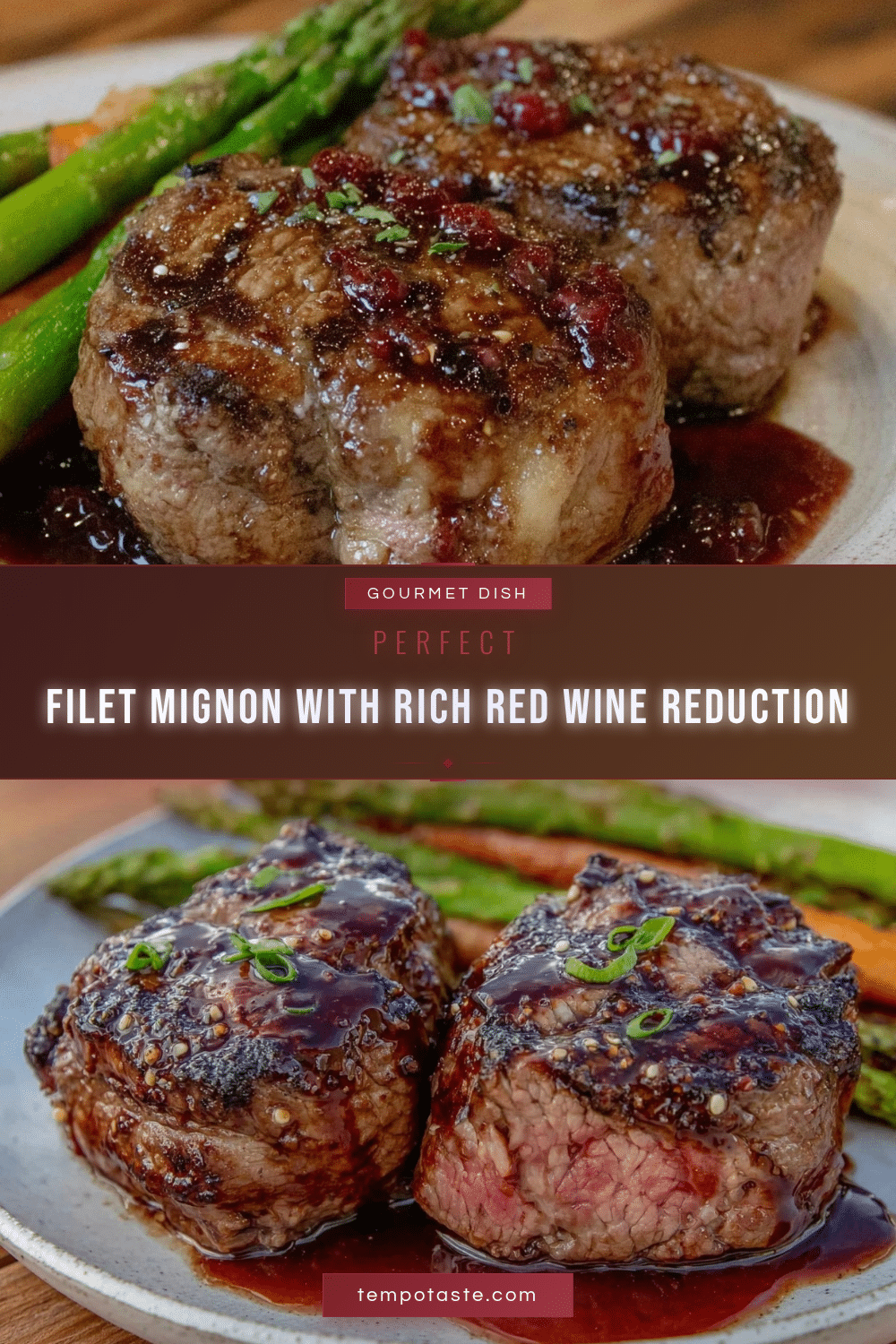
Perfect Filet Mignon Recipe with Easy Rich Red Wine Reduction Sauce

A tender filet mignon with a caramelized crust paired with a silky, rich red wine reduction sauce. This approachable recipe is quick, elegant, and perfect for impressing without stress.
- Prep Time: 10 minutes
- Cook Time: 20 minutes
- Total Time: 30 minutes
- Yield: 2 servings
- Category: Main Course
- Cuisine: French-inspired
Ingredients
- Filet Mignon Steaks – about 6 oz (170 g) each, preferably 1.5 to 2 inches thick
- Salt and Freshly Ground Black Pepper – for seasoning
- Olive Oil – 1 tablespoon
- Unsalted Butter – 2 tablespoons
- Shallots – 1 small, finely minced
- Garlic – 1 clove, minced
- Dry Red Wine – 1 cup (240 ml), such as Cabernet Sauvignon or Merlot
- Beef Stock or Broth – 1/2 cup (120 ml), preferably low sodium
- Fresh Thyme – 2 sprigs
- Optional: Dijon Mustard – 1 teaspoon
Instructions
- Bring the steaks to room temperature by taking them out of the fridge about 30 minutes before cooking. Pat dry with paper towels.
- Season both sides of each steak generously with salt and freshly ground black pepper.
- Heat a cast iron or heavy-bottomed skillet over medium-high heat. Add olive oil and heat until shimmering.
- Sear the steaks for about 3-4 minutes on the first side without moving them. Flip gently and sear the other side for about 3 minutes for medium-rare, aiming for an internal temperature of 130°F (54°C).
- Add butter to the pan and baste the steaks by spooning melted butter over them repeatedly for about 1 minute.
- Transfer the steaks to a warm plate, loosely cover with foil, and let rest for 8-10 minutes.
- In the same skillet, reduce heat to medium and sauté minced shallots and garlic until softened and fragrant, about 2 minutes.
- Deglaze the pan with red wine, scraping up browned bits. Add fresh thyme sprigs and simmer until the wine reduces by half, about 8-10 minutes.
- Stir in beef stock and continue simmering until the sauce thickens slightly and coats the back of a spoon, about 5 minutes. Optionally whisk in Dijon mustard.
- Remove thyme sprigs and strain the sauce if desired. Off heat, swirl in 1 tablespoon cold butter for shine and richness.
- Serve the rested filet mignon with the warm red wine reduction spooned over the top.
Notes
Bring steaks to room temperature before cooking for even doneness. Use an instant-read thermometer to achieve perfect medium-rare. Rest steaks after searing to lock in juices. Slowly reduce the wine sauce over low heat to avoid bitterness. Adding butter at the end enriches the sauce and adds shine. For dairy-free, substitute butter with neutral oil. Optional Dijon mustard adds depth to the sauce.
Nutrition
- Serving Size: 1 filet mignon steak
- Calories: 450
- Sugar: 2
- Sodium: 350
- Fat: 32
- Saturated Fat: 14
- Carbohydrates: 5
- Fiber: 0.5
- Protein: 38
Keywords: filet mignon, red wine reduction, steak recipe, easy dinner, elegant meal, quick steak, cast iron steak, dinner party recipe