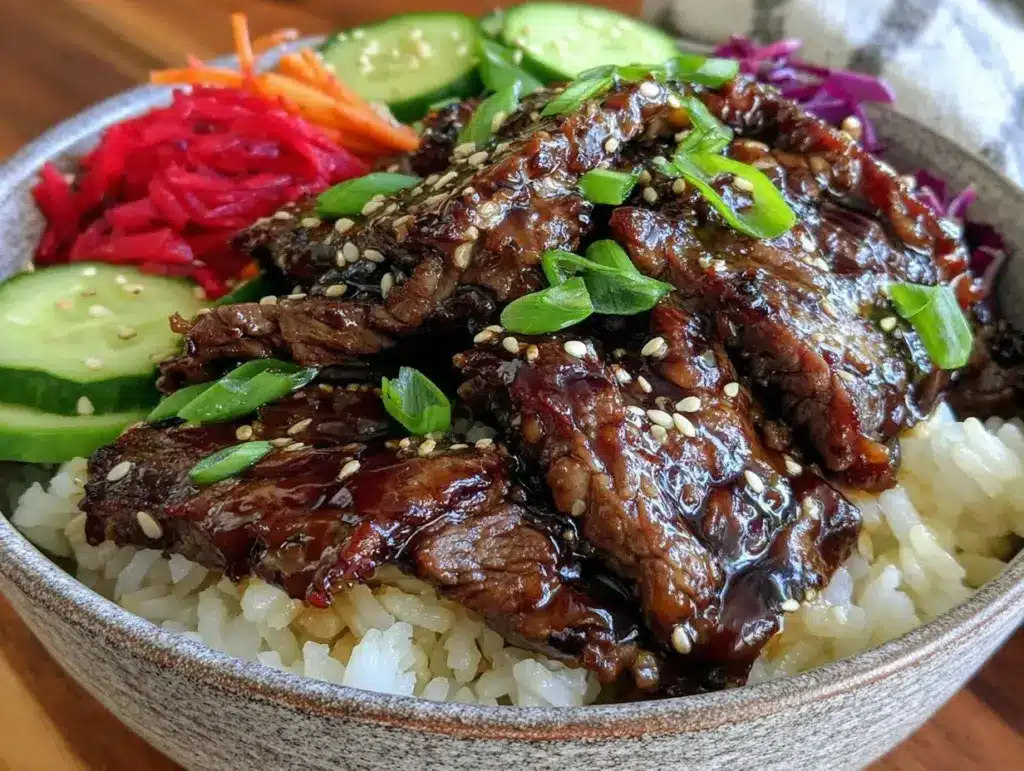
“Hey, you got any beef?” my roommate called from the living room as I was rummaging through the fridge, tired and unsure what to cook after a long day of juggling deadlines. Honestly, I wasn’t in the mood for anything complicated—just something quick that tasted like it belonged to a restaurant, not a microwave meal. That’s when I stumbled on some thinly sliced beef and a jar of kimchi from a recent grocery haul. The idea of Flavorful Korean Bulgogi Beef Bowls with Pickled Vegetables wasn’t on my radar until I threw together some soy sauce, garlic, and a dash of brown sugar to marinate the beef. What started as a last-minute fix ended up as a game changer.
The sizzle of the beef hitting the hot pan, mingling with the tangy crunch of pickled veggies, was oddly soothing—a small comfort in an otherwise chaotic evening. I couldn’t believe how fast it all came together and how every bite packed that perfect sweet-savory punch. Since then, I’ve found myself making this recipe multiple times a week, sometimes swapping in different pickled veggies or tossing in a fried egg on top for an extra cozy touch.
There’s something about the balance of flavors and textures here that just sticks with you, you know? It’s the kind of meal that feels both fresh and familiar at the same time. The Flavorful Korean Bulgogi Beef Bowls with Pickled Vegetables became my quiet little secret for a quick, satisfying dinner that never disappoints, no matter how tired or rushed I am.
Why You’ll Love This Flavorful Korean Bulgogi Beef Bowls Recipe
This Flavorful Korean Bulgogi Beef Bowls recipe is the kind of dish that proves you don’t need a ton of time or fancy ingredients to enjoy something memorable. Having tested it thoroughly (with some happy taste testers on hand), here’s why it’s become a staple in my kitchen:
- Quick & Easy: Ready in under 30 minutes, it’s perfect for those evenings when you want a homemade meal without the fuss.
- Simple Ingredients: Most of what you need are pantry staples or easy-to-find items—soy sauce, garlic, sugar, and beef—nothing intimidating.
- Perfect for Weeknights: Whether it’s a solo dinner or a casual meal with friends, these bowls bring flavor and comfort without stress.
- Crowd-Pleaser: I’ve served this at potlucks and get-togethers, and it always gets rave reviews from everyone, including picky eaters.
- Unbelievably Delicious: The marinade creates tender, juicy beef with that signature sweet-savory flavor, balanced by the bright crunch of pickled vegetables.
What sets this recipe apart is the marinade technique—letting the beef soak up the bold flavors just long enough to develop depth without becoming mushy. Plus, the homemade pickled vegetables bring a crisp, acidic contrast that wakes up each bite. It’s not just another bulgogi bowl; it’s the one you’ll find yourself craving again and again for its perfect harmony of tastes.
You might find yourself closing your eyes after the first bite, savoring the layers of flavor. It’s comfort food that feels fresh and vibrant, making it ideal for a casual dinner or impressing guests without breaking a sweat.
What Ingredients You Will Need for Flavorful Korean Bulgogi Beef Bowls
This recipe uses straightforward, wholesome ingredients to deliver an authentic taste and satisfying texture without any complicated steps. Most are pantry staples, and a few fresh items add brightness and crunch. Here’s what you’ll need:
- For the Bulgogi Beef:
- 1 lb (450 g) thinly sliced beef ribeye or sirloin (look for well-marbled cuts for the best tenderness)
- 3 tablespoons soy sauce (I recommend Kikkoman for a balanced salty-sweet flavor)
- 2 tablespoons brown sugar (light or dark, depending on your preference; dark adds a richer caramel note)
- 1 tablespoon sesame oil (toasted sesame oil adds a lovely nutty aroma)
- 3 cloves garlic, minced (fresh is best; avoid jarred for optimal flavor)
- 1 teaspoon freshly grated ginger (adds a subtle zing)
- 1 teaspoon rice vinegar (optional, for a slight tang)
- 1/2 teaspoon freshly ground black pepper
- 1/4 teaspoon red pepper flakes (optional, for a mild kick)
- 2 green onions, thinly sliced (for garnish and mild onion flavor)
- 1 teaspoon toasted sesame seeds (for garnish)
- For the Pickled Vegetables:
- 1 cup julienned carrots
- 1 cup thinly sliced cucumber
- 1/2 cup daikon radish, julienned (adds crispness and mild earthiness)
- 1/2 cup rice vinegar
- 2 tablespoons sugar
- 1 teaspoon salt
- 1/4 cup water
- For Serving:
- Cooked jasmine rice or short-grain white rice (about 3 cups cooked)
- Optional: Fried egg or steamed greens like spinach or bok choy
Feel free to swap the beef for thinly sliced chicken or pork if you want a different protein. For a gluten-free version, substitute tamari for soy sauce. If you want to try it with a low-carb twist, cauliflower rice is a great alternative to traditional rice.
Equipment Needed
- Large mixing bowl for marinating the beef
- Sharp knife and cutting board for slicing vegetables and beef
- Medium saucepan or jar for pickling vegetables
- Large skillet or cast-iron pan for cooking the beef (a heavy-bottomed pan helps achieve that nice sear)
- Measuring spoons and cups for precise ingredient amounts
- Rice cooker or pot for cooking rice
- Optional: Mandoline slicer for uniform vegetable cuts (use caution!)
I personally prefer using a cast-iron skillet because it retains heat evenly and gives the beef a great caramelized crust. But if you don’t have one, a non-stick skillet works just fine. For pickling, a simple glass jar with a lid is perfect and easy to clean. If you’re on a budget, a basic chef’s knife and sturdy pan will get the job done without fuss.
Preparation Method for Flavorful Korean Bulgogi Beef Bowls
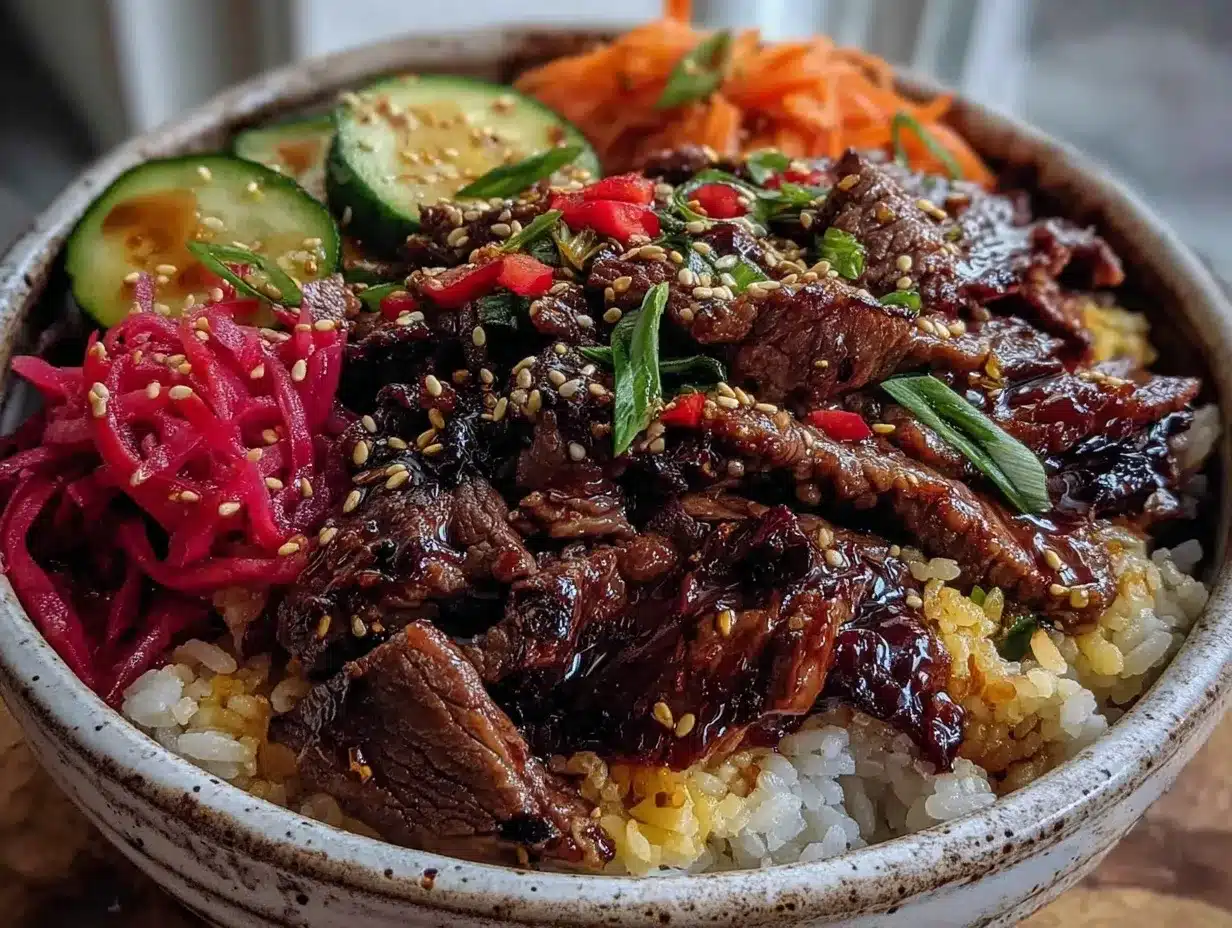
- Prepare the Pickled Vegetables (15 minutes + chilling): In a small saucepan, combine rice vinegar, sugar, salt, and water. Warm over medium heat, stirring until sugar and salt dissolve. Remove from heat and let cool slightly. Place julienned carrots, cucumber, and daikon radish in a jar or bowl. Pour the pickling liquid over the veggies, ensuring they’re submerged. Cover and refrigerate for at least 30 minutes to develop crisp tanginess.
- Marinate the Beef (10 minutes): In a large bowl, whisk together soy sauce, brown sugar, sesame oil, garlic, ginger, rice vinegar, black pepper, and red pepper flakes. Add the thinly sliced beef, tossing to coat evenly. Let it sit for 10 minutes at room temperature—this is enough time for the marinade to infuse flavor without making the meat mushy.
- Cook the Rice: While the beef marinates, prepare your rice according to package instructions or in a rice cooker. Fluff and keep warm.
- Cook the Beef (5-7 minutes): Heat a large skillet over medium-high heat. Add the marinated beef in a single layer (you may need to do this in batches to avoid overcrowding). Let the beef sear without stirring for about 2 minutes to develop a nice crust, then stir and cook until no longer pink and slightly caramelized, about 3-4 more minutes. Avoid overcooking to keep it tender.
- Assemble the Bowls: Divide the cooked rice between serving bowls. Top with cooked bulgogi beef, a generous scoop of pickled vegetables, and garnish with sliced green onions and toasted sesame seeds. Optionally, add a fried egg or steamed greens for extra texture and flavor.
Pro tip: Keep an eye on the beef while cooking—too much stirring breaks it down, and too little can cause uneven cooking. The goal is tender, caramelized strips bursting with flavor. If your beef looks dry, a splash of sesame oil right before serving brings it back to life.
Cooking Tips & Techniques for the Best Bulgogi Beef Bowls
Getting bulgogi just right can take a bit of practice, but these tips should set you on the right path:
- Use Thinly Sliced Beef: This helps the marinade penetrate quickly and cooks evenly. If your butcher doesn’t have pre-sliced beef, pop a piece in the freezer for 20 minutes before slicing thinly against the grain.
- Marinate Briefly: Too long can make the beef mushy, thanks to the sugar and acid. Ten to fifteen minutes is your sweet spot.
- High Heat Searing: For that signature caramelization, make sure your pan is hot before adding beef. Don’t overcrowd the pan—work in batches if necessary.
- Pickling Makes a Difference: The homemade pickled vegetables add brightness and crunch that balance the rich beef. Resist skipping this step—it’s what makes the bowl sing.
- Multitask Smartly: Start pickling veggies first, then marinate the beef while the rice cooks. This way, everything finishes around the same time.
- Hands-Off When Searing: Let the meat sit a moment before stirring to get that lovely browned crust.
- Avoid Excess Liquid: Drain pickled veggies before topping the bowls to keep rice from getting soggy.
I once rushed the marinade and ended up with bland beef—lesson learned. Also, using toasted sesame oil instead of plain brings out that irresistible nutty aroma that turns simple meat into something special. You’ll want to savor every bite.
Variations & Adaptations for Korean Bulgogi Beef Bowls
One of the reasons this recipe works so well is its flexibility. Here are a few ways to switch it up:
- Protein Swap: Thinly sliced chicken thighs or pork shoulder work beautifully with the same marinade. Cooking times vary slightly—chicken may take a bit longer to cook through.
- Vegetable Variations: In place of carrots and daikon, try quick-pickled red cabbage or radishes. In summer, fresh cucumber and watermelon radish bring a bright, refreshing crunch.
- Spice It Up: Add gochujang (Korean chili paste) to the marinade for a spicy kick. I sometimes stir in a tablespoon for an extra punch that’s not overpowering.
- Low-Carb Version: Swap out rice for cauliflower rice or leafy greens for a lighter bowl.
- Allergen-Friendly: Use tamari instead of soy sauce for gluten-free needs, and coconut sugar instead of brown sugar for a refined sugar-free option.
Personally, I’ve made this recipe with cauliflower rice to keep it low-carb and it was just as satisfying. The crunch of the pickled vegetables contrasted beautifully with the tender beef, making the bowl feel indulgent without the carbs.
Serving & Storage Suggestions
Serve your Flavorful Korean Bulgogi Beef Bowls with Pickled Vegetables warm, straight from the pan to the bowl. The rice should be fluffy and hot, beef tender and juicy, and pickled veggies cool and crisp to provide contrast. Garnish with fresh green onions and sesame seeds for that finishing touch.
These bowls pair well with simple sides like steamed bok choy or a light cucumber salad. For a beverage, a cold Korean barley tea or even a crisp lager complements the sweet and savory flavors nicely.
To store leftovers, keep the beef and rice in an airtight container in the fridge for up to 3 days. Store pickled vegetables separately to maintain their crunch. Reheat beef gently in a skillet over medium heat or microwave in short bursts to avoid drying out. The flavors tend to meld and deepen after a day, so leftovers can be even better!
Nutritional Information & Benefits
Each serving of these bulgogi beef bowls packs approximately 450-500 calories, depending on portion sizes. The beef provides a rich source of protein and essential iron, while the pickled vegetables add fiber and probiotics for gut health. Using lean cuts of beef can reduce saturated fat content.
The marinade’s ginger and garlic offer anti-inflammatory benefits, and the light use of brown sugar keeps sugar levels moderate. For those watching carbs, swapping rice for cauliflower rice keeps this dish low-carb and paleo-friendly.
Overall, this recipe balances indulgence with nourishment, making it a satisfying meal that supports a well-rounded diet.
Conclusion
This Flavorful Korean Bulgogi Beef Bowls with Pickled Vegetables recipe is a go-to for anyone craving a quick, tasty, and well-rounded meal. It’s easy enough for weeknight dinners yet impressive enough to serve friends. I love its mix of sweet, savory, and tangy flavors with the fresh crunch of pickled veggies—it feels like a hug in a bowl.
Don’t hesitate to tweak the toppings or protein to match your mood or pantry. And if you try adding a fried egg on top, you might find yourself hooked like I did. Feel free to share how you make it your own—I’m always curious to hear your twists!
Happy cooking and may your kitchen be filled with delicious aromas and satisfied appetites.
Frequently Asked Questions About Flavorful Korean Bulgogi Beef Bowls
What cut of beef is best for bulgogi?
Thinly sliced ribeye or sirloin with good marbling works best for tenderness and flavor. You can also use flank steak if sliced thinly against the grain.
Can I make the pickled vegetables ahead of time?
Yes! They actually taste better after sitting in the pickling liquid for a few hours or overnight in the fridge.
How long should I marinate the beef?
About 10-15 minutes is ideal to let flavors soak in without affecting the texture.
Can I freeze the bulgogi beef bowls?
Cooked beef and rice can be frozen separately, but pickled vegetables are best fresh or refrigerated to maintain crunch.
What can I serve with bulgogi beef bowls?
Steamed greens, kimchi, fresh cucumber salad, or a simple miso soup all complement the flavors nicely.
Pin This Recipe!
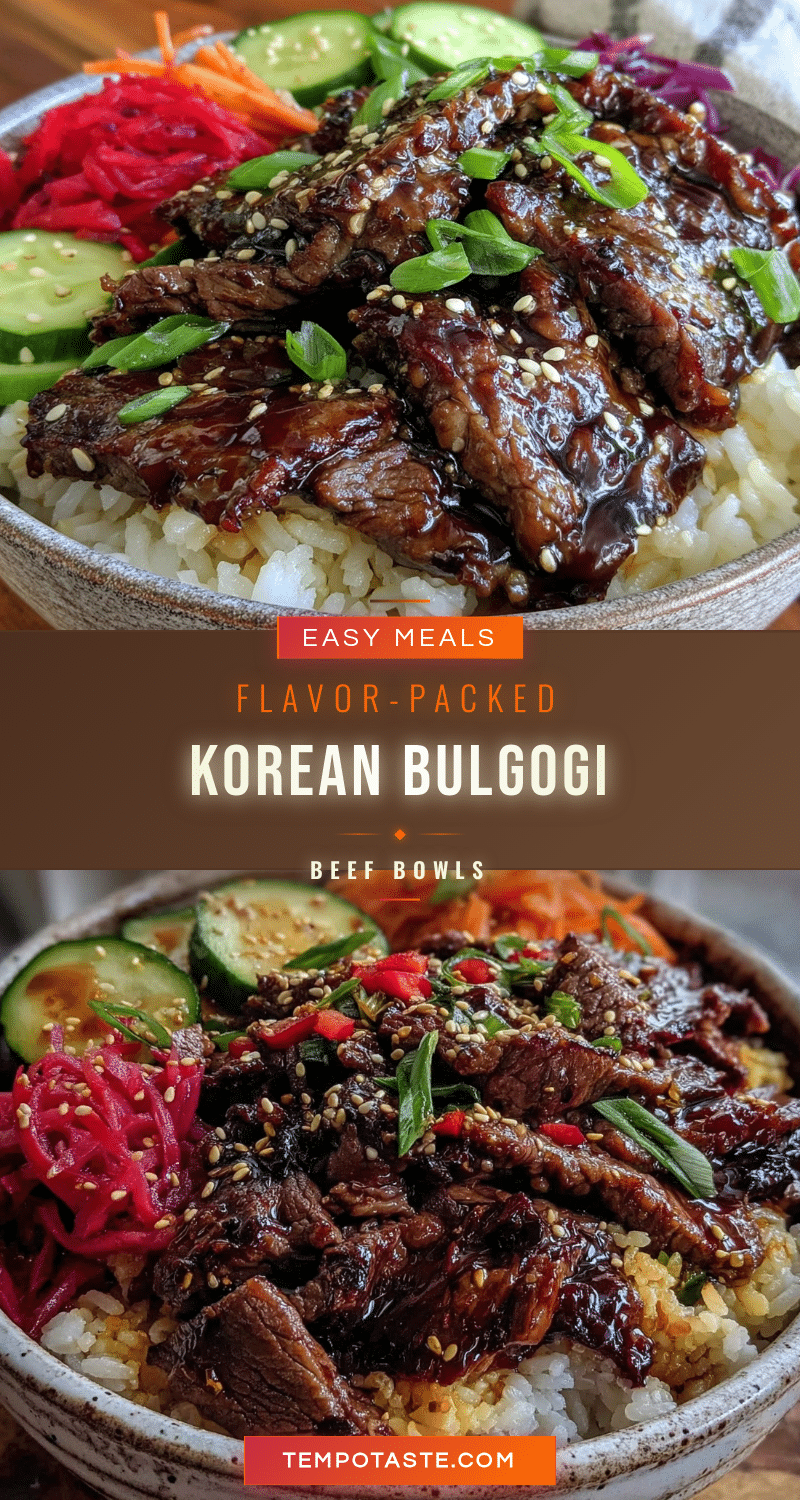
Flavorful Korean Bulgogi Beef Bowls with Pickled Vegetables

A quick and easy Korean bulgogi beef bowl recipe featuring tender marinated beef, homemade pickled vegetables, and fluffy rice for a perfect sweet-savory meal.
- Prep Time: 15 minutes
- Cook Time: 15 minutes
- Total Time: 30 minutes
- Yield: 4 servings 1x
- Category: Main Course
- Cuisine: Korean
Ingredients
- 1 lb thinly sliced beef ribeye or sirloin
- 3 tablespoons soy sauce
- 2 tablespoons brown sugar
- 1 tablespoon sesame oil
- 3 cloves garlic, minced
- 1 teaspoon freshly grated ginger
- 1 teaspoon rice vinegar (optional)
- 1/2 teaspoon freshly ground black pepper
- 1/4 teaspoon red pepper flakes (optional)
- 2 green onions, thinly sliced
- 1 teaspoon toasted sesame seeds
- 1 cup julienned carrots
- 1 cup thinly sliced cucumber
- 1/2 cup daikon radish, julienned
- 1/2 cup rice vinegar
- 2 tablespoons sugar
- 1 teaspoon salt
- 1/4 cup water
- About 3 cups cooked jasmine rice or short-grain white rice
- Optional: Fried egg or steamed greens like spinach or bok choy
Instructions
- Prepare the pickled vegetables: In a small saucepan, combine rice vinegar, sugar, salt, and water. Warm over medium heat, stirring until sugar and salt dissolve. Remove from heat and let cool slightly.
- Place julienned carrots, cucumber, and daikon radish in a jar or bowl. Pour the pickling liquid over the veggies, ensuring they’re submerged. Cover and refrigerate for at least 30 minutes.
- Marinate the beef: In a large bowl, whisk together soy sauce, brown sugar, sesame oil, garlic, ginger, rice vinegar, black pepper, and red pepper flakes.
- Add the thinly sliced beef, tossing to coat evenly. Let it sit for 10 minutes at room temperature.
- Cook the rice according to package instructions or in a rice cooker. Fluff and keep warm.
- Heat a large skillet over medium-high heat. Add the marinated beef in a single layer. Let sear without stirring for about 2 minutes to develop a crust, then stir and cook for 3-4 more minutes until no longer pink and caramelized.
- Assemble the bowls: Divide cooked rice between bowls. Top with cooked bulgogi beef, a scoop of pickled vegetables, sliced green onions, and toasted sesame seeds.
- Optionally, add a fried egg or steamed greens for extra texture and flavor.
Notes
Use thinly sliced beef for quick marinating and cooking. Marinate beef for 10-15 minutes to avoid mushiness. Use a hot pan and avoid overcrowding for best caramelization. Drain pickled vegetables before serving to keep rice from getting soggy. Substitute tamari for soy sauce for gluten-free. Cauliflower rice can be used for a low-carb version.
Nutrition
- Serving Size: 1 bowl (including be
- Calories: 475
- Sugar: 12
- Sodium: 900
- Fat: 18
- Saturated Fat: 4
- Carbohydrates: 45
- Fiber: 3
- Protein: 32
Keywords: bulgogi, Korean beef bowl, pickled vegetables, quick dinner, easy recipe, marinated beef, Korean cuisine