
“You won’t believe this cake came together in one bowl,” my friend joked as I pulled the warm lemon olive oil cake from the oven. Honestly, I was skeptical at first—how could something so simple yield such a moist, fragrant cake? The magic started on an afternoon when I was juggling too many things: emails piling up, the kids clamoring for snacks, and zero desire to wash multiple dishes. I tossed ingredients into a single bowl, stirred in some fresh rosemary from the windowsill, and hoped for the best.
As the cake baked, the kitchen filled with an unexpected aroma of bright lemon zest mingled with herbal rosemary, something that instantly snapped me out of the chaos. The crumb was tender, the texture unbelievably moist, thanks to the olive oil, and the subtle rosemary twist made it feel special without any fuss. It wasn’t just a quick fix; it became a little ritual I looked forward to—perfect for summer afternoons when you want something fresh, simple, and a bit rustic.
What stuck with me was how the flavors balanced each other—zesty citrus brightness paired with the earthy, piney notes of rosemary—and how easy it was to make. No fancy tools, no complicated steps, just honest, delicious cake that anyone can whip up. This moist one-bowl lemon olive oil cake with fresh rosemary quickly became my go-to when friends dropped by unexpectedly or I needed a pick-me-up. It’s the kind of recipe that feels like a quiet promise: simple ingredients, straightforward prep, and a reward that makes you close your eyes after the first bite.
Why You’ll Love This Recipe
After baking this lemon olive oil cake more times than I can count, I’m still surprised by how reliably delicious and easy it turns out. Here’s why this recipe has earned a permanent spot in my kitchen repertoire:
- Quick & Easy: Everything comes together in under 15 minutes, which is a lifesaver on busy summer days or when you need a last-minute dessert.
- Simple Ingredients: You likely have these staples in your pantry already—no need for fancy or hard-to-find items.
- Perfect for Summer: The fresh lemon and rosemary combo gives this cake a light, refreshing vibe that’s ideal for warm weather gatherings or afternoon tea.
- Crowd-Pleaser: Kids and adults alike are always surprised by the moist crumb and subtle herbal note. It’s rarely around long enough for leftovers.
- Unbelievably Delicious: The use of olive oil instead of butter creates a tender crumb that stays moist for days, while the rosemary adds an unexpected but delightful flavor depth.
This isn’t your run-of-the-mill lemon cake. What sets it apart is the one-bowl method that keeps cleanup minimal and the fresh rosemary infusion that adds a sophisticated twist without complicating things. I’ve tested this recipe alongside other lemon cakes and honestly, this one wins for its balance of ease and elegance.
It’s the kind of cake that turns a simple coffee break into a small celebration. Plus, if you’ve enjoyed my creamy lemon posset, you’ll appreciate how this cake complements those bright, citrusy flavors in a totally different, more textured way.
What Ingredients You Will Need
This recipe uses simple, wholesome ingredients to deliver bright flavor and a satisfyingly tender texture without any fuss. You’ll find many of these items are pantry staples, with the fresh rosemary adding that seasonal touch that makes this cake special.
- All-purpose flour (1 ¾ cups / 220 g) – The backbone for the cake’s structure. For a gluten-free option, try a cup-for-cup gluten-free flour blend.
- Baking powder (2 tsp) – To give the cake a lovely rise.
- Fine sea salt (½ tsp) – Balances sweetness and enhances flavor.
- Granulated sugar (1 cup / 200 g) – Simple sweetness that melds with lemon zest.
- Large eggs (3, room temperature) – Helps bind the ingredients and create a moist crumb.
- Extra virgin olive oil (⅔ cup / 160 ml) – The secret to moistness and a subtle fruity note. I recommend using a mild, fruity olive oil like California Olive Ranch for best texture and flavor.
- Whole milk (½ cup / 120 ml) – Adds richness. You can substitute with almond or oat milk if preferred.
- Fresh lemons (zest and juice of 2 lemons) – The bright star of the recipe. Use unwaxed lemons for the best zest flavor.
- Fresh rosemary (1 tbsp finely chopped) – Gives an earthy, piney aroma that pairs beautifully with lemon. If fresh isn’t available, 1 tsp dried rosemary can be used but fresh is definitely better.
- Vanilla extract (1 tsp) – Rounds out the flavors.
When selecting your lemons, look for firm fruit with vibrant skin. This recipe really benefits from fresh zest and juice—frozen or bottled lemon juice just won’t do it justice. Also, chopping the rosemary finely helps it distribute evenly so you get that hint of herb in every bite without overpowering the cake.
Equipment Needed
- Mixing bowl – A large one-bowl setup keeps things simple; no fancy gadgets required.
- Whisk or fork – For combining ingredients smoothly. A hand whisk works fine, but an electric mixer can speed things up.
- Measuring cups and spoons – Accuracy is key for baking success.
- Loaf pan or round cake pan (8-inch / 20 cm) – I prefer a loaf pan for this recipe, but a round pan works too. Make sure to grease it well or line with parchment paper.
- Zester or microplane – For zesting lemons finely. If you don’t have one, a vegetable peeler and careful knife work.
- Cooling rack – Helps the cake cool evenly and prevents sogginess at the bottom.
Personally, I love how minimal this recipe is in terms of equipment. It’s perfect for those who want to bake without dragging out a dozen bowls and utensils. A well-seasoned loaf pan makes a difference too, so if you bake this often, consider investing in a nonstick or silicone pan for easy release and cleanup.
Preparation Method

- Preheat your oven to 350°F (175°C). Grease your pan with a little olive oil or butter and line with parchment paper if you want an extra-release guarantee. This step ensures the cake bakes evenly and doesn’t stick.
- Combine dry ingredients: In your large mixing bowl, whisk together 1 ¾ cups (220 g) all-purpose flour, 2 teaspoons baking powder, and ½ teaspoon fine sea salt. This blend creates a tender crumb and the lift you want.
- Mix sugar and eggs: Add 1 cup (200 g) granulated sugar and 3 large eggs (room temperature) to the dry ingredients. Whisk briskly until the mixture is pale and slightly thickened, about 2-3 minutes. This aerates the batter, making it lighter.
- Add olive oil and milk: Slowly drizzle in ⅔ cup (160 ml) extra virgin olive oil and ½ cup (120 ml) whole milk while whisking gently. The batter should become smooth and glossy. If it looks curdled, don’t panic—that’s normal with olive oil batters.
- Incorporate lemon and rosemary: Stir in the zest and juice of 2 fresh lemons along with 1 tablespoon of finely chopped fresh rosemary and 1 teaspoon vanilla extract. The batter will smell incredibly fresh and herbaceous here—trust that rosemary adds a subtle complexity.
- Pour batter into pan: Transfer the batter to your prepared pan and smooth the top with a spatula. Don’t overwork it here; a gentle touch keeps the crumb tender.
- Bake for 45-50 minutes, or until a toothpick inserted in the center comes out clean. The cake will be golden on top with a slight spring to the touch. If the top browns too quickly, tent with foil halfway through baking.
- Cool and serve: Let the cake cool in the pan for 15 minutes, then transfer to a wire rack to cool completely. This prevents sogginess and helps the flavors settle.
Pro tip: If you want a little extra zing, sprinkle some coarse sugar over the batter before baking for a crunchy top. Also, I once accidentally swapped rosemary for thyme, and while it was tasty, the rosemary’s piney brightness is definitely the winner here.
Cooking Tips & Techniques
Olive oil cakes can be a bit tricky if you’re used to butter-based recipes, but once you get the hang of it, they’re a breeze. A few things I’ve learned over the years:
- Use good quality olive oil. The flavor of your oil really shines through, so pick one that’s fruity and mild, not bitter or overpowering.
- Room temperature eggs and milk help the batter come together more smoothly and bake more evenly.
- Don’t overmix once you add the flour. Overworking the batter can lead to a dense cake instead of a tender crumb.
- Fresh rosemary should be chopped finely to avoid big, woody bits. It’s subtle but impactful.
- Watch your bake time. Ovens vary, so start checking at 40 minutes. A toothpick test is your best friend here.
- Let the cake cool completely before slicing. Olive oil cakes can be delicate when warm.
One mistake I made early on was skipping the zest and juice balance—just zest or just juice can make the cake either too tart or lacking brightness. The combo is what gives this cake its signature fresh zip. Also, if you want to multitask, this recipe pairs wonderfully with a freshly brewed iced tea like this creamy homemade Thai iced tea, perfect for summer sipping while the cake bakes.
Variations & Adaptations
This lemon olive oil cake is a great base for customization. Here are some ideas I’ve tried and loved:
- Herb swap: If you’re not a fan of rosemary, try fresh thyme or basil for a different herbal note that pairs with lemon.
- Gluten-free version: Replace all-purpose flour with a gluten-free blend like Bob’s Red Mill 1-to-1. The texture is slightly different but still moist and delicious.
- Berry infusion: Fold in ½ cup (75 g) fresh blueberries or raspberries before baking for bursts of juicy sweetness.
- Vegan adaptation: Substitute eggs with flax eggs (1 tbsp ground flaxseed + 3 tbsp water per egg) and use plant-based milk. Olive oil keeps the crumb moist.
- Citrus twist: Swap lemon zest and juice with orange or grapefruit for a seasonal spin.
One personal favorite is adding a lemon glaze drizzle made with powdered sugar and lemon juice, creating a shiny, tangy finish. If you like experimenting, you might also enjoy pairing it with the lavender gin fizz cocktail—the herbal notes marry beautifully.
Serving & Storage Suggestions
This cake shines best served at room temperature or slightly warmed. I often slice it thinly and serve alongside a dollop of whipped cream or a scoop of vanilla ice cream for an easy dessert that feels a little fancy.
It’s also wonderful with a cup of hot tea or a cold, creamy iced drink. For summer gatherings, I’ve found that pairing it with fresh berries or a simple fruit salad adds a lovely contrast in texture and flavor.
To store, wrap the cake tightly in plastic wrap or keep it in an airtight container at room temperature for up to 3 days. It stays incredibly moist. For longer storage, freeze wrapped slices for up to 2 months. Thaw overnight in the fridge or at room temperature.
Reheating slices in the microwave for 10-15 seconds revives the soft crumb and releases the aroma of lemon and rosemary. I’ve noticed the flavors deepen slightly after a day, giving it a more rounded, mellow profile.
Nutritional Information & Benefits
Per slice (based on 8 slices), this moist lemon olive oil cake provides approximately:
| Calories | 280 kcal |
|---|---|
| Fat | 15 g |
| Carbohydrates | 32 g |
| Protein | 4 g |
| Fiber | 1 g |
Using olive oil instead of butter adds healthy monounsaturated fats, which are better for heart health. Fresh rosemary contains antioxidants and anti-inflammatory compounds, while lemon provides vitamin C and a refreshing flavor without extra calories.
This cake is naturally free from nuts and can be made gluten-free with a simple flour swap. It’s a lower-sugar option compared to heavily frosted cakes and offers a satisfying balance of indulgence and freshness.
Conclusion
This moist one-bowl lemon olive oil cake with fresh rosemary is a testament to how simple ingredients and straightforward methods can create something truly memorable. It’s bright, tender, and just a little bit different with that herbal twist, making it perfect for those warm summer days when you want comfort without fuss.
Feel free to tweak the herbs or add your favorite citrus for a personalized touch. I keep coming back to this recipe because it’s reliably delicious and kind to my busy schedule—plus, it brings a touch of sunshine to any table.
If you give it a try, I’d love to hear how you make it your own or what pairings you enjoy. Baking it once might turn into making it every week—just like it did for me.
Frequently Asked Questions
Can I use butter instead of olive oil in this cake?
You can, but the texture and flavor will change. Olive oil keeps the cake moist and adds a subtle fruity note that butter doesn’t replicate. If you prefer butter, melt it first and use the same amount.
How do I know when the cake is fully baked?
Insert a toothpick or skewer into the center. If it comes out clean or with a few moist crumbs, the cake is done. Avoid opening the oven door too early to prevent sinking.
Can I make this cake ahead of time?
Absolutely! This cake keeps well at room temperature for up to 3 days and freezes beautifully. Just wrap tightly and thaw before serving.
Is fresh rosemary necessary? Can I use dried instead?
Fresh rosemary is best for its bright, piney flavor. Dried rosemary can be used but use less (about 1 teaspoon) and crush it finely to avoid tough bits.
What’s the best way to serve this cake?
Serve it at room temperature or slightly warm. It pairs wonderfully with whipped cream, vanilla ice cream, or fresh berries. A cup of tea or iced coffee rounds out the experience perfectly.
Pin This Recipe!
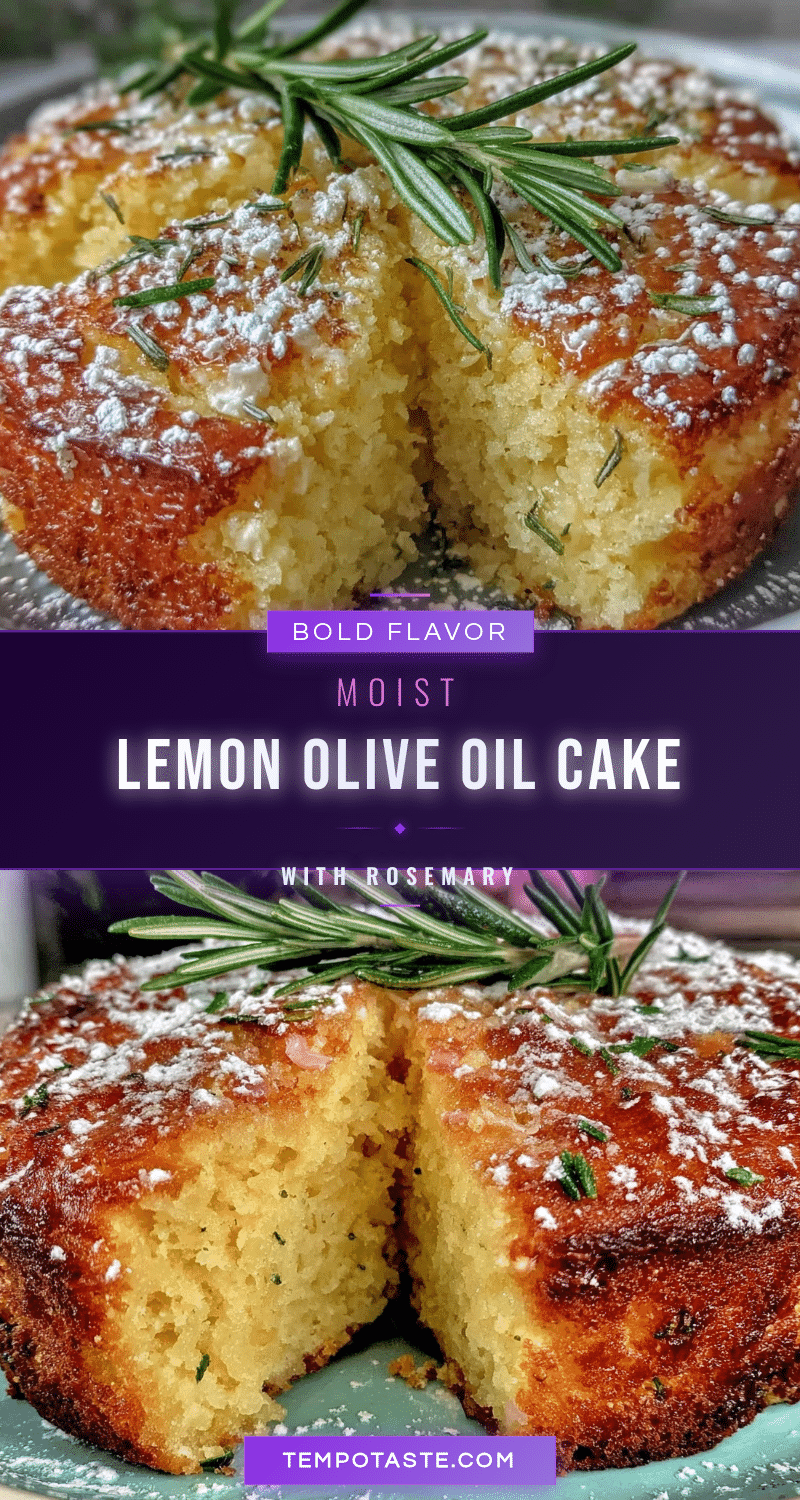
Moist One-Bowl Lemon Olive Oil Cake Recipe with Fresh Rosemary

A simple, moist, and fragrant lemon olive oil cake infused with fresh rosemary, perfect for summer afternoons and easy one-bowl preparation.
- Prep Time: 15 minutes
- Cook Time: 45-50 minutes
- Total Time: 60-65 minutes
- Yield: 8 servings 1x
- Category: Dessert
- Cuisine: American
Ingredients
- 1 ¾ cups (220 g) all-purpose flour
- 2 teaspoons baking powder
- ½ teaspoon fine sea salt
- 1 cup (200 g) granulated sugar
- 3 large eggs, room temperature
- ⅔ cup (160 ml) extra virgin olive oil
- ½ cup (120 ml) whole milk
- Zest and juice of 2 fresh lemons
- 1 tablespoon finely chopped fresh rosemary
- 1 teaspoon vanilla extract
Instructions
- Preheat your oven to 350°F (175°C). Grease your pan with a little olive oil or butter and line with parchment paper if desired.
- In a large mixing bowl, whisk together the flour, baking powder, and sea salt.
- Add the sugar and eggs to the dry ingredients. Whisk briskly until the mixture is pale and slightly thickened, about 2-3 minutes.
- Slowly drizzle in the olive oil and milk while whisking gently until the batter is smooth and glossy.
- Stir in the lemon zest and juice, chopped rosemary, and vanilla extract.
- Pour the batter into the prepared pan and smooth the top with a spatula.
- Bake for 45-50 minutes, or until a toothpick inserted in the center comes out clean. Tent with foil if the top browns too quickly.
- Let the cake cool in the pan for 15 minutes, then transfer to a wire rack to cool completely.
Notes
Use good quality mild, fruity olive oil for best flavor. Room temperature eggs and milk help batter come together smoothly. Do not overmix after adding flour to keep the cake tender. Fresh rosemary should be finely chopped to avoid woody bits. Start checking doneness at 40 minutes with a toothpick test. Let cake cool completely before slicing. Optional: sprinkle coarse sugar on top before baking for a crunchy crust.
Nutrition
- Serving Size: 1 slice (1/8 of cake
- Calories: 280
- Fat: 15
- Carbohydrates: 32
- Fiber: 1
- Protein: 4
Keywords: lemon cake, olive oil cake, rosemary cake, one-bowl cake, summer dessert, easy cake recipe, moist cake