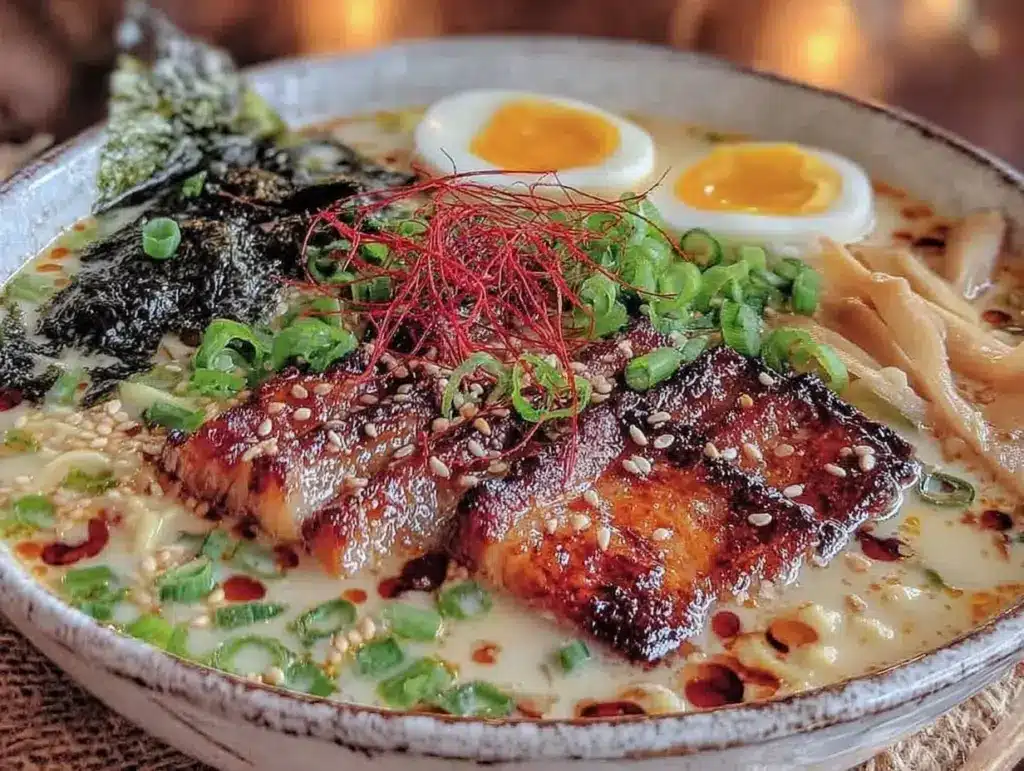
“You really have to try this,” my friend texted me late one rainy evening. I was already half in my pajamas, debating whether to order takeout or just settle for cereal. Honestly, I was skeptical—homemade ramen? The idea felt intimidating, something only ramen shops could pull off. But curiosity won over, and I decided to give it a shot with this creamy Tonkotsu style pork ramen bowl recipe.
As the rich, porky broth simmered on my stove, the kitchen filled with an aroma that was so comforting it almost felt like a warm hug. I remember stirring the broth, watching it thicken and turn a luscious milky color, thinking, “Okay, this might actually work.” The tender pork slices melting into the broth, the soft noodles, and the perfect balance of umami flavors surprised me in the best way possible. It was a low-key night saved by something simple, hearty, and soul-soothing.
This recipe stuck with me—not just because it’s delicious, but because it’s approachable. If you think making ramen at home means hours of fuss, this creamy Tonkotsu style pork ramen bowl will change your mind. It’s about crafting layers of flavor with everyday ingredients, and yes, it’s totally worth getting a little messy in the kitchen for. Plus, it’s the kind of meal that’s just as good on a solo night in as it is when you want to impress friends without stress.
After a few tries (okay, maybe more than a few), I found the rhythm of this recipe. It’s become my go-to when I crave something indulgent but homemade. And honestly, sometimes I just make the broth in bulk and freeze it for those “I need comfort now” moments. You’ll see that the creamy Tonkotsu style pork ramen bowl recipe isn’t just a meal; it’s a little ritual of comfort, patience, and joy in a bowl.
Why You’ll Love This Creamy Tonkotsu Style Pork Ramen Bowl Recipe
After testing this recipe multiple times (yes, more than a few nights a week), I’m confident it’s one of the most satisfying ramen bowls you can make at home. Here’s why it stands out:
- Quick & Easy: The broth takes some time to develop flavor, but the hands-on prep is straightforward. With some multitasking, you can have this creamy pork ramen ready in about 2 hours—perfect for a weekend treat or a relaxed evening.
- Simple Ingredients: No need for hard-to-find Japanese specialty stores. The key players like pork bones, garlic, and miso paste are pantry staples or easy to source.
- Perfect for Cozy Nights: This ramen bowl is ideal for chilly evenings when you want something rich, warm, and filling without ordering out.
- Crowd-Pleaser: I’ve served this to friends who swore they didn’t like pork ramen before—now they ask for seconds every time.
- Unbelievably Delicious: The broth’s creamy texture, thanks to the slow simmer of pork bones, creates a silky mouthfeel that’s just next-level comfort food.
This isn’t your average bowl of ramen. The secret is in the technique—simmering pork bones to release collagen and flavor until the broth turns opaque and creamy. The seasoning balance is just right, with a touch of miso and soy that complements but never overpowers the pork’s richness. Plus, I love adding a soft boiled egg and fresh scallions for that extra pop of texture and flavor.
It’s worth noting that this recipe doesn’t just taste good—it makes you feel good. It’s the kind of meal where you close your eyes after the first bite and savor the moment. If you’re curious about pairing it with a refreshing drink, I once enjoyed it alongside the creamy homemade Thai iced tea, which was a surprisingly perfect combo!
What Ingredients You Will Need
This creamy Tonkotsu style pork ramen bowl recipe uses simple, wholesome ingredients that come together to create a rich and satisfying flavor profile. Most of these are pantry staples or easy to find in your local grocery store.
- Pork bones (preferably neck bones or trotters, about 3 pounds / 1.4 kg) – key for that milky, collagen-rich broth
- Pork belly slices (about 1 pound / 450 g) – for tender, flavorful topping
- Fresh ramen noodles (or substitute with fresh egg noodles) – the chewy base that soaks up broth beautifully
- Garlic cloves (6-8, smashed) – adds depth and a savory punch
- Ginger (3-inch piece, sliced) – for subtle warmth and aroma
- Green onions/scallions (4-5, chopped) – for freshness and garnish
- White miso paste (3 tablespoons) – balances the richness with a touch of umami
- Soy sauce (1/4 cup / 60 ml) – seasoning with that classic salty note
- Mirin (2 tablespoons) – adds a slight sweetness
- Salt – to taste
- Eggs (4 large) – soft boiled, for topping
- Sesame oil (1 teaspoon) – finishing touch for aroma
- Optional toppings: bamboo shoots, nori sheets, corn kernels, chili oil, or pickled ginger – customize as you like!
If you want a gluten-free version, swap out soy sauce for tamari. For a quick shortcut, use store-bought pork broth as a base, but trust me, the slow-simmered pork bones make all the difference here. I usually recommend Kikkoman soy sauce for its balanced saltiness and Miso Master white miso paste for a smooth, mellow taste.
Equipment Needed
- Large stockpot or heavy-bottomed pot: Essential for simmering the pork bones for hours. A wide pot helps with evaporation and flavor concentration.
- Strainer or fine mesh sieve: To remove bones and impurities from the broth, yielding a silky texture.
- Large bowl: For marinating and resting the pork belly slices or holding toppings.
- Medium saucepan: For boiling eggs and noodles separately.
- Chopsticks and ladle: For serving and eating that authentic ramen experience.
If you don’t have a large stockpot, a slow cooker can work for the broth, though it might take longer. I’ve tried both, but the stovetop method gives me better control over the broth’s consistency. Also, a mesh skimmer is handy to remove scum during simmering, keeping your broth clear and flavorful.
Preparation Method
- Prepare the pork bones: Rinse the pork bones under cold water. Place them in a large stockpot and cover with cold water. Bring to a boil over high heat and boil for 10 minutes to remove impurities. Drain and rinse bones thoroughly to keep your broth clean and clear.
- Make the broth: Return the cleaned bones to the pot and cover with fresh water (about 12 cups / 3 liters). Add smashed garlic and sliced ginger. Bring to a boil, then reduce heat to a gentle simmer. Let it simmer uncovered for at least 3 hours, preferably 4–5. Occasionally skim off any scum or fat that rises to the surface to avoid a greasy broth.
- Cook the pork belly: While the broth simmers, score the pork belly skin lightly. In a hot pan, sear the pork belly on all sides until golden and crisp. Remove and set aside. Alternatively, braise pork belly in soy sauce, mirin, and water for 1 hour for a melt-in-your-mouth texture.
- Prepare the soft boiled eggs: Place eggs in boiling water for exactly 7 minutes. Transfer eggs immediately to an ice bath to stop cooking. Peel carefully and set aside.
- Season the broth: After simmering, remove bones, garlic, and ginger by straining the broth through a fine mesh sieve into a clean pot. Stir in miso paste, soy sauce, and mirin. Taste and adjust salt as needed. The broth should be creamy, rich, and well balanced.
- Cook the noodles: Boil fresh ramen noodles according to package instructions (usually 2–3 minutes). Drain and rinse under cold water briefly to stop cooking and prevent clumping.
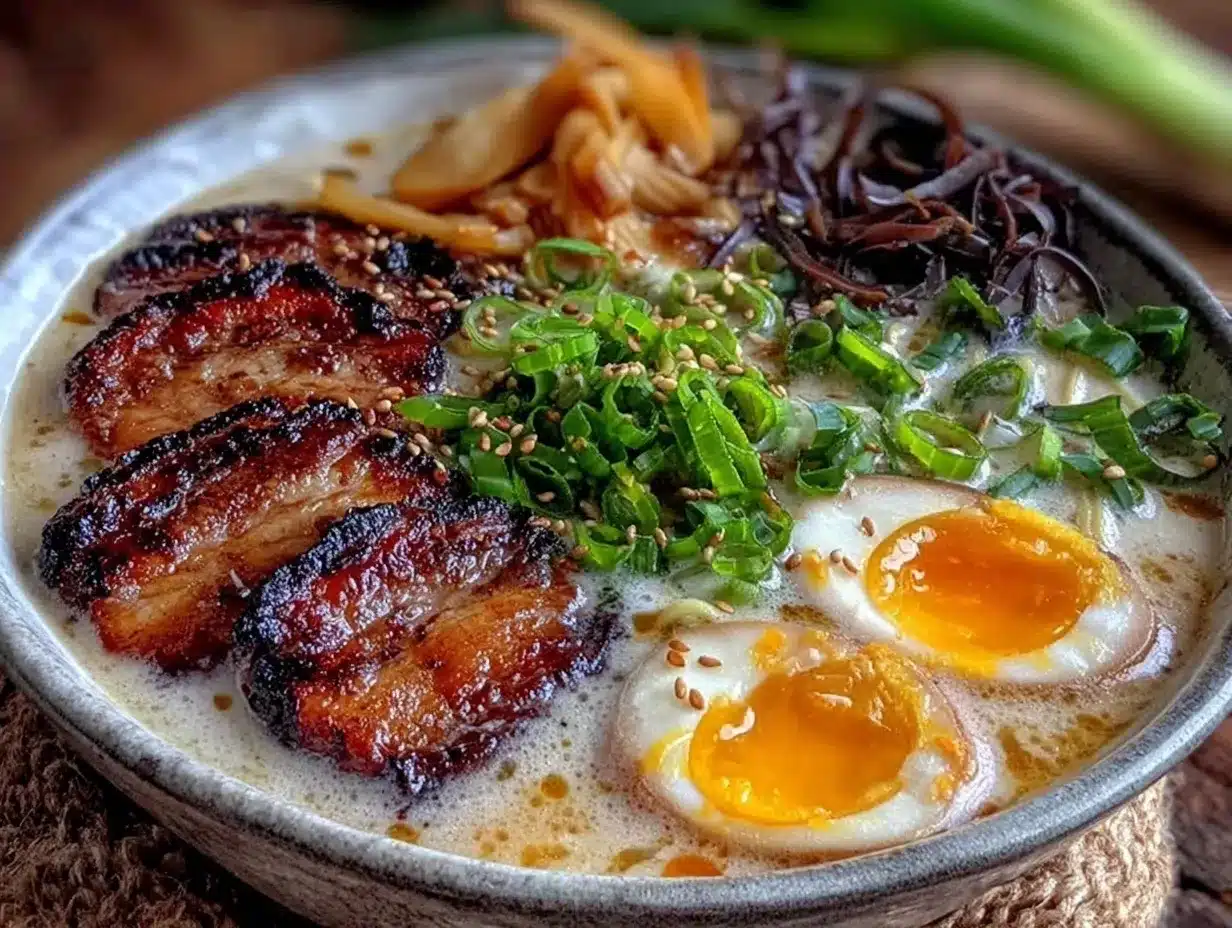
- Assemble the bowl: Divide noodles into serving bowls. Ladle hot broth over noodles. Top with sliced pork belly, halved soft boiled eggs, chopped scallions, and optional toppings like bamboo shoots or nori. Drizzle with a little sesame oil for an extra aroma boost.
Pro tip: Keep an eye on the broth’s surface while simmering. If it looks cloudy or greasy, regular skimming will fix that. Also, don’t rush the simmering—it’s the slow cooking that breaks down collagen and creates that signature creamy texture.
Cooking Tips & Techniques
Making a creamy Tonkotsu style pork ramen bowl at home might seem like a lot, but a few insider tips make it manageable and delicious.
- Patience is key: The broth gains its signature creaminess from long, gentle simmering. If you rush or boil too hard, you’ll miss that silky texture.
- Skim often: Removing the scum early and often keeps your broth clean and flavorful. I usually set a timer to remind myself every 20 minutes.
- Prep multitasking: While the broth simmers, prep your toppings and marinate pork belly to save time.
- Soft boiled eggs: Timing is everything here. Seven minutes in boiling water yields a slightly runny yolk that’s perfect in ramen.
- Don’t overcook noodles: Fresh ramen noodles cook quickly. Overcooked noodles turn mushy and won’t hold up in the hot broth.
- Customize seasoning: Taste your broth as you go. Some prefer saltier, others milder. Adjust soy sauce and miso to match your palate.
From my experience, a common mistake is skipping the blanching step on bones. It might seem like an unnecessary extra step, but it makes a huge difference in broth clarity. Also, if you want to speed things up, preparing the broth a day ahead lets flavors deepen overnight.
Variations & Adaptations
This creamy Tonkotsu style pork ramen bowl recipe is a great base to customize depending on your mood, diet, or what you have on hand.
- Vegetarian version: Swap pork bones for a combo of shiitake mushrooms, kombu seaweed, and soy milk for a creamy, umami-rich broth without meat.
- Spicy twist: Add a spoonful of chili oil or homemade spicy garlic paste to the broth before serving for a warming kick.
- Low-carb option: Use shirataki noodles or spiralized zucchini noodles instead of ramen noodles to cut carbs without sacrificing texture.
- Different proteins: Instead of pork belly, try adding roasted chicken thighs or tofu for variety.
- Seasonal veggies: Swap in fresh corn kernels and baby spinach in summer, or braised bamboo shoots and mushrooms in fall.
I once tried a version with a smoky paprika pork belly glaze, which added a surprising depth and smoky note to the creamy broth. It’s fun to experiment, but the classic recipe always wins me over in the end.
Serving & Storage Suggestions
Serve this ramen hot, straight from the stove, to enjoy the broth at its richest. I like to garnish with extra scallions and a sprinkle of toasted sesame seeds for texture. Pair it with a simple cucumber salad or pickled vegetables to cut through the richness.
Leftovers store well in the refrigerator for up to 2 days. Keep broth and noodles separate to avoid sogginess. Reheat broth gently on the stove, then add freshly cooked noodles and toppings to maintain texture.
If you want to freeze broth, do so without noodles or toppings—freeze in airtight containers for up to 3 months. Thaw overnight in the fridge before reheating.
This ramen actually tastes better the next day as the flavors meld beautifully, but the noodles will be best fresh.
Nutritional Information & Benefits
This creamy Tonkotsu style pork ramen bowl offers a balanced meal with protein from pork and eggs, carbs from noodles, and a boost of vitamins from fresh scallions and optional veggies. The collagen-rich broth supports joint and skin health, and the garlic and ginger add immune-boosting properties.
Estimated nutrition per serving (1 bowl):
Calories: ~650 kcal
Protein: 35g
Fat: 30g
Carbohydrates: 50g
Sodium: Moderate (adjust soy sauce to taste)
For those mindful of gluten, swapping soy sauce for tamari keeps it gluten-free. The recipe is naturally low in sugar and can be adapted for low-carb diets by changing noodles.
Conclusion
This creamy Tonkotsu style pork ramen bowl recipe is one of those dishes that feels like a special occasion but is totally doable on a regular weeknight. It’s rich, comforting, and surprisingly simple once you get the process down. Whether you’re feeding yourself or a small group, this recipe invites you to slow down, savor, and enjoy the magic of homemade ramen.
I love how flexible it is too—you can make it your own with different toppings or spice levels, so it never gets old. Plus, the satisfaction of building that creamy, porky broth at home is something else entirely.
Give it a try, and I’d love to hear how you customize it. Feel free to share your twists or questions in the comments below—let’s make ramen nights a new tradition! And if you’re interested in noodles with a different twist, you might enjoy the fresh cold sesame noodles with creamy peanut sauce for warmer days.
FAQs about Creamy Tonkotsu Style Pork Ramen Bowl
How long does it take to make Tonkotsu ramen broth?
The broth requires at least 3 to 4 hours of simmering to extract collagen and develop that creamy texture. Some cooks simmer for up to 8 hours, but 4 hours is a good balance for home cooks.
Can I use store-bought broth for this recipe?
You can, but homemade pork bone broth gives the signature creamy texture and depth. If using store-bought broth, try to find a rich, unsalted pork or chicken broth and add miso and soy sauce to build flavor.
What’s the best way to cook ramen noodles?
Boil fresh ramen noodles for 2-3 minutes until just tender. Avoid overcooking to keep them chewy. Rinse briefly under cold water if not serving immediately to prevent clumping.
How do I make a soft boiled egg perfect for ramen?
Boil eggs for exactly 7 minutes, then transfer to an ice bath immediately. This keeps yolks slightly runny and whites firm, ideal for ramen toppings.
Can I prepare the broth ahead of time?
Yes! Making the broth a day or two in advance improves flavor as it allows ingredients to meld. Store in the fridge and reheat gently before serving.
Pin This Recipe!
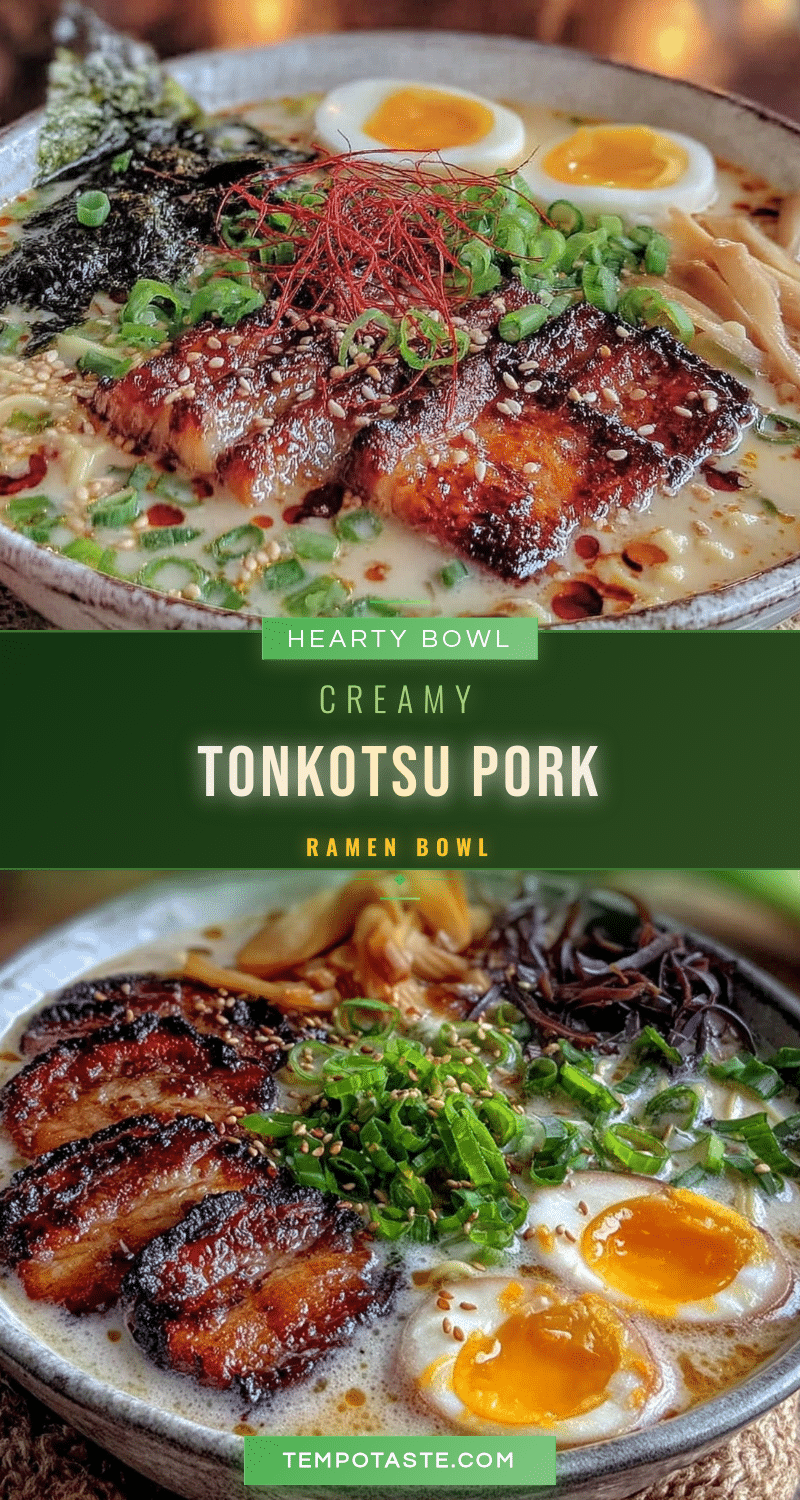
Creamy Tonkotsu Style Pork Ramen Bowl Recipe

A rich and comforting homemade ramen featuring a creamy, collagen-rich pork bone broth, tender pork belly, fresh noodles, and soft boiled eggs. This recipe is approachable and perfect for cozy nights.
- Prep Time: 30 minutes
- Cook Time: 4 hours 30 minutes
- Total Time: 5 hours
- Yield: 4 servings 1x
- Category: Main Course
- Cuisine: Japanese
Ingredients
- 3 pounds pork bones (preferably neck bones or trotters)
- 1 pound pork belly slices
- Fresh ramen noodles (or fresh egg noodles)
- 6–8 garlic cloves, smashed
- 3-inch piece ginger, sliced
- 4–5 green onions/scallions, chopped
- 3 tablespoons white miso paste
- 1/4 cup soy sauce (60 ml)
- 2 tablespoons mirin
- Salt to taste
- 4 large eggs
- 1 teaspoon sesame oil
- Optional toppings: bamboo shoots, nori sheets, corn kernels, chili oil, pickled ginger
Instructions
- Rinse the pork bones under cold water. Place them in a large stockpot and cover with cold water. Bring to a boil over high heat and boil for 10 minutes to remove impurities. Drain and rinse bones thoroughly.
- Return the cleaned bones to the pot and cover with fresh water (about 12 cups / 3 liters). Add smashed garlic and sliced ginger. Bring to a boil, then reduce heat to a gentle simmer. Let it simmer uncovered for at least 3 hours, preferably 4–5 hours. Occasionally skim off any scum or fat that rises to the surface.
- Score the pork belly skin lightly. In a hot pan, sear the pork belly on all sides until golden and crisp. Remove and set aside. Alternatively, braise pork belly in soy sauce, mirin, and water for 1 hour.
- Place eggs in boiling water for exactly 7 minutes. Transfer eggs immediately to an ice bath to stop cooking. Peel carefully and set aside.
- After simmering, remove bones, garlic, and ginger by straining the broth through a fine mesh sieve into a clean pot. Stir in miso paste, soy sauce, and mirin. Taste and adjust salt as needed.
- Boil fresh ramen noodles according to package instructions (usually 2–3 minutes). Drain and rinse under cold water briefly to stop cooking and prevent clumping.
- Divide noodles into serving bowls. Ladle hot broth over noodles. Top with sliced pork belly, halved soft boiled eggs, chopped scallions, and optional toppings. Drizzle with sesame oil.
Notes
Patience is key for the creamy broth; simmer gently and skim often to keep broth clear. Soft boiled eggs should be cooked exactly 7 minutes for perfect yolk texture. For gluten-free, substitute soy sauce with tamari. Broth can be made ahead and frozen without noodles or toppings.
Nutrition
- Serving Size: 1 bowl
- Calories: 650
- Fat: 30
- Carbohydrates: 50
- Protein: 35
Keywords: tonkotsu ramen, pork ramen, homemade ramen, creamy ramen, Japanese soup, pork bone broth, ramen recipe