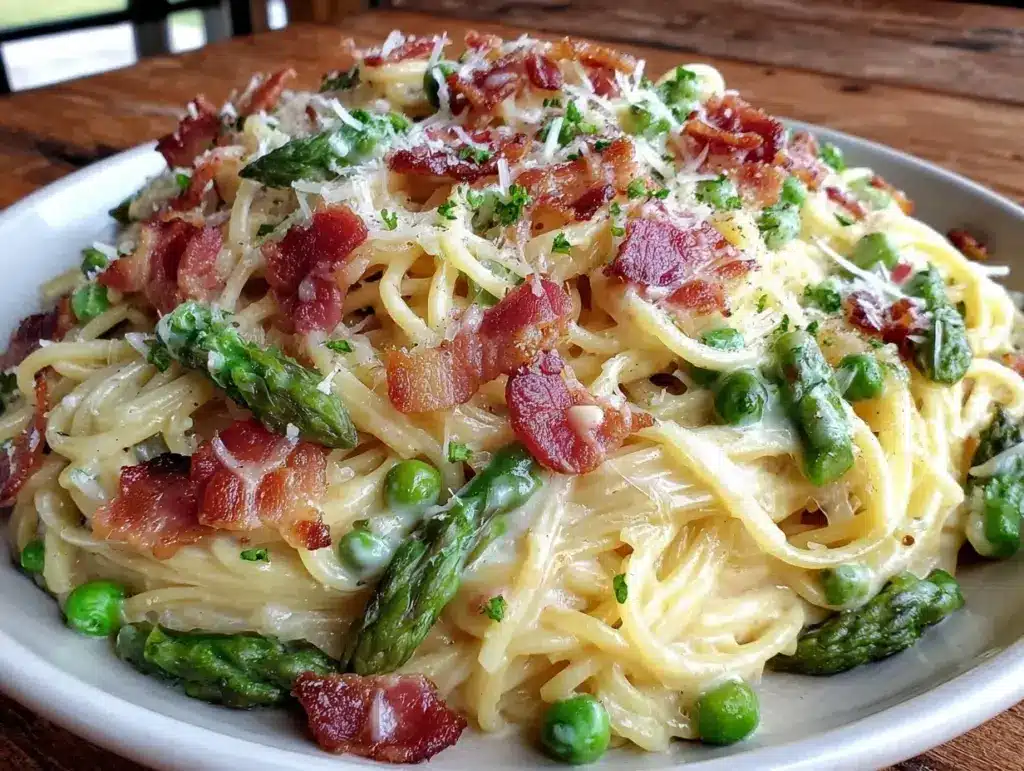
“You’ve got to try this,” my neighbor said one breezy afternoon, waving over a plate of pasta that smelled like sunshine wrapped in bacon. Honestly, I was skeptical—carbonara feels like one of those recipes you either nail or completely mess up. But the way those crispy pancetta bits crunched against the fresh snap peas and tender asparagus? It turned my usual quick dinner routine upside down. The spring vegetables made it feel light and lively, perfect for when you want something comforting yet fresh.
I found myself making this savory spring carbonara over and over that week, each time tweaking little bits—the texture of the pancetta, the timing of the peas, even the egg mixture’s creaminess. It was like rediscovering a classic with a garden-fresh twist, and honestly, it became my go-to after a long day when I needed a meal that felt like a gentle nudge back to happy. What struck me was how the ingredients, simple and real, came together in a way that made me pause and savor the moment. No fluff, just honest flavors that linger.
That quiet realization—that food can be both fuss-free and soulful—is why this recipe stuck. It’s the kind of dish that feels like a hug from an old friend, but with a springtime breeze tossed in.
Why You’ll Love This Recipe
After testing this savory spring carbonara countless times, I can say it’s a recipe that delivers on all fronts—flavor, ease, and that special something that makes you want seconds. Here’s why it stands out:
- Quick & Easy: Ready in just about 30 minutes, making it perfect for busy weeknights or when unexpected guests drop by.
- Simple Ingredients: No need for fancy or hard-to-find items; most are pantry staples, plus whatever fresh vegetables you have on hand.
- Perfect for Spring: The crisp veggies bring a lively freshness that brightens the creamy, savory base.
- Crowd-Pleaser: The crispy pancetta adds that irresistible crunch, and even picky eaters tend to ask for more.
- Unbelievably Delicious: The silky egg sauce clings perfectly to each strand of pasta, while the veggies keep things from feeling heavy.
What really sets this apart is the way the pancetta crisps up—think golden, crackling bits that add a smoky punch without overpowering the delicate spring veggies. Plus, the method of tempering the egg and cheese mixture keeps it creamy but not scrambled, which honestly took a few tries to get just right. It’s comfort food with a fresh spin, ideal for impressing guests or simply treating yourself after a long day.
What Ingredients You Will Need
This savory spring carbonara uses straightforward, wholesome ingredients to create a dish bursting with flavor and texture. Most are easy to find in your local grocery store or already sitting in your kitchen.
- Spaghetti: 12 ounces (340 grams) of dried spaghetti works perfectly; you can swap in fettuccine or linguine for a slight twist.
- Pancetta: 6 ounces (170 grams) diced pancetta for that essential crispy, salty bite (I like using Volpi brand for texture).
- Fresh Asparagus: 1 cup, trimmed and cut into 1-inch pieces (adds a subtle crunch and freshness).
- Snap Peas: 1 cup, trimmed (spring’s sweetest little gems).
- Garlic: 2 cloves, minced (for a gentle savory background).
- Large Eggs: 3, room temperature (the base for that creamy sauce).
- Parmesan Cheese: 1 cup finely grated (use Parmigiano-Reggiano if you can—it makes a difference).
- Olive Oil: 2 tablespoons (extra virgin for flavor, but any neutral oil works).
- Freshly Ground Black Pepper: To taste (don’t be shy here; it adds a lovely warmth).
- Salt: For pasta water and seasoning (adjust carefully since pancetta is already salty).
If you want to swap things up, almond flour can be used as a gluten-free pasta substitute, or you can try dairy-free cheese and coconut yogurt as a creamy alternative. When asparagus is out of season, fresh green beans or zucchini ribbons do the trick just fine. In fact, if you’re interested in a slightly creamier twist, adding a splash of cream (about ¼ cup) can make the sauce silkier without losing that authentic carbonara vibe.
Equipment Needed
- Large Pot: For boiling pasta; a wide pot helps prevent sticking.
- Large Skillet or Sauté Pan: For crisping pancetta and sautéing vegetables; a heavy-bottomed pan works best to avoid hot spots.
- Mixing Bowl: To whisk eggs and cheese together.
- Tongs or Pasta Fork: To toss pasta efficiently with the sauce and ingredients.
- Fine Grater: For freshly grating Parmesan cheese—fresh is always better.
- Colander: To drain pasta quickly while reserving some pasta water.
If you don’t have a heavy skillet, a nonstick pan will do with a little extra care to prevent sticking. I’ve found that a silicone-tipped tong is gentler on delicate pasta and helps keep everything together when tossing. Also, keeping a small ladle handy for reserved pasta water makes all the difference when adjusting sauce consistency.
Preparation Method
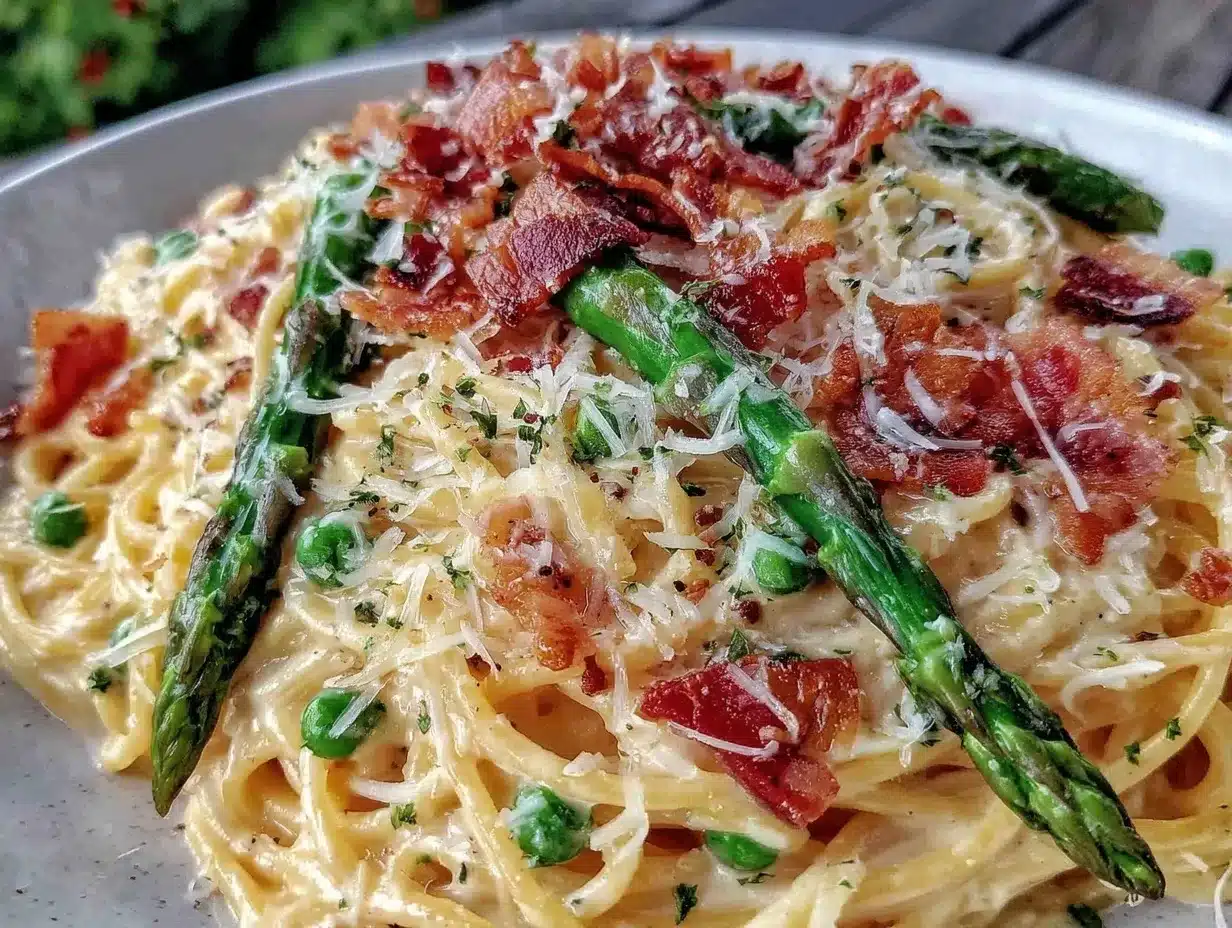
- Cook the pasta: Bring a large pot of salted water to a boil. Add 12 ounces (340 grams) of spaghetti and cook until al dente, about 8-9 minutes. Reserve 1 cup of pasta water before draining, then drain the pasta and set aside.
- Crisp the pancetta: While pasta cooks, heat 2 tablespoons olive oil in a large skillet over medium heat. Add 6 ounces (170 grams) diced pancetta and cook until crispy and golden, about 5-7 minutes. Use a slotted spoon to transfer pancetta to a paper-towel-lined plate, leaving rendered fat in the pan.
- Sauté vegetables: Add 1 cup trimmed asparagus pieces and 1 cup snap peas to the skillet with pancetta fat. Sauté for 3-4 minutes until tender-crisp. Toss in 2 minced garlic cloves and cook for another 30 seconds until fragrant.
- Prepare the egg mixture: In a mixing bowl, whisk together 3 large eggs and 1 cup finely grated Parmesan cheese until smooth. Add a generous grind of black pepper.
- Combine pasta and vegetables: Add the drained pasta to the skillet with veggies and toss to combine. Remove the skillet from heat to prevent scrambling the eggs.
- Temper and add the sauce: Slowly pour the egg and cheese mixture over the pasta, tossing quickly with tongs to coat evenly. Add reserved pasta water a little at a time (start with ¼ cup) to loosen the sauce and help it cling to the noodles, creating a creamy texture.
- Finish with pancetta and seasoning: Stir in the crispy pancetta. Taste and add salt if needed, keeping in mind pancetta’s saltiness. Add more black pepper to taste.
- Serve immediately: Divide among plates and, if desired, sprinkle extra Parmesan on top.
Note: The key to creamy carbonara is removing the pan from heat before adding the egg mixture to avoid scrambling. Tossing quickly while adding reserved pasta water helps create that silky sauce that clings beautifully to each strand.
Cooking Tips & Techniques
A few tricks I learned the hard way make all the difference in this savory spring carbonara recipe. First, patience with the pancetta is crucial—low and slow yields those perfect crispy bits without burning. I once rushed this step and ended up with a bitter flavor that no amount of cheese could fix.
When mixing eggs and cheese, room temperature ingredients help them blend smoother, avoiding any clumps. Also, don’t underestimate the power of reserved pasta water; it’s pure gold for adjusting sauce consistency and keeping everything silky without adding cream.
Timing matters too—adding the egg mixture off the heat and tossing vigorously prevents scrambled eggs, which is a common misstep. I recommend having everything prepped before pasta finishes cooking so you can move quickly once it’s drained.
For multitasking, start crisping pancetta first, then boil pasta while prepping vegetables and egg mixture. This way, everything converges perfectly without overcooking or cooling down. Remember, this dish is best enjoyed fresh, so resist the urge to let it sit too long.
Variations & Adaptations
This spring carbonara adapts beautifully depending on your mood, dietary needs, or what’s fresh at the market. Here are some ideas:
- Vegetarian Version: Skip the pancetta and add sautéed mushrooms or smoked tofu for umami depth.
- Seasonal Veggies: Swap asparagus and snap peas for zucchini ribbons, peas, or even fresh fava beans for a different springtime vibe.
- Gluten-Free: Use gluten-free pasta to keep the dish accessible without losing flavor.
- Spicy Kick: Add a pinch of red pepper flakes when sautéing garlic for a subtle heat.
- Personal Twist: I once added a handful of chopped fresh herbs—basil and parsley—right at the end, which brightened the dish beautifully.
For a richer sauce, some friends like to add a splash of cream or swap Parmesan for Pecorino Romano. Adjust salt accordingly if you try these tweaks. You might also try roasting the vegetables instead of sautéing for a deeper flavor profile.
Serving & Storage Suggestions
Serve this savory spring carbonara hot, straight from the pan, garnished with an extra grating of Parmesan and a twist of black pepper. It pairs wonderfully with a simple green salad dressed in lemon vinaigrette or a crusty loaf of bread to soak up every last bit of sauce.
If you have leftovers, store them in an airtight container in the refrigerator for up to 2 days. Reheat gently in a skillet over low heat, adding a splash of water or broth to revive the sauce’s creaminess. Microwave reheating tends to dry it out—so the stove method is best.
Interestingly, the flavors tend to meld and deepen overnight, making the next-day meal surprisingly satisfying. Just be sure to add a fresh sprinkle of cheese before serving again.
Nutritional Information & Benefits
Each serving of this savory spring carbonara provides a balanced mix of protein from the eggs and pancetta, healthy fats from olive oil, and fiber plus vitamins from fresh vegetables. It clocks in at approximately 550 calories per serving, depending on portion size.
The asparagus and snap peas offer vitamin C and antioxidants, while the eggs provide essential amino acids and choline for brain health. Using fresh Parmesan adds calcium and a touch of probiotics if unpasteurized.
For those watching carbs, using a smaller pasta portion or swapping in spiralized veggies can reduce the carb load while keeping the essence of the dish intact. Note that pancetta contains sodium and fat, so moderation is key for heart health-conscious eaters.
Conclusion
This savory spring carbonara recipe with crispy pancetta and fresh vegetables is a straightforward yet memorable way to bring a little springtime magic to your dinner table. It’s approachable, fast, and filled with flavors that feel both classic and fresh.
Don’t hesitate to make it your own—swap veggies, tweak seasoning, or add your favorite herbs. For me, it’s become a quiet weekday ritual that reminds me good food doesn’t have to be complicated to be satisfying.
If you’ve tried this recipe, I’d love to hear how you made it your own or what vegetable swaps you enjoyed. Sharing your spin helps keep the kitchen conversations alive and delicious.
FAQs
Can I use bacon instead of pancetta?
Absolutely! Bacon works well, though it’s usually smokier and less fatty. Cook it until crispy, then proceed as usual.
How do I prevent the eggs from scrambling?
Remove the pan from heat before adding the egg and cheese mixture and toss quickly. Adding reserved pasta water gradually helps create a smooth sauce.
What if I don’t have snap peas or asparagus?
Green beans, zucchini ribbons, or fresh peas make great substitutes and keep the spring freshness.
Is this recipe freezer-friendly?
Carbonara is best enjoyed fresh, as freezing can affect texture and sauce creaminess. Leftovers keep well in the fridge for 1-2 days.
Can I make this vegan?
For a vegan version, use plant-based pasta, replace pancetta with smoked tempeh or mushrooms, and swap eggs and cheese for vegan alternatives like cashew cream and nutritional yeast.
For a cozy creamy soup to pair on cooler evenings, you might enjoy the creamy sweet corn chowder with crispy bacon. Or if you’re in the mood for something equally comforting but different, the creamy one-pot truffle mushroom pasta offers a luxurious mushroom spin that complements spring flavors beautifully.
Pin This Recipe!
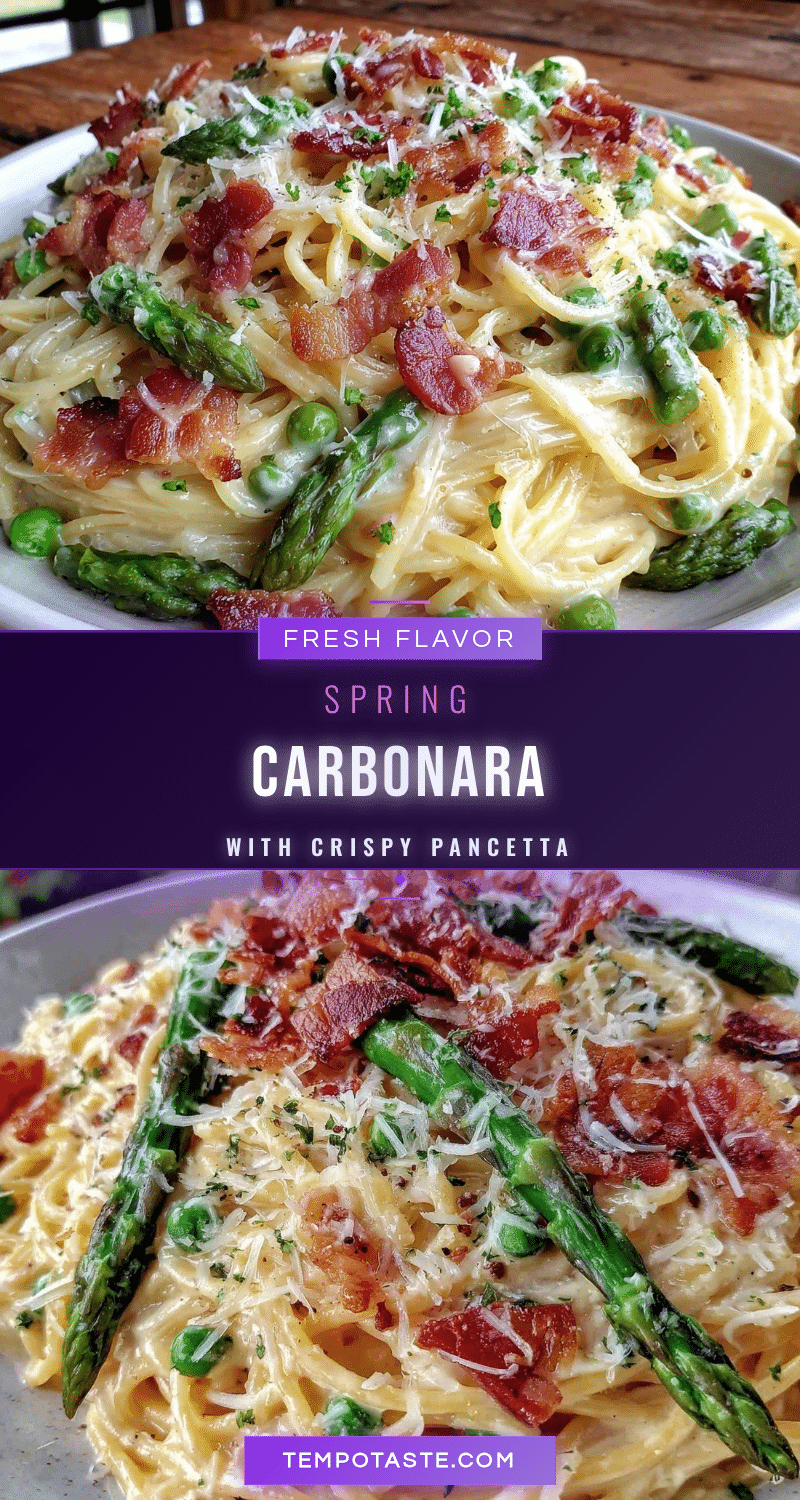
Savory Spring Carbonara Recipe with Crispy Pancetta and Fresh Veggies

A fresh and comforting carbonara featuring crispy pancetta and spring vegetables like asparagus and snap peas, delivering a creamy, flavorful pasta dish perfect for quick weeknight dinners.
- Prep Time: 10 minutes
- Cook Time: 20 minutes
- Total Time: 30 minutes
- Yield: 4 servings 1x
- Category: Main Course
- Cuisine: Italian
Ingredients
- 12 ounces (340 grams) dried spaghetti
- 6 ounces (170 grams) diced pancetta
- 1 cup fresh asparagus, trimmed and cut into 1-inch pieces
- 1 cup snap peas, trimmed
- 2 cloves garlic, minced
- 3 large eggs, room temperature
- 1 cup finely grated Parmesan cheese
- 2 tablespoons olive oil
- Freshly ground black pepper, to taste
- Salt, for pasta water and seasoning
Instructions
- Bring a large pot of salted water to a boil. Add 12 ounces (340 grams) of spaghetti and cook until al dente, about 8-9 minutes. Reserve 1 cup of pasta water before draining, then drain the pasta and set aside.
- While pasta cooks, heat 2 tablespoons olive oil in a large skillet over medium heat. Add 6 ounces (170 grams) diced pancetta and cook until crispy and golden, about 5-7 minutes. Use a slotted spoon to transfer pancetta to a paper-towel-lined plate, leaving rendered fat in the pan.
- Add 1 cup trimmed asparagus pieces and 1 cup snap peas to the skillet with pancetta fat. Sauté for 3-4 minutes until tender-crisp. Toss in 2 minced garlic cloves and cook for another 30 seconds until fragrant.
- In a mixing bowl, whisk together 3 large eggs and 1 cup finely grated Parmesan cheese until smooth. Add a generous grind of black pepper.
- Add the drained pasta to the skillet with veggies and toss to combine. Remove the skillet from heat to prevent scrambling the eggs.
- Slowly pour the egg and cheese mixture over the pasta, tossing quickly with tongs to coat evenly. Add reserved pasta water a little at a time (start with ¼ cup) to loosen the sauce and help it cling to the noodles, creating a creamy texture.
- Stir in the crispy pancetta. Taste and add salt if needed, keeping in mind pancetta’s saltiness. Add more black pepper to taste.
- Serve immediately, optionally garnished with extra Parmesan cheese.
Notes
Remove the pan from heat before adding the egg mixture to avoid scrambling. Toss quickly while adding reserved pasta water gradually to create a silky sauce. Use room temperature eggs and cheese for smoother blending. Pancetta should be cooked low and slow for perfect crispiness. Leftovers keep well refrigerated for up to 2 days; reheat gently on stovetop with a splash of water or broth.
Nutrition
- Serving Size: 1 plate (approximate
- Calories: 550
- Sugar: 4
- Sodium: 700
- Fat: 28
- Saturated Fat: 9
- Carbohydrates: 50
- Fiber: 4
- Protein: 25
Keywords: carbonara, spring carbonara, pancetta, asparagus, snap peas, pasta, quick dinner, creamy sauce, easy recipe