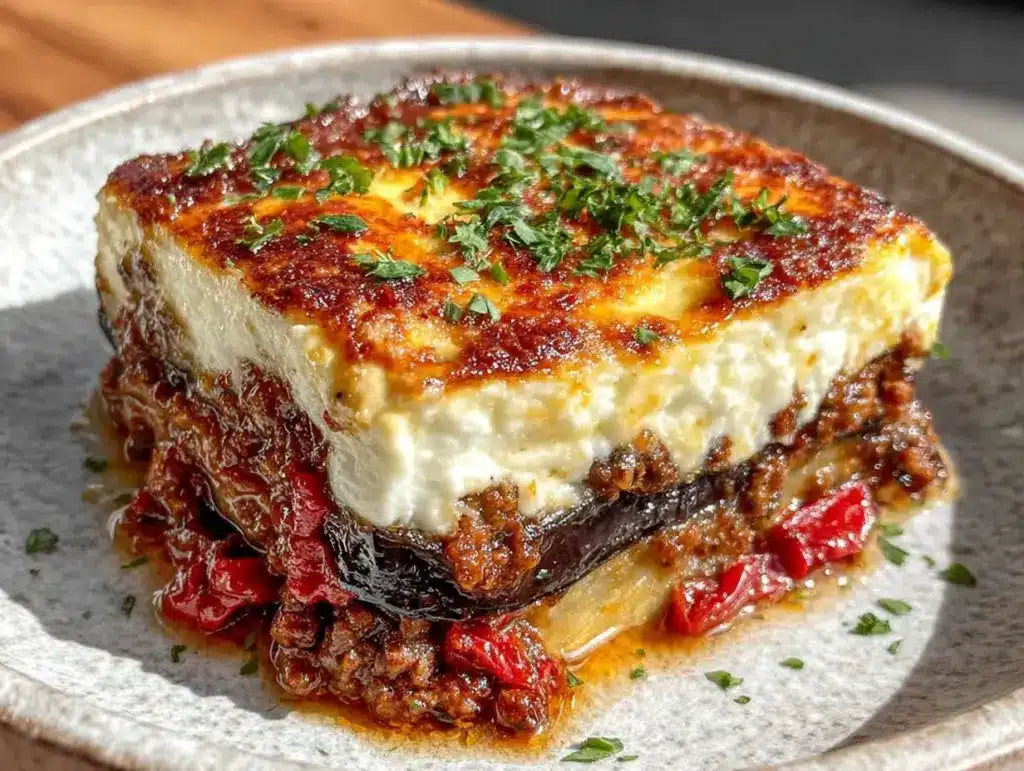
The smell of warm, creamy béchamel mingling with roasted eggplant and spiced meat has a way of pulling me right back to my grandmother’s kitchen. Honestly, Greek moussaka isn’t just a dish—it’s a comforting hug in casserole form. I first tackled this classic creamy eggplant casserole years ago, fumbling through layers of eggplant and béchamel sauce, but after a dozen tries (and some burnt edges), I nailed a version that’s both authentic and surprisingly simple to make. If you’ve ever been intimidated by moussaka, trust me, this Greek moussaka recipe is going to change your mind.
This recipe blends tender slices of eggplant with a rich, savory meat sauce, topped off with a luscious, creamy béchamel that’s just the right thickness. It’s ideal for cozy dinners, impressing guests without stress, or those weekends when you want to indulge but keep things wholesome. Plus, it’s versatile enough to tweak for dietary preferences. As a home cook who’s tested this recipe across seasons and dinner parties, I can vouch for its reliability and crowd-pleasing flavor. Let’s jump into making an irresistible Greek moussaka that feels like a warm Mediterranean getaway on your plate.
Why You’ll Love This Recipe
- Classic Comfort Food: This Greek moussaka recipe honors tradition with rich layers and comforting flavors that never disappoint.
- Easy Step-by-Step Instructions: Even if you’re new to making béchamel or layering casseroles, these clear steps guide you through smoothly.
- Simple, Accessible Ingredients: Most items are pantry staples or easy to find—eggplant, ground meat, tomatoes, and dairy.
- Perfect for Family Meals or Entertaining: It’s hearty and filling, making it ideal for feeding a crowd or meal prepping for the week.
- Rich, Creamy Texture: The velvety béchamel sauce sets this apart from other casseroles, giving it that signature creamy finish you crave.
- Flavor Balance: Spices like cinnamon and nutmeg add warmth without overpowering the fresh eggplant and tomato base.
What makes this recipe different? I blend cottage-cheese-style Greek yogurt into the béchamel for a subtle tang and lighter texture—trust me, it works wonders! Plus, I’ve fine-tuned the meat sauce seasoning to avoid the usual heaviness, so you get a rich flavor that’s never greasy. This isn’t just a moussaka recipe; it’s the one I keep coming back to, the one that makes you sigh after the first bite.
What Ingredients You Will Need
This Greek moussaka recipe uses simple, wholesome ingredients to deliver bold flavor and satisfying texture without fuss. Most of these are easy to find, and I’ve included some substitutions to fit your pantry or dietary needs.
- For the Eggplant Layers:
- 3 large eggplants (about 2 lbs / 900 g), sliced into ½-inch rounds
- Salt (for sweating eggplant to reduce bitterness)
- Olive oil, for brushing and frying (extra virgin preferred for flavor)
- For the Meat Sauce:
- 1 lb (450 g) ground beef or lamb (lamb adds authenticity)
- 1 medium onion, finely chopped
- 2 garlic cloves, minced
- 1 can (14 oz / 400 g) crushed tomatoes
- 2 tbsp tomato paste
- ½ cup (120 ml) red wine (optional but adds depth)
- 1 tsp ground cinnamon
- ½ tsp ground allspice
- Salt and freshly ground black pepper, to taste
- 2 tbsp fresh parsley, chopped (optional)
- For the Béchamel Sauce:
- 4 tbsp unsalted butter
- 4 tbsp all-purpose flour (or gluten-free blend)
- 4 cups (1 liter) whole milk, warmed
- 1 cup (240 g) Greek yogurt (full-fat, plain)
- 2 large eggs, beaten
- ¼ tsp freshly grated nutmeg
- Salt and white pepper, to taste
- ½ cup (50 g) grated Parmesan cheese (or Kefalotyri if you want to be traditional)
Ingredient tips: Look for firm, small-curd cottage cheese style Greek yogurt for best béchamel texture. If dairy-free, swap milk and yogurt with unsweetened almond or oat milk and coconut yogurt. For a vegetarian twist, replace meat with lentils or mushrooms.
Equipment Needed
- A large skillet or frying pan for cooking the meat sauce and frying eggplant slices. A non-stick pan is handy here.
- A baking dish, approximately 9×13 inches (23×33 cm), to layer and bake the moussaka.
- A medium saucepan to prepare the béchamel sauce.
- A whisk for smooth béchamel—honestly, a balloon whisk works best to avoid lumps.
- A sharp knife and cutting board for prepping vegetables.
- An oven mitt or gloves to safely handle hot pans and dishes.
If you don’t have a non-stick pan, a well-seasoned cast iron skillet or stainless steel pan works fine—just keep an eye on the eggplant so it doesn’t stick. For béchamel, any heavy-bottomed saucepan helps prevent scorching. I’ve made this recipe with all kinds of gear, and while a stand mixer isn’t necessary, a hand mixer can speed up whisking the eggs into the sauce.
Detailed Preparation Method
- Prepare the Eggplant: Slice the eggplants into ½-inch (1.3 cm) thick rounds. Lay them out on a baking sheet and sprinkle both sides with salt. Let them sit for 30 minutes to draw out moisture and bitterness. Then, rinse and pat dry with paper towels.
- Cook the Eggplant: Brush each slice with olive oil on both sides. Heat a skillet over medium heat and fry the slices in batches until golden brown, about 3 minutes per side. Alternatively, roast them at 425°F (220°C) for 20 minutes, flipping halfway. Set aside on paper towels to drain excess oil.
- Make the Meat Sauce: In the same skillet, add a drizzle of olive oil and sauté the chopped onion until translucent (about 5 minutes). Add the garlic and cook for 1 minute. Add ground meat and cook until browned, breaking it up with a spoon.
- Stir in tomato paste, crushed tomatoes, and red wine (if using). Add cinnamon, allspice, salt, and pepper. Simmer on low for 25-30 minutes, stirring occasionally, until thickened. Stir in fresh parsley at the end, then remove from heat.
- Prepare the Béchamel Sauce: Melt butter in a medium saucepan over medium heat. Whisk in flour and cook for 2 minutes to form a roux (it should smell slightly nutty, not burnt). Gradually add warm milk, whisking constantly to avoid lumps.
- Cook, whisking, until the sauce thickens and coats the back of a spoon (about 6-8 minutes). Remove from heat and stir in Greek yogurt, nutmeg, salt, and white pepper.
- Temper the beaten eggs by adding a few spoonfuls of the béchamel into them, whisking constantly. Then slowly whisk the egg mixture back into the sauce (to avoid scrambled eggs). Stir in half the Parmesan cheese.
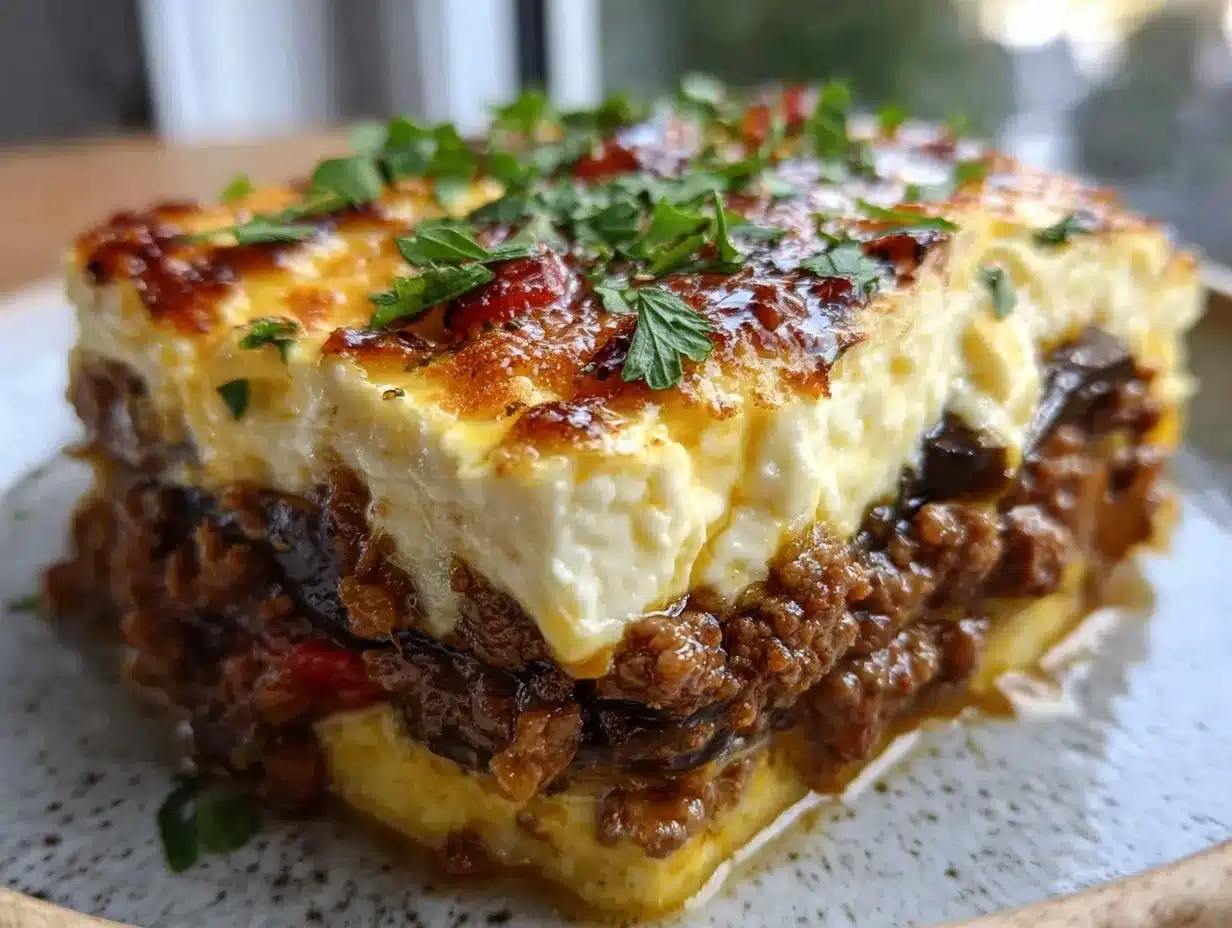
- Assemble the Moussaka: Preheat oven to 350°F (175°C). In a greased baking dish, layer half the eggplant slices, then spread all the meat sauce evenly. Add the remaining eggplant on top.
- Pour the béchamel sauce evenly over the top layer, smoothing it out with a spatula. Sprinkle the remaining Parmesan cheese over the béchamel.
- Bake: Bake uncovered for 45-50 minutes, until the top is golden and bubbling. Let the moussaka cool for at least 20 minutes before slicing—it helps the layers set beautifully.
Pro tip: Don’t skip the resting time! Cutting hot moussaka can be messy, but waiting lets the flavors marry and the béchamel firm up nicely.
Cooking Tips & Techniques
Making Greek moussaka can seem intimidating because of the layers and sauces, but a few tricks make it manageable and delicious every time.
- Sweating the Eggplant: Salting the eggplant slices removes bitterness and excess moisture. This step prevents soggy layers and improves flavor.
- Even Cooking: Fry or roast eggplant slices evenly to get a tender but firm texture that holds up under the sauce.
- Meat Sauce Simmering: Letting the meat sauce simmer low and slow deepens flavors. If you’re short on time, at least 20 minutes is crucial.
- Béchamel Sauce Smoothness: Whisk continuously when adding milk to the roux. If lumps form, strain the sauce or use an immersion blender.
- Tempering Eggs: Always temper eggs with a little warm sauce before mixing fully to avoid scrambled bits.
- Resting Time: Letting moussaka rest after baking is key for clean slices and perfect layering.
Over the years, I learned that patience with each step pays off in flavor and texture. Also, don’t rush the béchamel—rushing leads to lumps or curdling. And if you want, you can multitask by prepping the meat sauce while the eggplant sweats—efficient and smart!
Variations & Adaptations
This Greek moussaka recipe is flexible enough to suit many tastes and dietary needs without losing its soul.
- Vegetarian Version: Swap the ground meat for sautéed mushrooms, lentils, or a mix of both. Add a bit of smoked paprika to mimic that meaty depth.
- Gluten-Free: Use a gluten-free flour blend in the béchamel roux. Ensure your tomato paste and other canned ingredients are gluten-free.
- Dairy-Free: Replace butter with olive oil, use almond or oat milk for béchamel, and swap Greek yogurt with coconut yogurt. Nutritional yeast can add some cheesy notes.
- Seasonal Spin: In summer, add layers of zucchini or thinly sliced potatoes alongside or instead of eggplant for variety.
- Spice It Up: Add a pinch of cayenne or chili flakes to the meat sauce for a subtle heat kick.
One time, I tried a lamb and beef combo with smoked paprika and nutmeg for a more robust flavor, and it was a hit at a dinner party. Feel free to experiment, but keep the béchamel creamy and smooth—that’s the heart of this casserole.
Serving & Storage Suggestions
Serve Greek moussaka warm or at room temperature—both ways taste fantastic. I like to garnish with fresh parsley or a sprinkle of extra Parmesan. It pairs beautifully with a crisp Greek salad, crusty bread, and a glass of red wine or chilled ouzo for an authentic touch.
Store leftovers covered in the refrigerator for up to 3 days. For longer storage, freeze portions wrapped tightly in plastic wrap and foil for up to 2 months. When reheating, thaw overnight in the fridge, then warm in a 350°F (175°C) oven until heated through to keep that golden béchamel crust intact.
Flavors meld beautifully after a day, so moussaka often tastes even better the next day. Just remember to let it come to room temperature before reheating to avoid drying out.
Nutritional Information & Benefits
This Greek moussaka recipe provides a balanced mix of protein, healthy fats, and fiber. The eggplant adds antioxidants and dietary fiber, supporting digestion and heart health. Ground beef or lamb offers essential iron and B vitamins, while the béchamel sauce delivers calcium and protein from milk and yogurt.
Per serving (based on 8 servings), the dish roughly contains:
| Calories | 350-400 kcal |
|---|---|
| Protein | 22-25 g |
| Fat | 22-25 g (mostly from olive oil and dairy) |
| Carbohydrates | 15-18 g |
| Fiber | 4-5 g |
This recipe can be adapted for gluten-free, low-carb, or dairy-free diets with simple swaps, making it accessible for many dietary needs. As someone mindful of balanced meals, I appreciate that this dish satisfies both cravings and nutrition.
Conclusion
Greek moussaka is one of those dishes that’s truly worth the effort. With layers of tender eggplant, savory meat sauce, and that creamy béchamel topping, it’s a comforting, soulful meal that brings a bit of Greece to your table. Whether you’re cooking for family, friends, or just treating yourself, this classic creamy eggplant casserole will impress and satisfy.
Feel free to tweak the spices, swap ingredients, or add your personal flair! I love how this recipe lets you make it your own while keeping that authentic heart. When you try it, don’t forget to share your experience or any fun variations you discover—I always love hearing from fellow food lovers. Happy cooking and καλό όρεξη!
FAQs
What is the best way to prevent eggplant from becoming soggy in moussaka?
Salting the eggplant slices and letting them sit for about 30 minutes helps draw out moisture and reduce bitterness. After rinsing, pat them dry before frying or roasting to keep the layers firm.
Can I make Greek moussaka ahead of time?
Absolutely! Moussaka actually tastes better the next day as the flavors meld. Assemble and bake it, then refrigerate overnight. Reheat in the oven before serving for best results.
Is there a vegetarian alternative to the meat sauce?
Yes, you can replace the ground meat with sautéed mushrooms, lentils, or a mix of both. Adding spices like smoked paprika can help mimic the depth of flavor from meat.
How do I make the béchamel sauce smooth and lump-free?
Whisk continuously when adding warm milk to the roux. If lumps form, strain the sauce or blend it gently with an immersion blender. Temper eggs by adding a little hot sauce before mixing fully to avoid scrambling.
Can Greek moussaka be frozen?
Yes! Freeze leftovers in airtight containers for up to 2 months. Thaw overnight in the fridge and reheat in the oven to maintain the creamy texture and golden top.
Pin This Recipe!
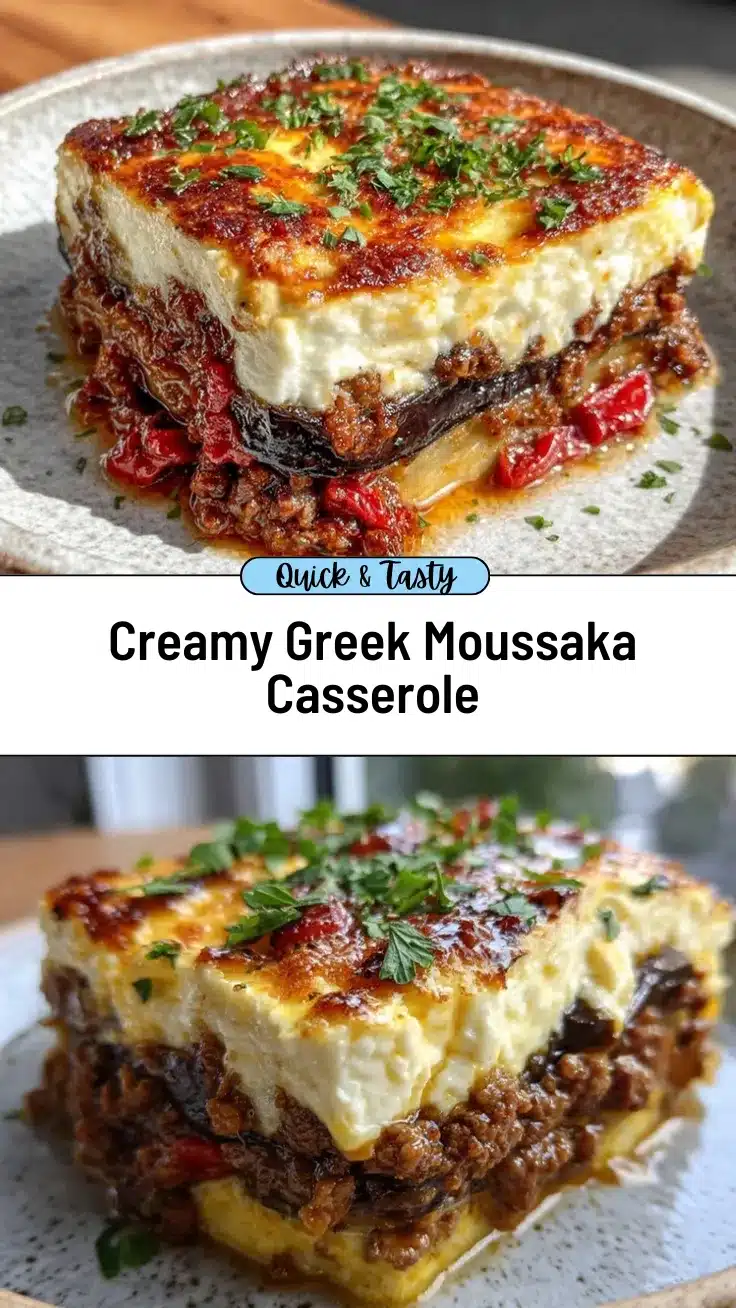
Greek Moussaka Recipe Easy Step-by-Step Classic Creamy Eggplant Casserole

A comforting classic Greek casserole featuring layers of tender eggplant, savory meat sauce, and a rich, creamy béchamel topping. This recipe is authentic, simple to make, and perfect for family meals or entertaining.
- Prep Time: 45 minutes
- Cook Time: 50 minutes
- Total Time: 1 hour 35 minutes
- Yield: 8 servings 1x
- Category: Main Course
- Cuisine: Greek
Ingredients
- 3 large eggplants (about 2 lbs / 900 g), sliced into ½-inch rounds
- Salt (for sweating eggplant to reduce bitterness)
- Olive oil, for brushing and frying (extra virgin preferred for flavor)
- 1 lb (450 g) ground beef or lamb
- 1 medium onion, finely chopped
- 2 garlic cloves, minced
- 1 can (14 oz / 400 g) crushed tomatoes
- 2 tbsp tomato paste
- ½ cup (120 ml) red wine (optional)
- 1 tsp ground cinnamon
- ½ tsp ground allspice
- Salt and freshly ground black pepper, to taste
- 2 tbsp fresh parsley, chopped (optional)
- 4 tbsp unsalted butter
- 4 tbsp all-purpose flour (or gluten-free blend)
- 4 cups (1 liter) whole milk, warmed
- 1 cup (240 g) Greek yogurt (full-fat, plain)
- 2 large eggs, beaten
- ¼ tsp freshly grated nutmeg
- Salt and white pepper, to taste
- ½ cup (50 g) grated Parmesan cheese (or Kefalotyri)
Instructions
- Slice the eggplants into ½-inch thick rounds. Lay them out on a baking sheet and sprinkle both sides with salt. Let them sit for 30 minutes to draw out moisture and bitterness. Rinse and pat dry with paper towels.
- Brush each eggplant slice with olive oil on both sides. Heat a skillet over medium heat and fry the slices in batches until golden brown, about 3 minutes per side. Alternatively, roast them at 425°F (220°C) for 20 minutes, flipping halfway. Set aside on paper towels to drain excess oil.
- In the same skillet, add a drizzle of olive oil and sauté the chopped onion until translucent, about 5 minutes. Add garlic and cook for 1 minute. Add ground meat and cook until browned, breaking it up with a spoon.
- Stir in tomato paste, crushed tomatoes, and red wine if using. Add cinnamon, allspice, salt, and pepper. Simmer on low for 25-30 minutes, stirring occasionally, until thickened. Stir in fresh parsley at the end, then remove from heat.
- Melt butter in a medium saucepan over medium heat. Whisk in flour and cook for 2 minutes to form a roux, ensuring it smells nutty but not burnt.
- Gradually add warm milk, whisking constantly to avoid lumps. Cook and whisk until the sauce thickens and coats the back of a spoon, about 6-8 minutes.
- Remove from heat and stir in Greek yogurt, nutmeg, salt, and white pepper.
- Temper the beaten eggs by adding a few spoonfuls of the béchamel into them while whisking constantly. Slowly whisk the egg mixture back into the sauce to avoid scrambling. Stir in half the Parmesan cheese.
- Preheat oven to 350°F (175°C). In a greased 9×13 inch baking dish, layer half the eggplant slices, then spread all the meat sauce evenly. Add the remaining eggplant on top.
- Pour the béchamel sauce evenly over the top layer, smoothing it out with a spatula. Sprinkle the remaining Parmesan cheese over the béchamel.
- Bake uncovered for 45-50 minutes, until the top is golden and bubbling. Let the moussaka cool for at least 20 minutes before slicing to allow layers to set.
Notes
Salting the eggplant removes bitterness and moisture to prevent soggy layers. Temper eggs carefully to avoid scrambling in béchamel. Let moussaka rest after baking for clean slices and better flavor melding. For dairy-free, substitute milk and yogurt with unsweetened almond or oat milk and coconut yogurt. For vegetarian, replace meat with lentils or mushrooms and add smoked paprika for depth.
Nutrition
- Serving Size: 1 slice (1/8th of th
- Calories: 375
- Sugar: 7
- Sodium: 350
- Fat: 23.5
- Saturated Fat: 10
- Carbohydrates: 16.5
- Fiber: 4.5
- Protein: 23.5
Keywords: Greek moussaka, eggplant casserole, béchamel sauce, classic Greek recipe, creamy casserole, Mediterranean dish, comfort food