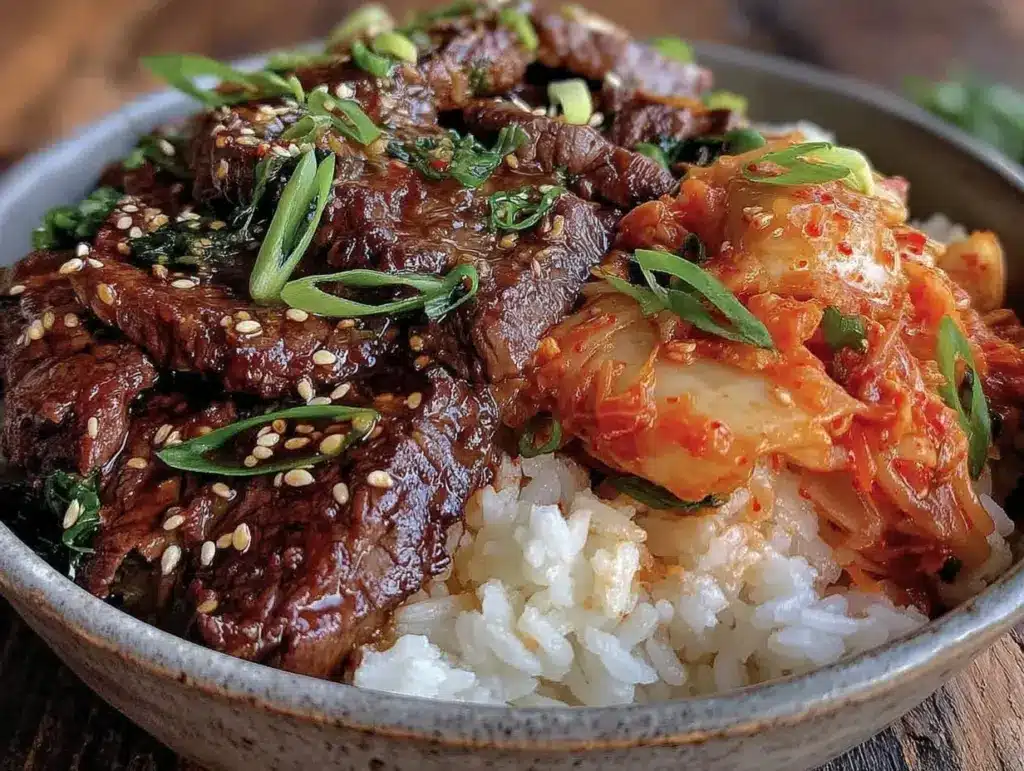
It was one of those evenings where the fridge looked bleak, and I was honestly too tired to think about elaborate cooking. I had a bit of leftover rice, a package of thinly sliced beef, and a jar of kimchi that had been hanging out in the back corner of the fridge for a while. I wasn’t sure if the flavors would really come together, but hey, Korean BBQ beef with kimchi and rice sounded promising enough, right?
So, I threw together what turned out to be this incredibly savory Korean BBQ beef bowl, mixing the spicy tang of kimchi with the sweet, garlicky marinade on the beef. The rice soaked up all those fantastic juices, making every bite a comforting explosion of flavors. I had my doubts at first—kimchi can be a tricky ingredient if you’re not used to it—but this bowl quickly became my go-to, especially on busy nights when I needed something quick but still satisfying.
Now, this recipe sticks with me not just because it’s delicious, but because it’s that perfect balance between fuss-free and full-flavored. It’s comfort food that feels a little adventurous without requiring a trip to the grocery store or hours in the kitchen. Honestly, it’s the kind of dish you find yourself making over and over—sometimes a few times a week—because it just hits the spot every single time.
Why You’ll Love This Recipe
- Quick & Easy: Comes together in under 30 minutes, perfect for busy weeknights or last-minute cravings.
- Simple Ingredients: No need for exotic items; pantry staples and a jar of kimchi are all you need.
- Perfect for Casual Dinners: Ideal for a cozy solo meal or a relaxed family dinner without complicated prep.
- Crowd-Pleaser: Whether you’re feeding kids or grown-ups, the savory-sweet combo always gets nods of approval.
- Unbelievably Delicious: The tender beef glazed in a flavorful marinade paired with tangy kimchi and fluffy rice creates a mouthwatering texture and taste.
This isn’t just another Korean BBQ beef bowl; it’s my version that nails the balance of flavors every time. The marinade is finely tuned to give you that authentic taste without overwhelming the palate. Plus, the kimchi adds that zing and crunch that turns a simple rice bowl into a memorable meal. It’s comfort food with character, and honestly, it’s the dish I turn to when I want something both satisfying and quick.
What Ingredients You Will Need
This recipe uses simple, wholesome ingredients to deliver bold flavor and satisfying texture without the fuss. Most are pantry basics, and the kimchi brings that signature punch. Here’s what you’ll need:
- For the beef and marinade:
- 1 pound (450g) thinly sliced beef ribeye or sirloin (look for well-marbled cuts for tenderness)
- 2 tablespoons soy sauce (I prefer Kikkoman for a balanced saltiness)
- 1 tablespoon brown sugar (adds subtle sweetness)
- 1 tablespoon sesame oil (toasted if possible, for that nutty aroma)
- 3 cloves garlic, minced (fresh is best!)
- 1 teaspoon grated ginger (adds a warm, spicy note)
- 1 tablespoon gochujang (Korean chili paste; adjust to taste)
- 1 tablespoon rice vinegar (for a subtle tang)
- 1 teaspoon black pepper
- For the bowl:
- 3 cups cooked white rice (short grain or jasmine works well)
- 1 cup kimchi, chopped (use your favorite brand or homemade; adds spice and crunch)
- 2 green onions, sliced thinly (for freshness and color)
- 1 tablespoon toasted sesame seeds (optional, for garnish)
- Fresh cilantro or parsley (optional, for a fresh finish)
If you want to make it gluten-free, just swap soy sauce with tamari. And if you’re sensitive to spice, reduce the gochujang or opt for a mild chili paste instead. The kimchi is the star here, so I recommend using a firm, crunchy version rather than overly fermented for the best texture contrast.
Equipment Needed
- Large skillet or cast iron pan (a heavy pan helps get a nice sear on the beef)
- Mixing bowl (for marinating the beef)
- Rice cooker or pot (to prepare the rice)
- Knife and cutting board (for slicing green onions and chopping kimchi)
- Measuring spoons (for accuracy in the marinade)
- Spatula or tongs (to stir and flip the beef)
If you don’t have a cast iron pan, any heavy-bottomed skillet will do just fine. I’ve used non-stick skillets in a pinch, but they don’t quite develop that caramelized crust on the beef. For marinating, a glass or ceramic bowl works best to avoid any metallic taste. And if you don’t own a rice cooker, no worries—just use a pot with a tight-fitting lid and keep an eye on the water ratio.
Preparation Method
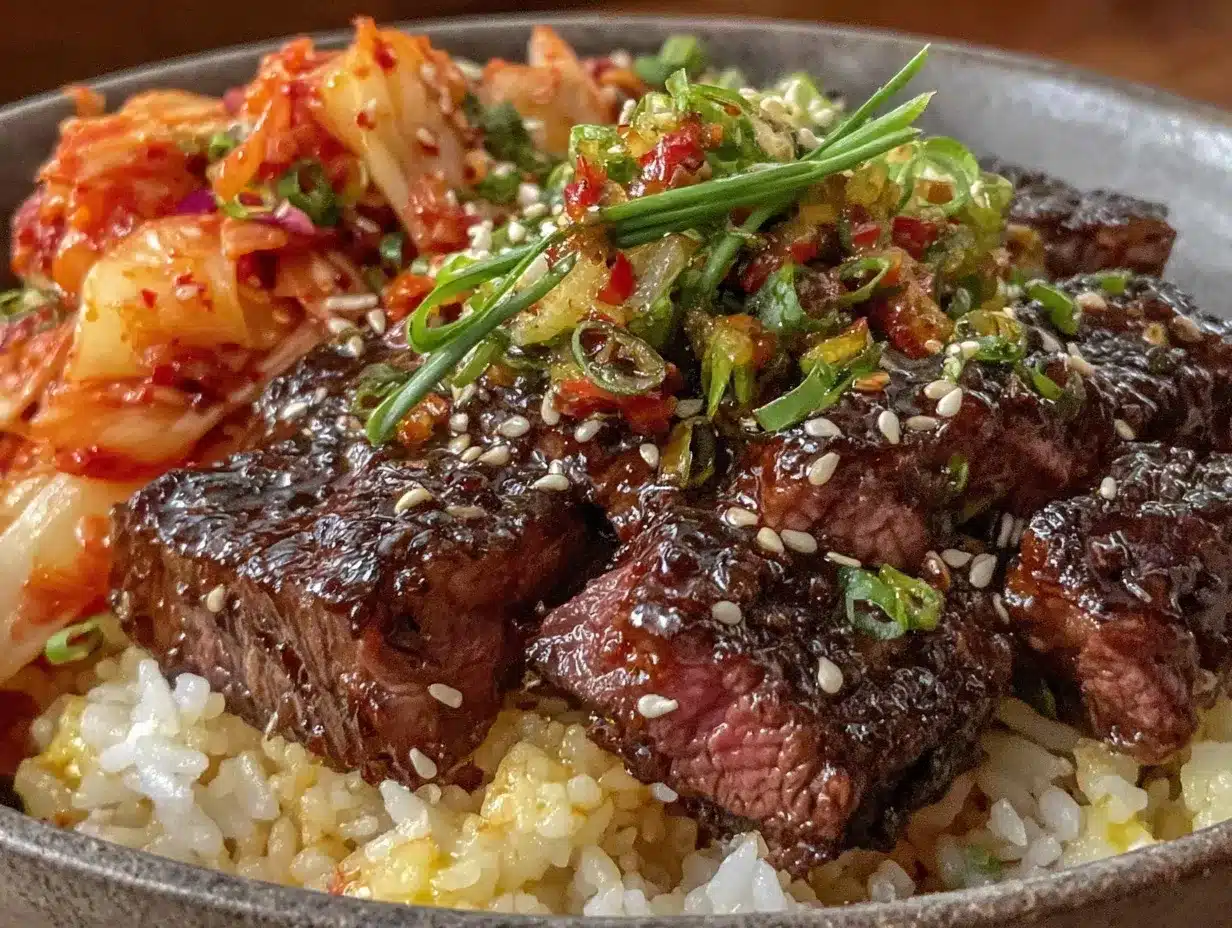
- Prepare the marinade: In a mixing bowl, combine 2 tablespoons soy sauce, 1 tablespoon brown sugar, 1 tablespoon toasted sesame oil, minced garlic, grated ginger, 1 tablespoon gochujang, rice vinegar, and black pepper. Whisk until the sugar dissolves and the mixture is smooth. (About 5 minutes)
- Marinate the beef: Add the thinly sliced beef to the marinade. Toss to coat well, making sure every piece is covered. Cover and refrigerate for at least 15 minutes or up to 1 hour. (Marinating longer tenderizes and deepens flavor)
- Cook the rice: While the beef marinates, prepare 3 cups of cooked rice according to package instructions. Fluff with a fork once done to keep it light and airy. (About 20 minutes total)
- Sauté the beef: Heat a large skillet or cast iron pan over medium-high heat until hot. Add the marinated beef in a single layer (you may need to do this in batches to avoid overcrowding). Cook for 2-3 minutes per side until nicely caramelized and cooked through. The beef should be tender and slightly sticky from the marinade. (5-7 minutes total)
- Warm the kimchi: Quickly warm the chopped kimchi in a small pan or microwave just to take the chill off—this step is optional but helps blend the flavors. Alternatively, serve it cold for a refreshing contrast.
- Assemble the bowl: Divide the cooked rice into bowls. Top each with a generous portion of the Korean BBQ beef, a scoop of kimchi, sliced green onions, and a sprinkle of toasted sesame seeds. Add fresh cilantro if desired for a bright finish.
- Final touches: Give everything a gentle mix or leave it layered for presentation. Enjoy immediately while warm and fragrant.
Tip: If the beef starts to stick, add a splash of water or a little more sesame oil to loosen the pan. The aroma should be savory with a hint of sweetness and spice—if it’s too salty, balancing with extra rice helps.
Cooking Tips & Techniques
Getting that perfect Korean BBQ beef bowl is all about timing and balance. Here are some tips I’ve learned:
- Thin slicing is key: Using thinly sliced beef ribeye or sirloin ensures quick cooking and tender bites. If you can’t find pre-sliced beef, freeze a steak for 30 minutes and slice thinly against the grain.
- Don’t overcrowd the pan: Cooking the beef in batches prevents steaming and helps develop that lovely caramelized crust—trust me, it makes a huge difference.
- Marinate just right: Too short, and the flavor won’t penetrate; too long, and the meat can get mushy. About 30 minutes hits the sweet spot.
- Use fresh garlic and ginger: They add brightness and authenticity. Avoid pre-minced from a jar if possible.
- Balance the kimchi: If your kimchi is very sour or spicy, mix in a pinch of sugar or a drizzle of honey before warming to mellow it slightly.
- Multitasking: While the beef marinates, start the rice and prep your toppings. This keeps everything moving smoothly without rush.
Honestly, my first attempt was a bit salty (lesson learned: measure soy sauce carefully), but once you get the hang of the marinade ratios, this bowl becomes a no-fail favorite.
Variations & Adaptations
One of the best things about this Korean BBQ beef bowl is how easy it is to tweak according to your taste or dietary needs:
- Vegetarian option: Swap beef for marinated tofu or mushrooms like shiitake or portobello. Use the same marinade and pan-sear until nicely browned.
- Spicy level: Adjust the gochujang amount or add fresh sliced chilies for more heat. For milder versions, reduce or omit the chili paste and rely on the kimchi for flavor.
- Grain alternatives: Use brown rice, quinoa, or cauliflower rice for a gluten-free or lower-carb twist. Each adds its own texture and nutritional profile.
- Seasonal veggies: Add quick-pickled cucumber slices, shredded carrots, or steamed broccoli for extra crunch and color.
- Personal twist: I once added a fried egg on top—runny yolk mixed with beef and kimchi? Next-level comfort.
Serving & Storage Suggestions
This Korean BBQ beef bowl is best enjoyed fresh and warm, but leftovers can be a lifesaver. Serve it right out of the pan with a side of crunchy kimchi and maybe a cold glass of Korean barley tea or a light lager for an authentic pairing.
To store, keep the beef and rice separate from the kimchi in airtight containers in the fridge. This prevents sogginess and keeps flavors vibrant. Use within 2-3 days.
When reheating, gently warm the beef and rice in a skillet or microwave, then add fresh kimchi at the end to retain its texture and brightness. Flavors meld nicely after a day or two, so leftovers might even taste better!
Nutritional Information & Benefits
This bowl packs a punch of protein from the beef and probiotics from the kimchi, which supports gut health. The sesame oil provides healthy fats, and the garlic and ginger add antioxidants and anti-inflammatory benefits. A serving has approximately 450-500 calories, with a balanced mix of carbs, protein, and fats.
Gluten-free if using tamari, and the recipe is naturally low in added sugars aside from a touch of brown sugar in the marinade. It’s a satisfying meal that’s also mindful of nutrition, making it a smart choice for those wanting flavor without heaviness.
Conclusion
The savory Korean BBQ beef bowl with kimchi and rice is one of those dishes that quickly becomes a staple because it’s just so straightforward and delicious. Its simplicity doesn’t sacrifice flavor, and the combination of sweet, spicy, and tangy hits all the right notes. I love how easy it is to customize and how it always feels like a special treat—even on the busiest nights.
Feel free to tweak the spice level or swap ingredients to fit what you have on hand. It’s a versatile recipe that adapts to your kitchen and mood, but the heart of it is always that satisfying, savory-sweet beef paired with punchy kimchi and fluffy rice. Give it a try and see if it doesn’t become your new favorite quick meal.
If you make it, I’d love to hear how you personalized your bowl or any tips you’ve picked up along the way. Happy cooking!
FAQs
Can I use other cuts of beef for this recipe?
Yes! While ribeye or sirloin work best for tenderness and flavor, flank or skirt steak sliced thinly can also be great options.
Is it necessary to cook the kimchi before adding it to the bowl?
No, you can serve kimchi cold for a crisp contrast, but warming it slightly can mellow sharpness and blend flavors better.
How long can I marinate the beef?
Between 15 minutes to 1 hour is ideal. Marinating longer than that might start to break down the meat texture too much.
Can I make this recipe vegan?
Absolutely! Replace beef with tofu, tempeh, or mushrooms and use vegan-friendly soy sauce or tamari.
What can I use if I don’t have gochujang?
You can substitute with a mixture of chili paste and a little miso paste or even a spicy sriracha-miso blend for a similar flavor profile.
Pin This Recipe!
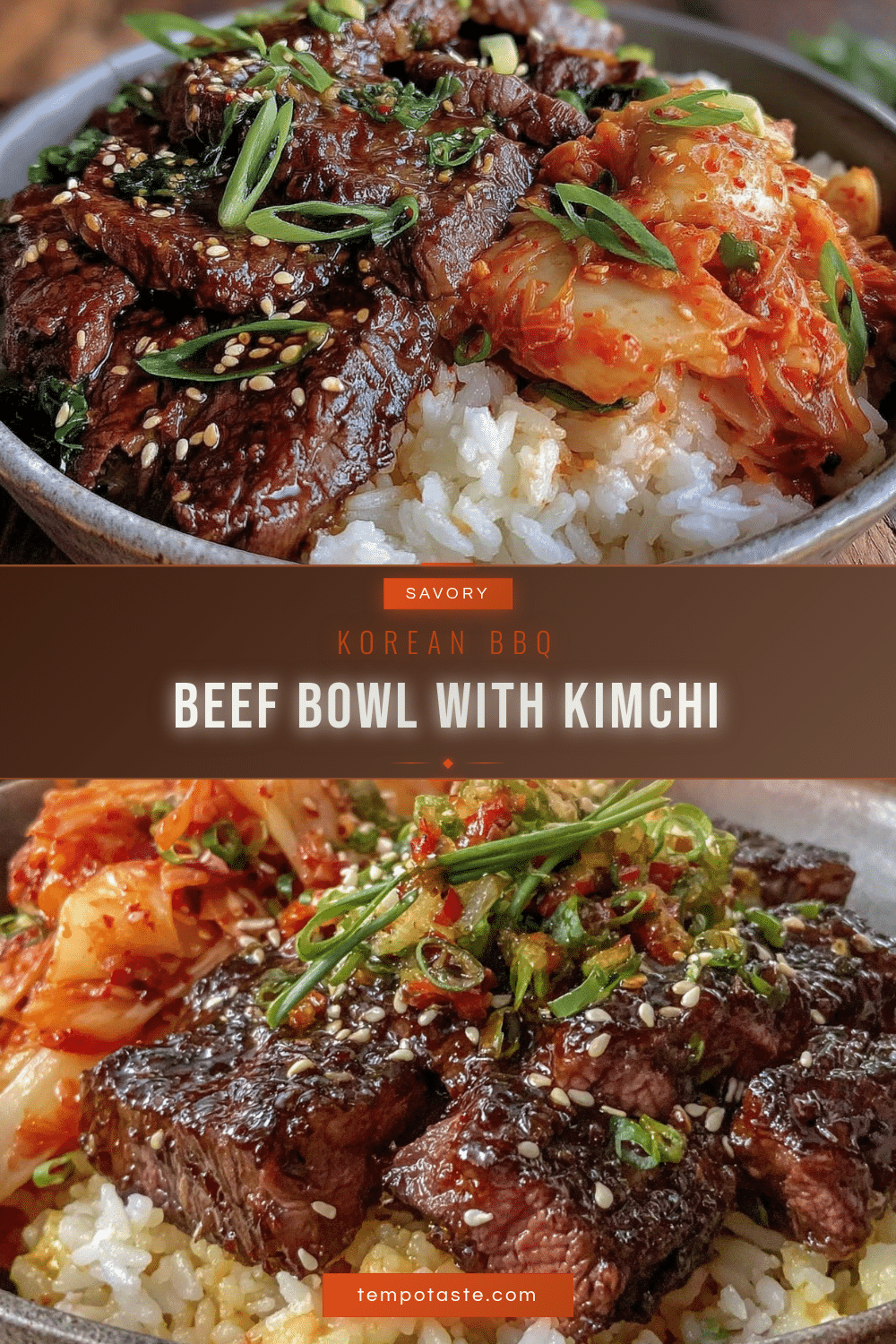
Savory Korean BBQ Beef Bowl Recipe Easy Homemade Kimchi Rice Bowl

A quick and easy Korean BBQ beef bowl combining tender marinated beef, spicy tangy kimchi, and fluffy rice for a comforting and flavorful meal perfect for busy nights.
- Prep Time: 20 minutes
- Cook Time: 20 minutes
- Total Time: 40 minutes
- Yield: 4 servings 1x
- Category: Main Course
- Cuisine: Korean
Ingredients
- 1 pound (450g) thinly sliced beef ribeye or sirloin
- 2 tablespoons soy sauce
- 1 tablespoon brown sugar
- 1 tablespoon sesame oil (toasted if possible)
- 3 cloves garlic, minced
- 1 teaspoon grated ginger
- 1 tablespoon gochujang (Korean chili paste)
- 1 tablespoon rice vinegar
- 1 teaspoon black pepper
- 3 cups cooked white rice (short grain or jasmine)
- 1 cup kimchi, chopped
- 2 green onions, sliced thinly
- 1 tablespoon toasted sesame seeds (optional)
- Fresh cilantro or parsley (optional)
Instructions
- Prepare the marinade: In a mixing bowl, combine 2 tablespoons soy sauce, 1 tablespoon brown sugar, 1 tablespoon toasted sesame oil, minced garlic, grated ginger, 1 tablespoon gochujang, rice vinegar, and black pepper. Whisk until the sugar dissolves and the mixture is smooth (about 5 minutes).
- Marinate the beef: Add the thinly sliced beef to the marinade. Toss to coat well, making sure every piece is covered. Cover and refrigerate for at least 15 minutes or up to 1 hour.
- Cook the rice: While the beef marinates, prepare 3 cups of cooked rice according to package instructions. Fluff with a fork once done to keep it light and airy (about 20 minutes total).
- Sauté the beef: Heat a large skillet or cast iron pan over medium-high heat until hot. Add the marinated beef in a single layer (cook in batches if needed). Cook for 2-3 minutes per side until caramelized and cooked through (5-7 minutes total).
- Warm the kimchi: Quickly warm the chopped kimchi in a small pan or microwave just to take the chill off (optional).
- Assemble the bowl: Divide the cooked rice into bowls. Top each with Korean BBQ beef, a scoop of kimchi, sliced green onions, and a sprinkle of toasted sesame seeds. Add fresh cilantro if desired.
- Final touches: Mix gently or leave layered for presentation. Serve immediately while warm.
Notes
If beef sticks to the pan, add a splash of water or more sesame oil. Use thinly sliced beef for quick cooking and tenderness. Marinate for 15-60 minutes for best flavor. Warm kimchi slightly to mellow sharpness or serve cold for contrast. For gluten-free, substitute soy sauce with tamari. Adjust gochujang for spice preference.
Nutrition
- Serving Size: 1 bowl (approximatel
- Calories: 475
- Sugar: 6
- Sodium: 850
- Fat: 22
- Saturated Fat: 5
- Carbohydrates: 38
- Fiber: 3
- Protein: 32
Keywords: Korean BBQ beef bowl, kimchi rice bowl, quick Korean recipe, easy beef bowl, homemade kimchi bowl, savory beef bowl