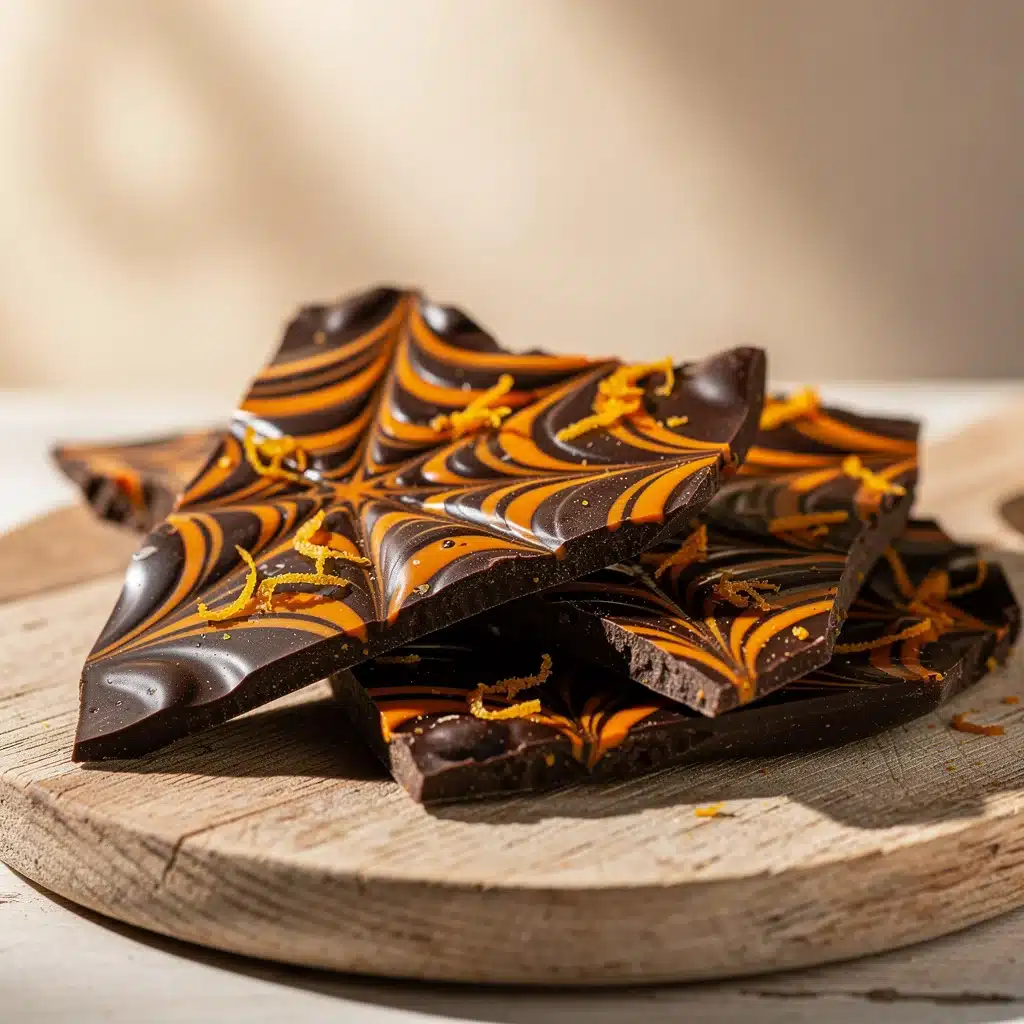
“Careful with that swirl!” my friend joked as I fumbled with the piping bag, trying to coax the perfect spider web pattern onto the chocolate bark. Honestly, I wasn’t expecting much the first time I tried making this Perfect Spider Web Chocolate Bark with Orange and Black Swirl. It was supposed to be a quick Halloween treat, tossed together when I realized I had no spooky snacks ready for a last-minute gathering. The kitchen was a mess, my countertops dusted with streaks of melted chocolate, and I was skeptical about whether this simple recipe would look anywhere near as cool as the photos I’d been drooling over online.
But, as I swirled those vibrant orange and deep black lines into a delicate web, something clicked. The texture was just right — crisp but not brittle — and the colors popped wildly against the glossy chocolate canvas. It quickly became the star of the party, with friends asking for the recipe (and the story behind my slightly shaky swirl technique). Since then, this recipe has snuck into my rotation more times than I can count around fall and Halloween, the perfect balance of festive and easy that you know won’t disappoint.
There’s something quietly satisfying about making this treat — the way the chocolate melts evenly, the tangy hint of orange zest cutting through the richness, and that swirl pattern that feels fancy but is surprisingly simple to pull off. It’s the kind of recipe that’s both a little creative and a little comforting, perfect for those moments when you want to impress without stress. I keep coming back to it because it always reminds me of that chaotic, fun night when a last-minute snack turned into a sweet win.
Why You’ll Love This Recipe
Making the Perfect Spider Web Chocolate Bark with Orange and Black Swirl has been one of those kitchen successes that’s hard to forget. I’ve tried several chocolate bark recipes before, but this one stands out for a few reasons that I think you’ll appreciate:
- Quick & Easy: You can get this done in about 30 minutes, including cooling time — perfect for last-minute holiday treats or whenever a chocolate craving hits.
- Simple Ingredients: Nothing fancy or hard to find here. Just good-quality chocolate, natural orange zest, and a touch of food coloring for that dramatic swirl.
- Perfect for Halloween Parties and Gifts: The black and orange swirl is festive without being over the top — great for potlucks, school events, or a cozy night in.
- Crowd-Pleaser: Kids and adults alike love the crunchy texture combined with that subtle hint of citrus. It’s sweet but not cloying.
- Unbelievably Delicious: The orange zest cuts through the sweetness, making the chocolate bark feel fresh and a little sophisticated — not just another sugary snack.
What makes this recipe really special is the swirl technique. It’s a simple twist on regular bark that adds a fun visual element without extra work or special tools. Plus, using black cocoa powder or black food coloring for the swirl gives it that deep, rich contrast that you just don’t get with other bark recipes. Honestly, it’s the kind of treat that makes you want to close your eyes after the first bite and savor the mix of flavors and textures.
If you’re looking for something that balances creativity with ease, this recipe is a winner. It’s the chocolate bark version of a cozy sweater — comforting, a little playful, and totally satisfying.
What Ingredients You Will Need
This recipe uses simple, wholesome ingredients to deliver bold flavor and a striking visual effect without any fuss or fancy additions. You probably have most of these in your pantry, or they’re easy to pick up at any grocery store.
- Dark chocolate (8 oz / 225 g): Choose a good-quality baking chocolate or couverture for best melting and shine. I often use Ghirardelli or Lindt for smooth texture.
- White chocolate (4 oz / 115 g): For the swirl lines. Use a brand with high cocoa butter content for easier melting.
- Orange zest (from 1 medium orange): Fresh zest adds a bright, natural citrus flavor that cuts through the richness of the chocolate.
- Black food coloring or black cocoa powder (1-2 tsp): This is what gives the bark its dramatic black swirl. Black cocoa powder is less intense but more natural; gel food coloring works well if you want bolder color.
- Optional: orange food coloring (a few drops): To deepen the orange color in the swirl if you want it more vivid.
- Sea salt flakes (a pinch): Sprinkled on top for a subtle contrast that makes the flavors pop.
Ingredient tips: When zesting your orange, avoid the white pith – it’s bitter and can dull the flavor. If you can’t find black food coloring, mixing a bit of activated charcoal powder with white chocolate can work, but test a small batch first. For a dairy-free version, swap the chocolates with vegan alternatives — just keep an eye on melting points.
Equipment Needed
- Baking sheet: A standard half-sheet pan works great; it gives you enough space to spread the bark thinly and evenly.
- Parchment paper or silicone baking mat: For easy removal and cleanup — parchment is my go-to.
- Microwave-safe bowls or double boiler: For melting the chocolate gently. Double boilers give you more control, but the microwave with short bursts works fine too.
- Small piping bag or resealable plastic bag: To pipe the white chocolate swirl lines. If you don’t have one, a small spoon or toothpick can work to drag lines.
- Zester or fine grater: To get that fresh orange zest without the bitter pith.
- Toothpick or skewer: Essential for creating the spider web swirl effect by dragging through the lines.
If you’re on a budget, you can substitute parchment paper with aluminum foil lightly greased, though the bark might stick more. I’ve also used a plastic sandwich bag with the corner snipped off in place of a piping bag when in a pinch — it’s not perfect but gets the job done.
Preparation Method
- Prep your workspace (5 minutes): Line your baking sheet with parchment paper or a silicone baking mat. Zest your orange carefully, avoiding the white pith, and set aside.
- Melt the dark chocolate (5-7 minutes): Chop the dark chocolate finely for even melting. Use a double boiler or microwave in 30-second bursts, stirring in between until smooth and glossy. Avoid overheating — chocolate can seize if too hot.
- Spread the base layer (3 minutes): Pour the melted dark chocolate onto the lined baking sheet. Use an offset spatula or the back of a spoon to spread it evenly to about 1/4 inch (6 mm) thickness. Sprinkle the orange zest evenly over the chocolate while it’s still warm, gently pressing it in.
- Melt the white chocolate (3-5 minutes): While the dark chocolate sets slightly but is still soft, melt the white chocolate using the same method. Stir in black food coloring or black cocoa powder to create a smooth black mixture (adjust intensity to your liking). If you want a brighter orange swirl, mix some orange food coloring into a small portion of the white chocolate before melting.
- Pipe swirl lines (5 minutes): Transfer the black (and optional orange) chocolate into piping bags or resealable bags with a small tip cut off. Pipe thin parallel lines across the dark chocolate bark, about 1 inch (2.5 cm) apart.
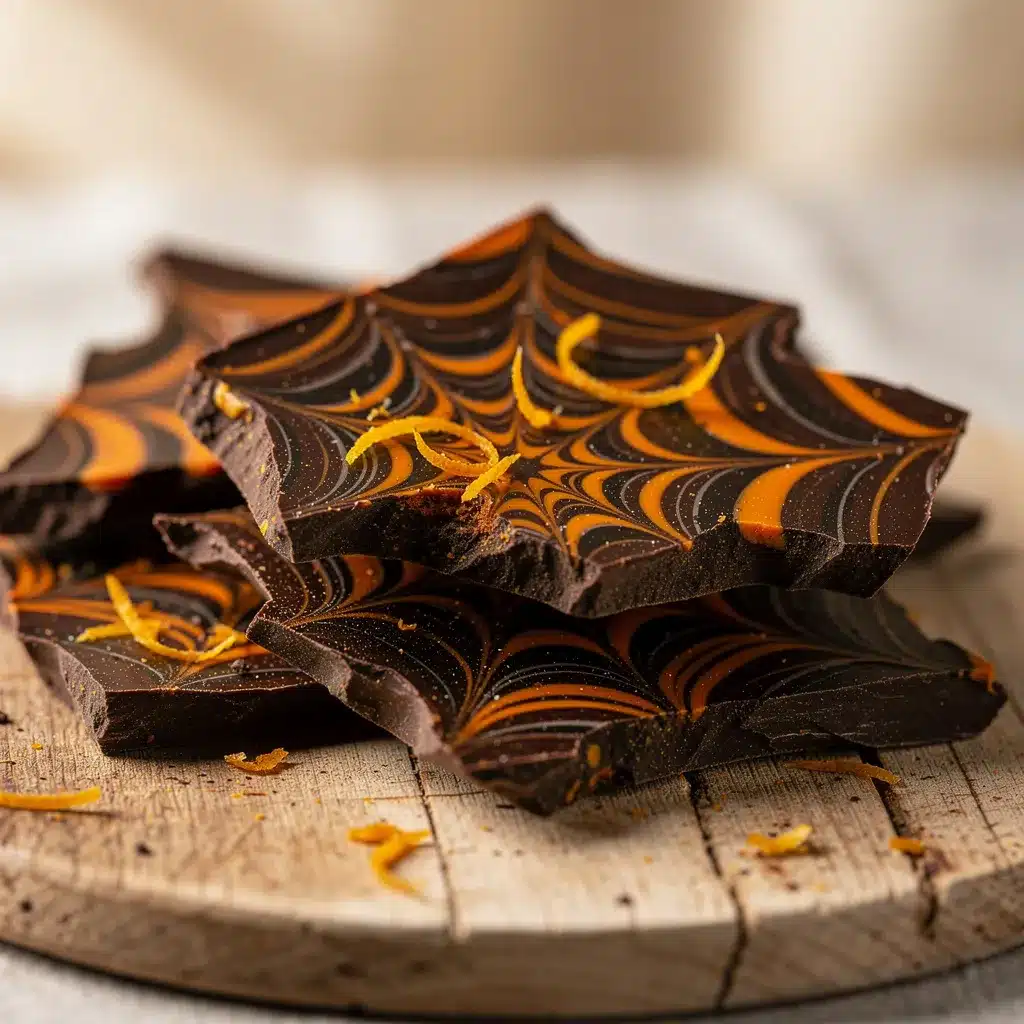
- Create the spider web pattern (5 minutes): Using a toothpick or skewer, drag lines perpendicular through the piped chocolate lines, alternating direction with each pass (first drag from top to bottom, then bottom to top, etc.). This motion creates the classic spider web swirl effect.
- Chill and set (15-20 minutes): Place the baking sheet in the refrigerator until the bark is firm and set completely. This usually takes about 15-20 minutes.
- Break into pieces and serve (2 minutes): Once set, lift the bark from the parchment and break into irregular pieces. Sprinkle a pinch of sea salt flakes over the top for contrast if desired.
Pro tip: Don’t wait too long after spreading the dark chocolate before piping the swirl lines — if it’s too hard, the lines won’t stick well; if it’s too soft, it might get messy. The sweet spot is when the surface is matte but still pliable.
Cooking Tips & Techniques
Getting that perfect spider web swirl might seem tricky, but it’s all about timing and a steady hand. Here are some tips from my many attempts (and a few missteps):
- Chocolate temperature matters: Melt your chocolate slowly and avoid overheating. If it’s too hot, the swirl lines won’t hold shape well; too cool, and it gets clumpy.
- Work quickly: Chocolate sets fast when cooling, so pipe your swirl lines soon after spreading the base layer.
- Use a fine toothpick or skewer: This tool gives you precision when dragging lines to form the web pattern. A dull or thick stick can ruin the delicate design.
- Practice the swirl motion: Dragging the skewer through the lines alternately from top to bottom and bottom to top is key. If you mess up, just smooth the chocolate lightly and try again.
- Keep your piping bag clean: Wipe off excess chocolate regularly to avoid clogs or blobs in your lines.
- Don’t skip the zest: Fresh orange zest is the secret to balancing the dark sweetness. I’ve tried dried zest, but it’s just not the same.
- Try chilling the black swirl first: If your black chocolate is too runny, chill it briefly to thicken before piping.
Honestly, the first time I made this bark, my swirl looked more like a messy spider’s playground than a web. But a little patience and a couple of tries later, it became a fun little ritual I actually look forward to each fall. Plus, it pairs so well with other simple treats like gooey Scotcheroos, which balance the chocolate’s richness with a chewy crunch.
Variations & Adaptations
This recipe is surprisingly flexible, so feel free to tweak it for your taste or dietary needs:
- Flavor twists: Add a pinch of cinnamon or chili powder to the dark chocolate for a warming kick. I’ve tried orange extract instead of zest for a more intense citrus flavor.
- Color swaps: Use purple and green food coloring for a Halloween twist that’s less traditional but just as fun. Red and white can make it festive for Christmas too.
- Dietary changes: Use vegan or dairy-free chocolates to make it allergy-friendly. Coconut or almond milk chocolate works well but may affect setting time.
- Nutty crunch: Sprinkle chopped toasted almonds or pistachios on top before chilling for added texture and flavor.
- Alternative bases: Instead of dark chocolate, try milk chocolate for a sweeter version, or mix white and dark chocolate layers for a marbled effect.
One of my favorites was a batch where I folded in crushed peppermint candy into the base layer — it gave a holiday vibe similar to my love for the creamy texture in magic cookie bars. Experimenting with add-ins is part of the fun!
Serving & Storage Suggestions
The Perfect Spider Web Chocolate Bark can be served at room temperature or slightly chilled, depending on your preference. I like to break it into irregular pieces for a rustic look, perfect for sharing on a dessert platter or gift boxes.
Pair it with warm drinks like spiced tea, coffee, or even a creamy hot chocolate to complement the orange and chocolate flavors. It’s also a fun addition to a Halloween-themed dessert table alongside easy treats like peanut butter cookies or classic rice krispie treats.
Store the bark in an airtight container at room temperature if your kitchen is cool (below 70°F / 21°C) or in the refrigerator if it’s warmer. It keeps well for up to two weeks. If you want to keep it longer, wrap tightly and freeze for up to 3 months — just thaw at room temperature before serving.
When reheating, avoid microwaving directly. Instead, let it come to room temp naturally or warm briefly in a low oven to soften slightly without melting fully. The flavors actually deepen a bit after a day or two, so making it ahead is a great option for parties.
Nutritional Information & Benefits
This chocolate bark recipe is an indulgent treat but comes with some benefits thanks to its simple, quality ingredients:
- Contains antioxidants from the dark chocolate, which may support heart health and reduce inflammation.
- Orange zest adds vitamin C and a fresh burst of natural flavor without added sugar.
- Gluten-free by nature, making it suitable for many dietary needs.
- Portion control is easy since the bark breaks into small pieces — so you can enjoy a rich treat without overdoing it.
Be mindful of allergens if serving to guests — this recipe contains dairy and may contain traces of nuts depending on your chocolate choice. I usually keep a batch handy for when I want a quick, satisfying snack that feels special but isn’t loaded with preservatives or artificial flavorings.
Conclusion
The Perfect Spider Web Chocolate Bark with Orange and Black Swirl is one of those recipes that’s simple but makes a statement. It’s colorful, festive, and just the right amount of fancy without being complicated or time-consuming. I love how it combines the deep richness of chocolate with bright citrus notes and a fun design that always gets people talking.
Whether you’re planning a Halloween party, holiday gift, or just want to treat yourself to something a little different, this recipe is a keeper. Feel free to play around with the colors, flavors, and add-ins to make it your own — it’s surprisingly forgiving and always delicious.
If you try it, I’d love to hear how your swirl turned out or what variations you created. Sharing kitchen wins (and funny fails) is part of the joy, don’t you think? So go ahead, make a batch and enjoy every bite of that crispy, zesty, chocolatey goodness.
FAQs
Can I use milk chocolate instead of dark chocolate for the base?
Yes, milk chocolate works fine and will make the bark sweeter and creamier. Just watch the melting carefully as milk chocolate tends to burn faster.
How do I prevent the white chocolate from hardening too quickly while piping the swirl?
Keep the white chocolate warm by placing the bowl over a warm water bath or microwave in short bursts. Work quickly, and if it starts to thicken, gently reheat before continuing.
Can I make this recipe dairy-free or vegan?
Absolutely! Use dairy-free or vegan chocolate brands and check all ingredients for compliance. Keep in mind melting and setting times may vary slightly.
What’s the best way to store leftover chocolate bark?
Store in an airtight container at room temperature in a cool place or in the refrigerator if your environment is warm. For longer storage, freeze the bark and thaw before serving.
How do I get a sharper contrast in the spider web swirl?
Use gel-based black food coloring in the white chocolate for a more intense black. Also, pipe the swirl lines while the base layer is slightly soft so the colors blend less and stay vibrant.
Pin This Recipe!
Perfect Spider Web Chocolate Bark Recipe Easy Homemade Orange Black Swirl Treat

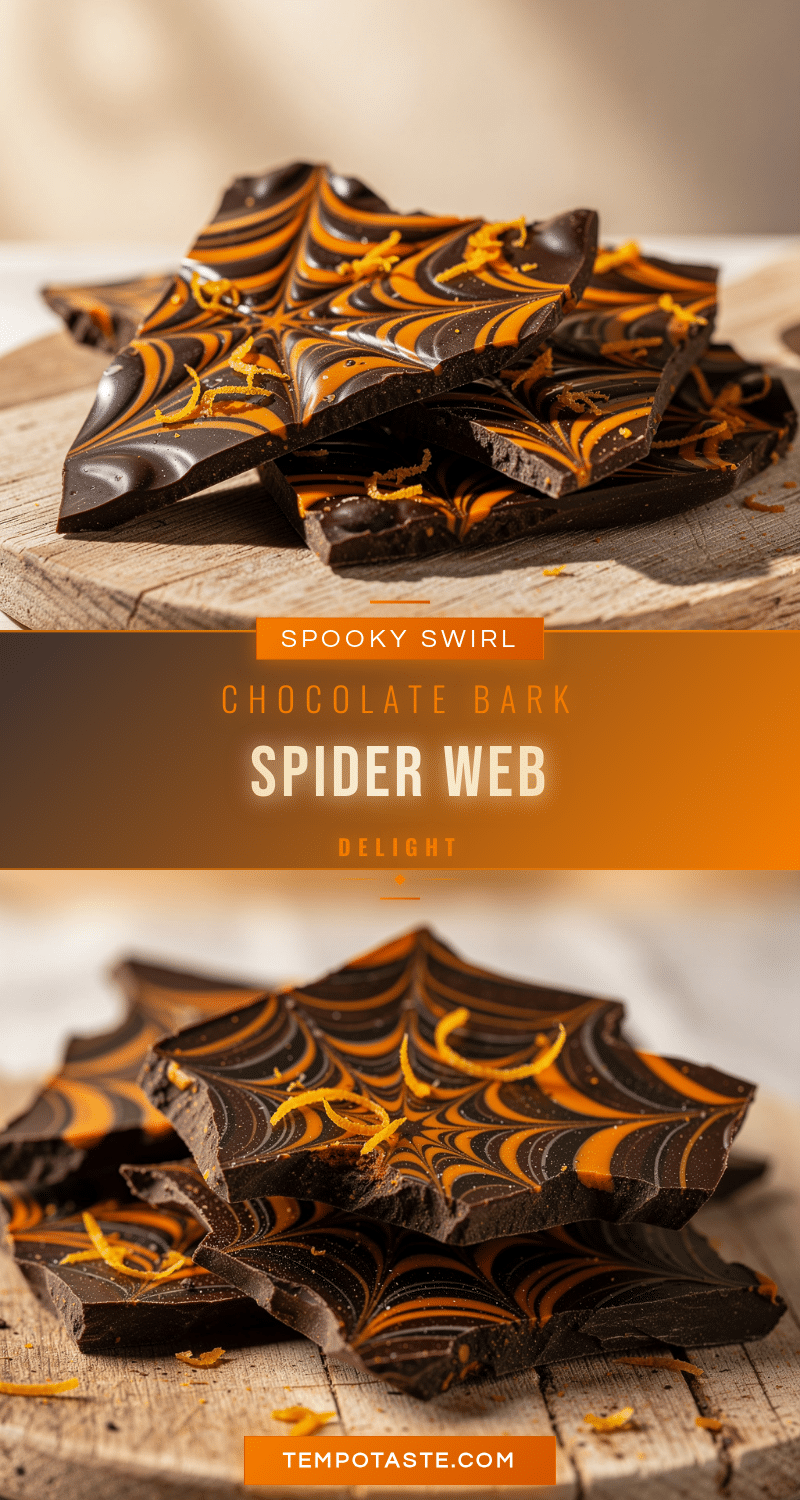
A quick and easy Halloween treat featuring a crisp chocolate bark with a festive orange and black spider web swirl pattern, accented with fresh orange zest and a hint of sea salt.
- Prep Time: 10 minutes
- Cook Time: 20 minutes
- Total Time: 30 minutes
- Yield: 12 servings 1x
- Category: Dessert
- Cuisine: American
Ingredients
- 8 oz (225 g) dark chocolate (baking or couverture)
- 4 oz (115 g) white chocolate
- Zest of 1 medium orange
- 1–2 tsp black food coloring or black cocoa powder
- Optional: a few drops orange food coloring
- Pinch of sea salt flakes
Instructions
- Prep your workspace by lining a baking sheet with parchment paper or a silicone baking mat. Zest the orange carefully, avoiding the white pith, and set aside.
- Chop the dark chocolate finely. Melt it using a double boiler or microwave in 30-second bursts, stirring until smooth and glossy. Avoid overheating.
- Pour the melted dark chocolate onto the lined baking sheet and spread evenly to about 1/4 inch (6 mm) thickness. Sprinkle orange zest evenly over the warm chocolate, pressing gently.
- Melt the white chocolate using the same method. Stir in black food coloring or black cocoa powder to create a smooth black mixture. For a brighter orange swirl, mix some orange food coloring into a small portion before melting.
- Transfer the black (and optional orange) chocolate into piping bags or resealable bags with a small tip cut off. Pipe thin parallel lines about 1 inch (2.5 cm) apart across the dark chocolate bark.
- Using a toothpick or skewer, drag lines perpendicular through the piped chocolate lines, alternating direction with each pass to create the spider web pattern.
- Place the baking sheet in the refrigerator for 15-20 minutes until the bark is firm and set.
- Lift the bark from the parchment and break into irregular pieces. Sprinkle a pinch of sea salt flakes on top if desired.
Notes
Work quickly when piping swirl lines to ensure they stick well. Avoid overheating chocolate to prevent seizing. For dairy-free version, use vegan chocolates and monitor melting times. Chilling the black swirl chocolate briefly can help thicken it for easier piping. Store bark in airtight container at room temperature if cool, or refrigerate if warm. Freeze for longer storage up to 3 months.
Nutrition
- Serving Size: Approximately 1 piec
- Calories: 180
- Sugar: 15
- Sodium: 15
- Fat: 12
- Saturated Fat: 7
- Carbohydrates: 18
- Fiber: 2
- Protein: 2
Keywords: chocolate bark, spider web chocolate, Halloween treat, orange chocolate, easy chocolate recipe, festive dessert, homemade chocolate bark