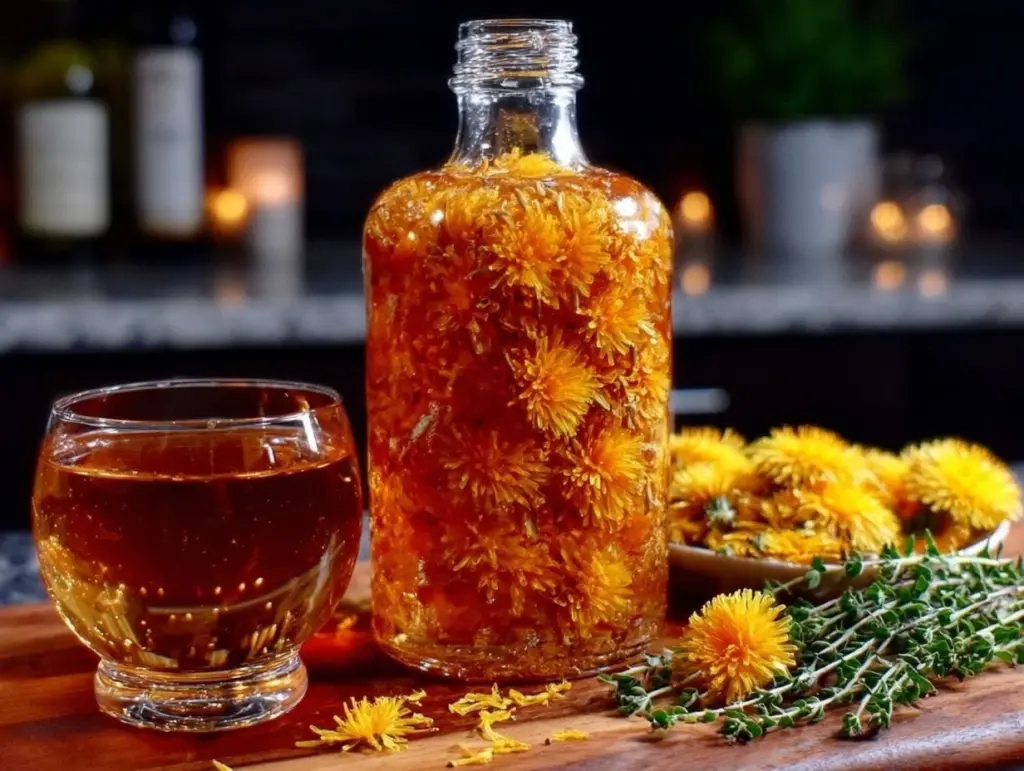
“You sure this is wine?” my neighbor asked, eyebrow raised as I handed her a glass of the golden liquid. I chuckled, thinking back to the first time I accidentally stumbled upon this recipe. It was a lazy Sunday, and honestly, I was just trying to make something out of the dandelions that had taken over my yard. I’d always ignored those bright yellow flowers — you know, the ones everyone dreads because they pop up everywhere in spring? But that day, a blog post mentioned dandelion petal wine, and curiosity got the best of me. I figured, why not give it a try?
At first, I was skeptical. Fermenting petals into wine sounded a little too out-there, but after a few days of bubbling jars and the faint, sweet aroma wafting through the kitchen, I was hooked. The first sip was surprising — light, slightly floral, and refreshing in a way that felt like spring in a glass. Honestly, it became a bit of an obsession; I made this batch three times in one week, tweaking the amounts here and there. Now it’s one of those simple homemade treats I reach for when I want something unique but easy to prepare.
What sticks with me about the dandelion petal wine is how it turns something so ordinary into an experience that’s pretty special. Plus, it’s a reminder that good things sometimes bloom where you least expect them — even in your front yard. This recipe has made me a believer, and I think you’ll find it refreshing too, perfect for those quiet evenings or casual get-togethers where a little homemade charm goes a long way.
Why You’ll Love This Recipe
From my many experiments crafting this easy refreshing dandelion petal wine recipe, I can say it’s one of those rare homemade projects that truly rewards patience and simplicity. Whether you’re a seasoned fermenter or a curious first-timer, this recipe is approachable and satisfying.
- Quick & Easy: It takes about 5 simple steps and just a few minutes of active prep time to get things started. The actual fermentation happens on its own, so you can set it and forget it for a bit.
- Simple Ingredients: You won’t need anything fancy — just fresh dandelion petals, sugar, lemon, and yeast. Odds are, you have most of these in your pantry or garden.
- Perfect for Spring and Summer: This wine captures the essence of the season, making it ideal for outdoor gatherings, casual brunches, or a relaxing evening on the porch.
- Crowd-Pleaser: I’ve shared it with friends and family, and it always sparks curiosity and compliments. It’s light, not too sweet, and refreshingly floral.
- Unique Flavor Profile: Unlike traditional grape wines, this one offers a delicate balance of floral and citrus notes, making it stand out in any homemade wine collection.
What sets this dandelion petal wine apart is the gentle infusion of petals that lend a subtle aromatic character, something you don’t find in your typical fruit wines. Plus, the little twist of adding lemon juice brightens up the flavor, giving it a crisp finish that’s honestly addictive. If you’ve enjoyed crafting other homemade beverages or want to try something a bit different, this recipe will quickly become a favorite. It’s a great companion to light dishes like a creamy white pizza with ricotta and spinach or a fresh salad.
What Ingredients You Will Need
This easy refreshing dandelion petal wine recipe uses simple, wholesome ingredients to deliver a bright, floral taste without any complicated steps or hard-to-find items. Most of these ingredients might already be in your kitchen or right outside your door.
- Dandelion Petals — about 4 cups of fresh, bright yellow petals (avoid any that have started to brown or have been sprayed with pesticides)
- Granulated Sugar — 2 ½ cups (500g), this feeds the yeast and balances the floral notes
- Lemon Juice — ½ cup fresh-squeezed (about 2 lemons), adds acidity and brightness
- Water — 1 gallon (3.8 liters), use filtered or spring water for best results
- White Wine Yeast — 1 packet (5g), specifically chosen for clean fermentation (I prefer Lalvin EC-1118 for reliable results)
- Campden Tablet (optional) — 1 crushed tablet to sterilize the must and prevent unwanted bacteria
Some tips for ingredient selection:
- Pick dandelions on a dry day, early morning is best before the sun gets too hot.
- If you can’t find fresh petals, dried ones work but expect a slightly less vibrant flavor.
- Use organic lemons if possible to avoid wax coatings or pesticides.
- White wine yeast is preferred here for a clean, crisp finish, but you can experiment with champagne yeast if you want more fizz.
This recipe is forgiving and easy to customize. For example, if you want a vegan-friendly option, ensure your sugar is bone-char free. You can also substitute honey for sugar, but that will add a richer flavor and longer fermentation time.
Equipment Needed
Making dandelion petal wine doesn’t require fancy gear, but having the right tools makes the process smoother and results more consistent. Here’s what I recommend:
- Large Food-Grade Fermentation Vessel: A 1-gallon glass carboy or food-safe plastic bucket with an airlock works perfectly. Glass is my favorite because it’s non-reactive and easy to clean.
- Airlock and Bung: Essential for allowing gases to escape without letting air or contaminants in.
- Large Pot or Kettle: For boiling water and sugar mixture.
- Fine Mesh Strainer or Cheesecloth: To strain out the petals before fermentation.
- Hydrometer (Optional): If you want to measure sugar content and track fermentation progress.
- Sanitizer: Like Star San or a bleach solution, to keep everything clean and avoid off-flavors.
If you’re on a budget, you can substitute a clean, food-grade bucket with a tight-fitting lid for the glass carboy. Just make sure to punch a hole in the lid to insert the airlock. I’ve also used kitchen strainers successfully when cheesecloth wasn’t handy. For more precise home cooking, check out my tips in the one-pot sausage and white bean stew recipe where I discuss simple kitchen equipment essentials.
Preparation Method
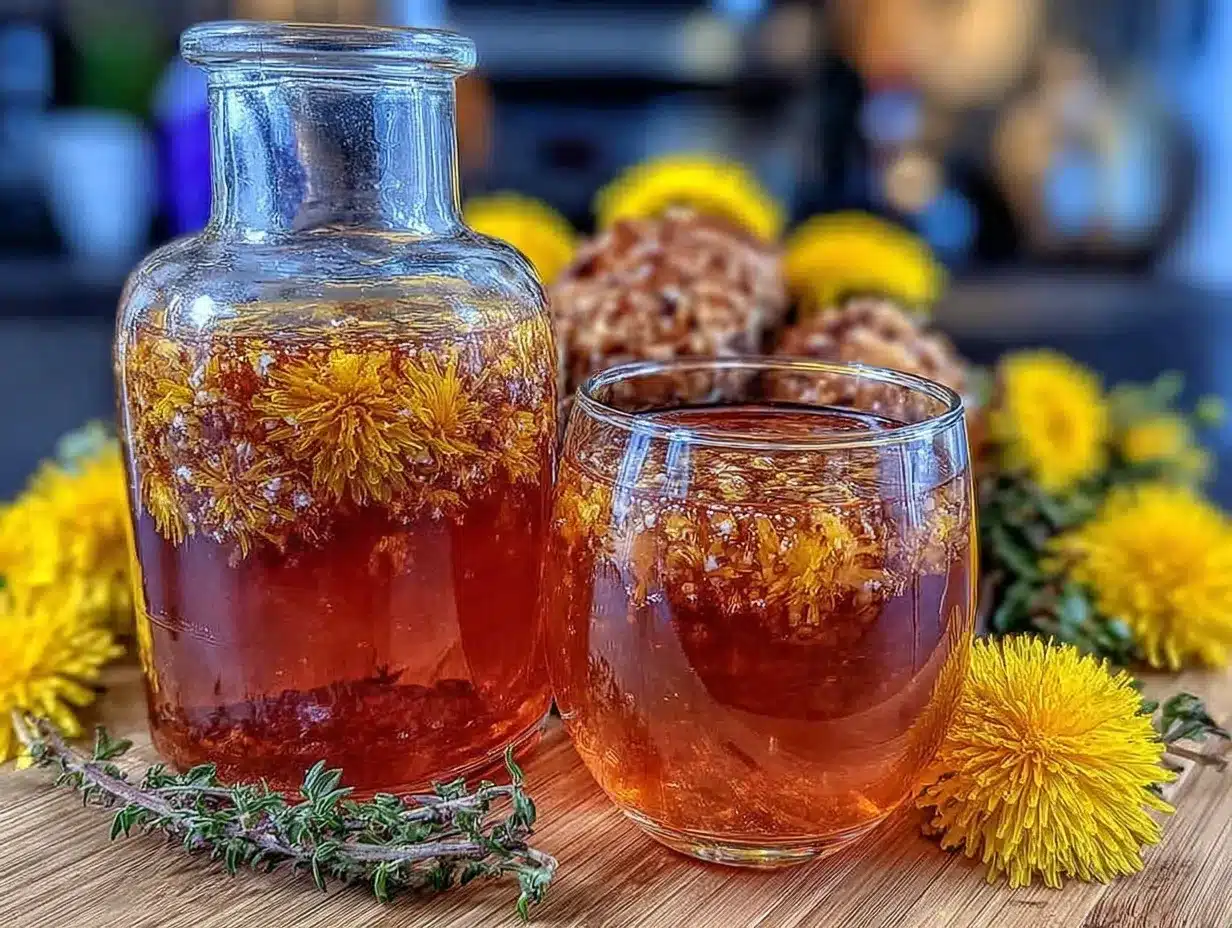
- Gather and Prep the Petals: Pick about 4 cups of fresh dandelion petals, discarding any green parts or stems for a cleaner flavor. Rinse them gently under cold water and spread on a clean towel to dry. This step takes about 15 minutes.
- Make the Sugar Syrup: In a large pot, bring 1 gallon (3.8 liters) of filtered water to a boil. Stir in 2 ½ cups (500g) of granulated sugar until fully dissolved. Remove from heat and let cool slightly, about 20 to 30 minutes. The syrup should be warm but not hot to the touch (around 70°F/21°C) before adding yeast.
- Steep the Petals: Place the dandelion petals in your fermentation vessel. Pour the warm sugar syrup over the petals. Add ½ cup fresh lemon juice and stir gently. If using, crush and add one Campden tablet now to sterilize (wait 24 hours before adding yeast if you do this).
- Add the Yeast: After the mixture cools to room temperature (or after 24 hours if using Campden), sprinkle one packet (5g) of white wine yeast evenly across the surface. Stir gently to combine. Seal the vessel with the airlock. This step usually takes about 5 minutes.
- Ferment and Bottle: Store the vessel in a dark, cool place (65-75°F/18-24°C) for primary fermentation. You’ll see bubbling in 2-3 days — that’s the yeast at work. Let it ferment for about 2-3 weeks, then strain out the petals using a fine mesh strainer or cheesecloth. Transfer the wine to a clean carboy for secondary fermentation and age for another 4-6 weeks. Once clear and no longer bubbling, bottle your wine. This whole process requires patience but is well worth the wait!
Pro tip: If you notice fermentation slowing too soon, gently swirl the vessel to mix yeast and sugars again. Smell is your friend here; the aroma should be sweet and floral, not sour or rotten.
Cooking Tips & Techniques
Fermentation can seem intimidating, but with this easy refreshing dandelion petal wine recipe, I’ve learned a few tricks to keep things smooth and avoid common pitfalls.
- Sanitize everything: Even the slightest contamination can lead to off-flavors or stalled fermentation. I use a no-rinse sanitizer on all equipment and hands before handling.
- Don’t rush the cooling: Adding yeast to hot syrup kills it. Wait until the liquid is comfortably warm (about 70°F/21°C) before pitching yeast.
- Be patient: Fermentation times vary. Rushing the process can leave your wine sweet and flat, while waiting lets flavors mature and clarity improve.
- Watch for signs of trouble: Mold, bad smells, or no bubbles after a week usually mean something went wrong. Starting over with fresh ingredients and strict sanitation is best.
- Use a hydrometer if you want: It’s not required, but it helps track sugar levels and know when fermentation is finished.
I once made the mistake of fermenting in a warm spot during summer, and the wine turned out too yeasty and harsh. Since then, I keep the batch in a cool pantry and it’s consistently better. Also, stirring gently during the first few days helps the yeast get active without disturbing the petals too much.
Variations & Adaptations
This dandelion petal wine recipe is surprisingly flexible. Here are some ways to tweak it based on what you have or prefer:
- Substitute Petals: Try mixing in other edible flower petals like elderflower, hibiscus, or rose to create unique blends. Each flower adds its own twist to aroma and color.
- Fruit Additions: Adding a cup of chopped apples or pears during primary fermentation gives a subtle fruity undertone. I once added frozen raspberries for a pinkish tint and a hint of tartness.
- Sweetness Levels: Adjust sugar up or down depending on how dry or sweet you like your wine. Just remember, less sugar means less alcohol and a lighter body.
- Alcohol-Free Version: Skip the yeast and let the petals steep in sugar water and lemon juice for a few days in the fridge. It’s a refreshing dandelion cordial perfect for summer sips.
- Alternative Sugars: Use honey or maple syrup instead of granulated sugar for a richer, earthier flavor profile, but expect longer fermentation and slightly different taste.
For those who like experimenting with flavors, this recipe pairs well with herbal infusions like mint or chamomile added during steeping. I’ve also found that aging the wine a bit longer mellows out the acidity and brings harmony to the floral notes.
Serving & Storage Suggestions
Dandelion petal wine tastes best chilled, around 50-55°F (10-13°C). Serve it in small wine glasses to appreciate the delicate floral aroma and light golden color. It’s a lovely accompaniment to light appetizers or a fresh summer salad.
Try pairing it with dishes like a crispy blackened salmon Caesar salad or a soft cheese platter for a casual but refined vibe.
Store bottled wine in a cool, dark place. Once opened, keep it refrigerated and consume within 3-5 days for best flavor. Over time, the flavors deepen and mellow, so if you like stronger floral tones, try aging unopened bottles for 2-3 months.
When reheating is needed (for example, if you want a warm, mulled version), heat gently and avoid boiling to keep delicate aromas intact.
Nutritional Information & Benefits
This homemade dandelion petal wine is naturally low in calories compared to most commercial wines, averaging about 90 calories per 5 oz (150 ml) serving, depending on residual sugar. It contains no artificial additives or preservatives.
Dandelions themselves are rich in antioxidants, vitamins A and C, and have traditional uses for digestion and liver health. While the fermentation process changes the raw profile, some trace benefits and the floral essence remain.
This recipe is gluten-free and can be made vegan with plant-based sugar. Just be mindful if you add honey or other animal-derived sweeteners.
Conclusion
This easy refreshing dandelion petal wine recipe is a little treasure — a way to turn a common garden flower into a homemade drink that feels thoughtful and special. It’s approachable for beginners, rewarding for those who enjoy crafting their own beverages, and surprisingly delicious.
Feel free to tweak the sweetness, experiment with added fruits or flowers, and find your perfect balance. I love the quiet satisfaction of making something from scratch that surprises friends and family. Plus, it’s a neat conversation starter at any gathering.
If you try your hand at this wine, I’d love to hear how your batch turns out and any creative spins you put on it. Sharing homemade recipes is part of the fun, right? Remember, good food and drink are all about enjoyment, so make it yours and savor every sip.
Frequently Asked Questions
Can I use dandelion leaves instead of petals to make wine?
Dandelion leaves are quite bitter and not ideal for wine-making. The petals provide the delicate floral aroma and sweetness needed for a pleasant wine.
How do I know when the fermentation is complete?
Fermentation is usually done when bubbling stops, the wine clears, and the hydrometer (if used) readings remain stable over a few days.
Is it safe to harvest dandelions from any location?
Only pick dandelions from areas you know haven’t been treated with pesticides or herbicides. Avoid roadside or industrial areas to reduce contamination risks.
Can I speed up the fermentation process?
Higher temperatures speed up fermentation but can produce off-flavors. It’s better to ferment at a steady 65-75°F (18-24°C) for best results.
How long does homemade dandelion wine last?
Unopened bottles stored in a cool, dark place can last up to a year. Once opened, consume within 3-5 days for optimal flavor.
Pin This Recipe!
Easy Refreshing Dandelion Petal Wine Recipe
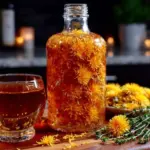
A simple and rewarding homemade wine recipe using fresh dandelion petals, sugar, lemon juice, and yeast. This light, floral wine captures the essence of spring and summer with a unique, refreshing flavor.
- Prep Time: 35 minutes
- Cook Time: 0 minutes
- Total Time: 6-8 weeks (including fermentation and aging)
- Yield: Approximately 1 gallon (about 16 servings of 5 oz each) 1x
- Category: Beverage
- Cuisine: Homemade/Traditional
Ingredients
- 4 cups fresh dandelion petals (avoid brown or pesticide-treated petals)
- 2 ½ cups (500g) granulated sugar
- ½ cup fresh lemon juice (about 2 lemons)
- 1 gallon (3.8 liters) filtered or spring water
- 1 packet (5g) white wine yeast (e.g., Lalvin EC-1118)
- 1 crushed Campden tablet (optional)
Instructions
- Gather and prep the petals: Pick about 4 cups of fresh dandelion petals, discarding any green parts or stems. Rinse gently under cold water and spread on a clean towel to dry (about 15 minutes).
- Make the sugar syrup: In a large pot, bring 1 gallon of filtered water to a boil. Stir in 2 ½ cups granulated sugar until fully dissolved. Remove from heat and let cool to about 70°F (21°C), about 20-30 minutes.
- Steep the petals: Place the dandelion petals in the fermentation vessel. Pour the warm sugar syrup over the petals. Add ½ cup fresh lemon juice and stir gently. If using, add crushed Campden tablet now and wait 24 hours before adding yeast.
- Add the yeast: After cooling to room temperature (or after 24 hours if using Campden), sprinkle 1 packet of white wine yeast evenly over the surface. Stir gently to combine. Seal the vessel with an airlock (about 5 minutes).
- Ferment and bottle: Store in a dark, cool place (65-75°F/18-24°C) for primary fermentation. Bubbling starts in 2-3 days. Let ferment 2-3 weeks, then strain out petals. Transfer wine to a clean carboy for secondary fermentation and age 4-6 weeks. Bottle once clear and no longer bubbling.
Notes
[‘Sanitize all equipment and hands before use to avoid contamination.’, ‘Wait until sugar syrup cools to about 70°F before adding yeast to prevent killing it.’, ‘Be patient with fermentation; rushing can affect flavor and clarity.’, ‘If fermentation slows, gently swirl the vessel to mix yeast and sugars.’, ‘Use a hydrometer to track fermentation progress if desired.’, ‘Store bottled wine in a cool, dark place; consume opened bottles within 3-5 days.’, ‘For a vegan option, ensure sugar is bone-char free or substitute with honey (note: honey will extend fermentation time).’, ‘Try adding other edible flower petals or fruits for unique flavor variations.’, ‘Alcohol-free version: skip yeast and steep petals in sugar water and lemon juice in the fridge for a few days.’]
Nutrition
- Serving Size: 5 oz (150 ml)
- Calories: 90
- Sugar: 5
- Carbohydrates: 5
Keywords: dandelion wine, homemade wine, floral wine, fermentation, spring beverage, easy wine recipe, natural wine, dandelion petals