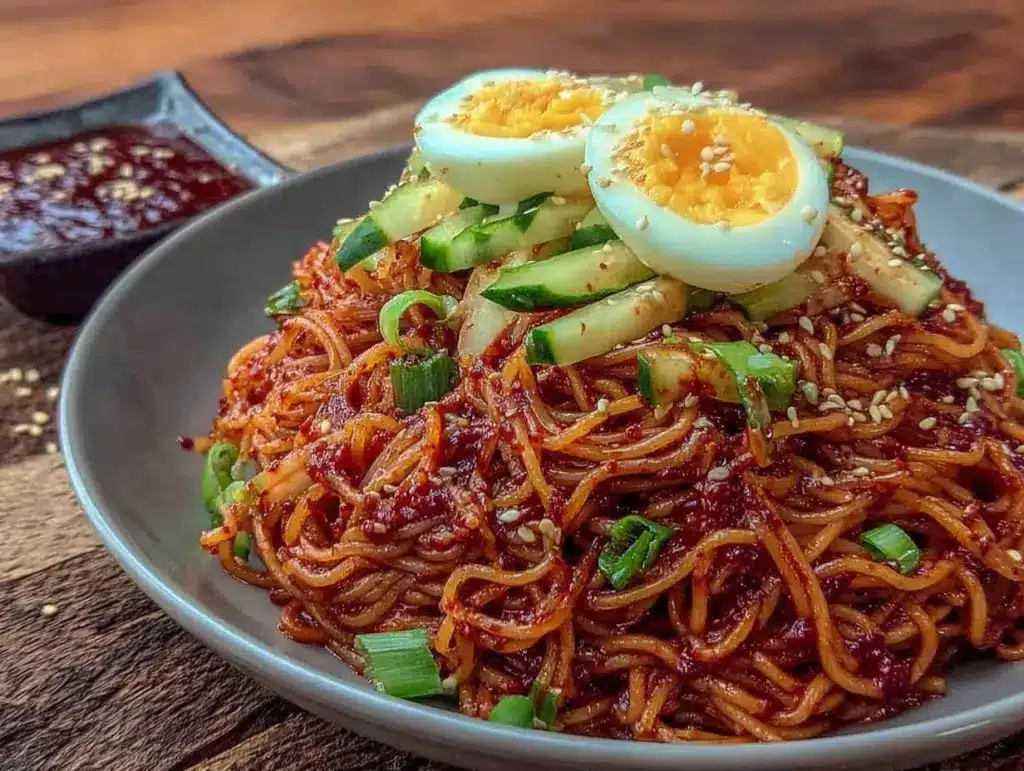
“You have to try this—it’s like summer in a bowl,” my friend insisted over text last July. I wasn’t convinced at first; cold noodles with a spicy sauce sounded like a weird combo. But that night, after a long day juggling work and a million little things, I finally gave in and whipped up these Korean cold noodles with spicy gochugaru sauce. Honestly? It was a game changer.
The noodles were perfectly chewy, the sauce had that fiery kick from the gochugaru chili flakes that made me sit up and pay attention, but also a subtle sweetness and tang that balanced everything out. It wasn’t just spicy for the sake of it—there was depth, a kind of harmony you don’t get with many quick dishes. And the cool noodles? Pure relief on a hot night.
I’ve found myself making this recipe multiple times since then, sometimes as a solo late-night snack, other times as a laid-back dinner when friends drop by unexpectedly. It’s quick, bright, and honestly comforting in a way I didn’t expect from a cold noodle dish. Plus, it beats the usual takeout when you want something fresh but with a punch of flavor. This recipe stuck around because it’s easy to tweak and always feels like a little celebration on the plate.
So, if you ever find yourself craving something bold yet refreshing—something that isn’t your usual pasta or salad—these flavorful Korean cold noodles with spicy gochugaru sauce might just become your new go-to. No frills, just seriously tasty food that cools you down and wakes up your taste buds at the same time.
Why You’ll Love This Recipe
After testing this Korean cold noodles recipe over several weeks, I can safely say it’s become one of my top picks for quick, satisfying meals. The spicy gochugaru sauce is what really sets it apart, bringing authentic Korean flavor that’s both approachable and exciting. Here’s why this recipe stands out:
- Quick & Easy: Ready in under 30 minutes, perfect for those busy evenings when you want flavor without fuss.
- Simple Ingredients: Most items are pantry staples or easy-to-find Asian grocery store basics—no exotic hunting required.
- Perfect for Warm Weather: This cool, spicy dish hits the spot on hot days or when you want something light yet filling.
- Crowd-Pleaser: Spicy but balanced, it’s a hit with family, friends, and even skeptical spice avoiders.
- Unbelievably Delicious: The chewy noodles paired with a sauce that’s spicy, sweet, and tangy bring a complex yet comforting flavor profile.
This isn’t just another cold noodle recipe; the gochugaru sauce is blended with a touch of sesame oil and rice vinegar that gives it a special, almost addictive quality. I’ve played with other versions, but this one nails the balance without any complicated steps. Plus, it’s versatile enough to dress up with fresh veggies or a protein of your choice.
The recipe’s flexibility and bold, authentic taste make it perfect for impressing guests without stress. It’s the kind of dish that stays on your mind long after the last bite, making you want to come back to it again and again.
What Ingredients You Will Need
This Korean cold noodles recipe uses straightforward ingredients that combine to create a bold, satisfying flavor and great texture. Most of these are pantry staples or easy to grab from your local Asian market. Here’s what you’ll need:
- For the noodles:
- 1/2 pound (225g) Korean wheat noodles or somyeon (thin wheat noodles) – these hold up well and have just the right chew
- Ice cubes (for chilling noodles)
- For the spicy gochugaru sauce:
- 2 tablespoons gochugaru (Korean red chili flakes) – the star ingredient, offering smoky heat
- 2 tablespoons soy sauce – I prefer Kikkoman for its balance
- 1 tablespoon rice vinegar – adds bright acidity
- 1 tablespoon sesame oil – use toasted for deep, nutty aroma
- 1 tablespoon honey or sugar – balances the heat with a subtle sweetness
- 1 teaspoon minced garlic – fresh, not powdered
- 1 teaspoon grated ginger – optional but recommended for warmth
- For garnish and mix-ins:
- 1 cucumber, julienned – fresh crunch and coolness
- 2 green onions, thinly sliced – for a mild onion bite
- 1 hard-boiled egg, halved – optional but classic addition
- Toasted sesame seeds – adds texture and nuttiness
- Optional: shredded cooked chicken or tofu for protein
If you can’t find Korean noodles, thin spaghetti or angel hair pasta can work in a pinch, though the texture won’t be quite the same. For a gluten-free option, try rice vermicelli noodles. When it comes to gochugaru, avoid using generic chili flakes; Korean gochugaru is unique with its smoky, slightly sweet profile. For a milder sauce, reduce the chili by half or swap half for sweet paprika.
Equipment Needed
- Large pot – for boiling the noodles
- Large bowl – for mixing the sauce and chilling noodles
- Colander or strainer – to drain noodles
- Sharp knife and cutting board – for slicing cucumber and green onions
- Measuring spoons – to keep the sauce ratios precise
- Small whisk or fork – to blend the sauce ingredients smoothly
- Optional: ice bath bowl – a separate bowl filled with ice water helps cool noodles quickly and stops cooking
If you don’t have a whisk, a fork works just fine for mixing the sauce. I keep a dedicated set of measuring spoons for spicy recipes to avoid cross-contamination of flavors. When prepping the noodles, I find using a large bowl for the ice bath makes chilling them easy and uniform, which keeps the noodles firm and springy.
Preparation Method
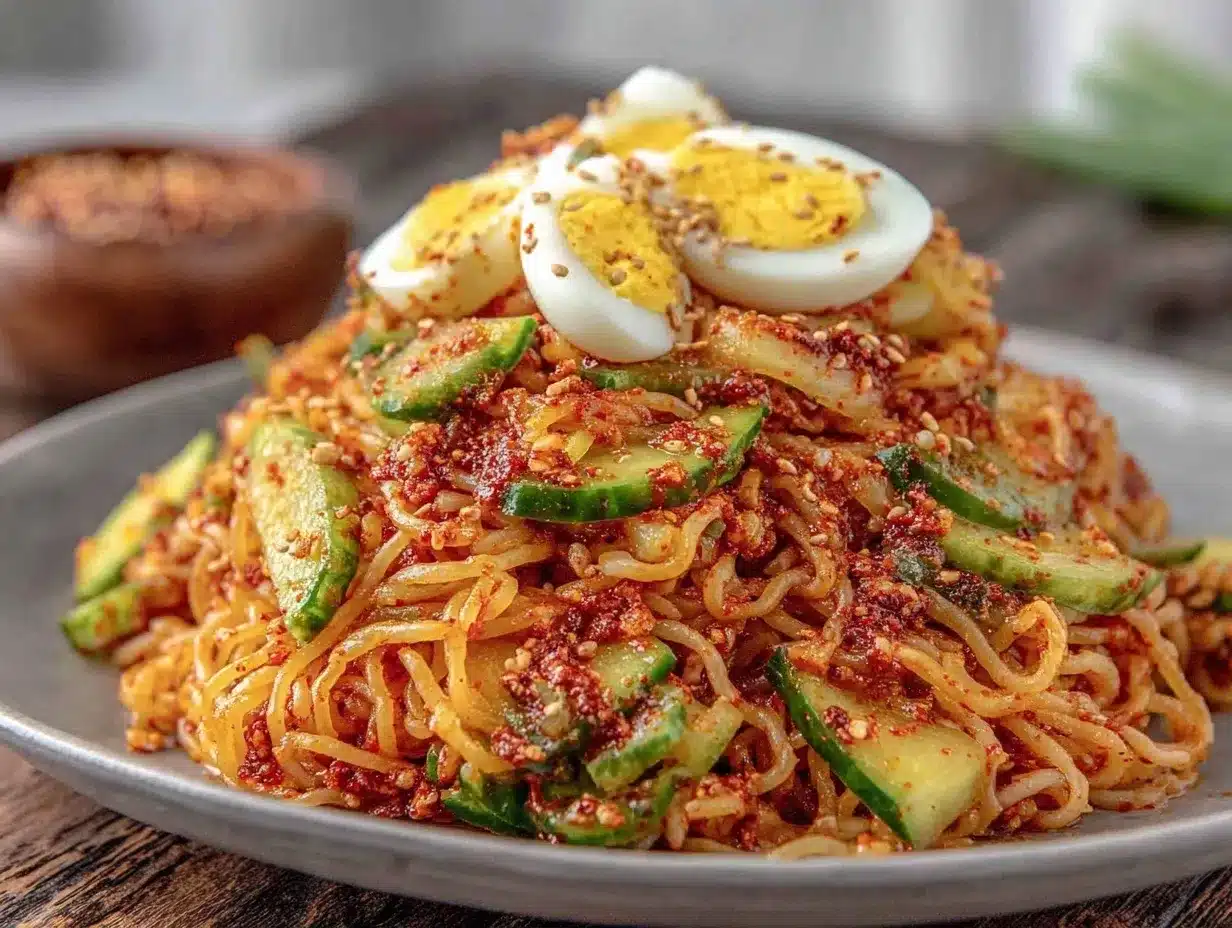
- Boil the noodles: Bring a large pot of water to a rolling boil. Add the Korean wheat noodles (about 225g or 1/2 pound). Cook according to package instructions, usually 3-4 minutes, until just tender but still chewy. Avoid overcooking—noodles should have a slight bite.
- Drain and chill: Immediately drain noodles in a colander and rinse under cold running water to stop cooking. Transfer noodles to a large bowl filled with ice water (or add ice cubes) to cool completely. This step is crucial for that perfect cold noodle texture.
- Prepare the sauce: In a small bowl, whisk together 2 tablespoons gochugaru, 2 tablespoons soy sauce, 1 tablespoon rice vinegar, 1 tablespoon toasted sesame oil, 1 tablespoon honey, 1 teaspoon minced garlic, and 1 teaspoon grated ginger. Adjust sweetness or spice to taste. The sauce should be spicy, tangy, and slightly sweet.
- Drain noodles again: Once chilled, drain noodles thoroughly to avoid watery sauce. Transfer to a serving bowl.
- Mix sauce and noodles: Pour the spicy gochugaru sauce over the cold noodles. Toss gently but thoroughly to coat every strand evenly. You want the noodles glistening but not swimming in sauce.
- Add garnishes: Top noodles with julienned cucumber, sliced green onions, halved hard-boiled egg, and a sprinkle of toasted sesame seeds. If using protein like shredded chicken or tofu, add it now for a more filling meal.
- Serve immediately: This dish is best enjoyed right away while the noodles are cool and the sauce is vibrant. You can refrigerate leftovers covered for up to one day, but the noodles may firm up and the sauce might thicken slightly.
Pro tip: I always reserve a little of the noodle cooking water to loosen the sauce if it feels too thick after mixing. The salty starch helps everything bind nicely without diluting flavor.
Cooking Tips & Techniques
One of the trickiest parts of making Korean cold noodles is getting the texture right. Overcooked noodles turn mushy fast, so keep a close eye on the timing. Cooking them just shy of done and then plunging into ice water locks in that perfect bite.
When mixing the sauce, whisking the ingredients well before adding to noodles ensures even flavor distribution. Gochugaru can be a bit powdery, so blending it with the wet ingredients prevents clumps and delivers a smooth coating.
Don’t skip the ice bath—it’s what transforms this dish from just spicy noodles to a refreshing, cooling experience. I’ve made the mistake of rinsing noodles with cold water only once and ended up with limp, sticky noodles. The ice bath firms them right up.
Adjusting heat levels is simple here. If you’re new to gochugaru or prefer mild spice, start with 1 tablespoon and work your way up. The honey helps tame the heat, but you can always add more if you want that extra kick.
Multitasking tip: While noodles boil, prep your sauce and slice cucumber and green onions. This way, assembly is quick and you’re not left waiting with hot noodles sitting around.
Variations & Adaptations
This Korean cold noodles recipe is surprisingly versatile. Here are some ways to switch things up:
- Protein-packed: Add shredded rotisserie chicken, cooked shrimp, or pan-fried tofu for a heartier meal.
- Vegetarian/Vegan: Skip the egg and substitute honey with maple syrup or agave. Use tamari instead of soy sauce for a gluten-free option.
- Seasonal twists: In summer, toss in fresh julienned carrots, radishes, or even thinly sliced Asian pear for extra crunch and sweetness.
- Spice variations: Swap gochugaru for a milder chili powder or add a drizzle of Korean chili paste (gochujang) for a saucier, more complex flavor.
- Cold noodle swaps: Try this sauce over buckwheat soba noodles or even cold rice noodles for a different texture.
Personally, I’ve mixed in kimchi on occasion for a fermented tang and extra bite—it adds a punch that pairs beautifully with the spicy sauce. Experimenting with different garnishes like crushed peanuts or fresh cilantro can also add interesting layers.
Serving & Storage Suggestions
Serve these flavorful Korean cold noodles chilled for the best experience. The cool noodles with spicy sauce are incredibly refreshing on warm days or when you want a meal that feels light but still satisfying.
Plate the noodles in shallow bowls, garnish with the cucumber, egg, and sesame seeds so the colors pop. A side of pickled radish or a simple Asian cucumber salad works well alongside, as does a crisp, cold glass of iced green tea or a light beer.
Leftovers keep well covered in the fridge for up to 24 hours. The noodles may firm up and the sauce thickens, so give it a quick toss with a splash of cold water or a little extra sesame oil before serving again. Avoid freezing, as the texture won’t hold up.
Flavors tend to mellow over time, so if you’re making this in advance, consider adding fresh garnishes right before serving to keep things vibrant.
Nutritional Information & Benefits
This Korean cold noodles recipe is moderate in calories, making it a good choice for a balanced, flavorful meal. The gochugaru chili flakes are rich in antioxidants and vitamins A and C, which support immunity and skin health. Sesame oil contributes healthy fats and a boost of vitamin E.
Using fresh cucumbers adds hydration and fiber, while the egg provides protein and essential nutrients like choline. For those watching gluten intake, swapping noodles for gluten-free options like rice vermicelli or soba made with 100% buckwheat is a smart alternative.
This dish fits well into a light Mediterranean-inspired or Asian fusion diet, offering satisfying flavor without heavy sauces or excess oil.
Conclusion
Flavorful Korean cold noodles with spicy gochugaru sauce have quickly become a favorite in my kitchen for their perfect balance of heat, tang, and cool refreshment. They’re simple enough for a weeknight but special enough to impress friends when you’re craving something different. I love how adaptable this recipe is, letting you tweak spice levels, add proteins, or toss in fresh veggies to suit your mood.
Give this recipe a try and make it your own—whether you want to keep it classic or add your personal flair. I’d love to hear how you customize it or what your favorite garnishes are!
And if you ever feel like pairing these noodles with a cozy dessert, the brown sugar caramel apple cake is a sweet way to round out the meal. Or for something savory and just as comforting, the crispy keto beef tacos with cheese shells make a great follow-up dinner idea.
Happy cooking and enjoy every spicy, cool bite!
FAQs
What is gochugaru and can I substitute it?
Gochugaru is Korean red chili flakes with a smoky, slightly sweet flavor. If you don’t have it, you can use mild chili powder or smoked paprika, but the flavor won’t be quite the same.
Can I make these noodles ahead of time?
You can prep the sauce and noodles separately in advance, but mix them just before serving to keep the noodles from getting soggy.
What noodles work best for this recipe?
Korean wheat noodles or somyeon are ideal for their chewiness. Thin spaghetti can be a substitute, and rice vermicelli works for gluten-free options.
How spicy is this dish?
The heat level depends on the amount of gochugaru you add. Start with less if you prefer mild spice and adjust to taste.
Can I add protein to make it a full meal?
Absolutely! Shredded chicken, tofu, or cooked shrimp are all tasty additions to make the dish more filling.
Pin This Recipe!
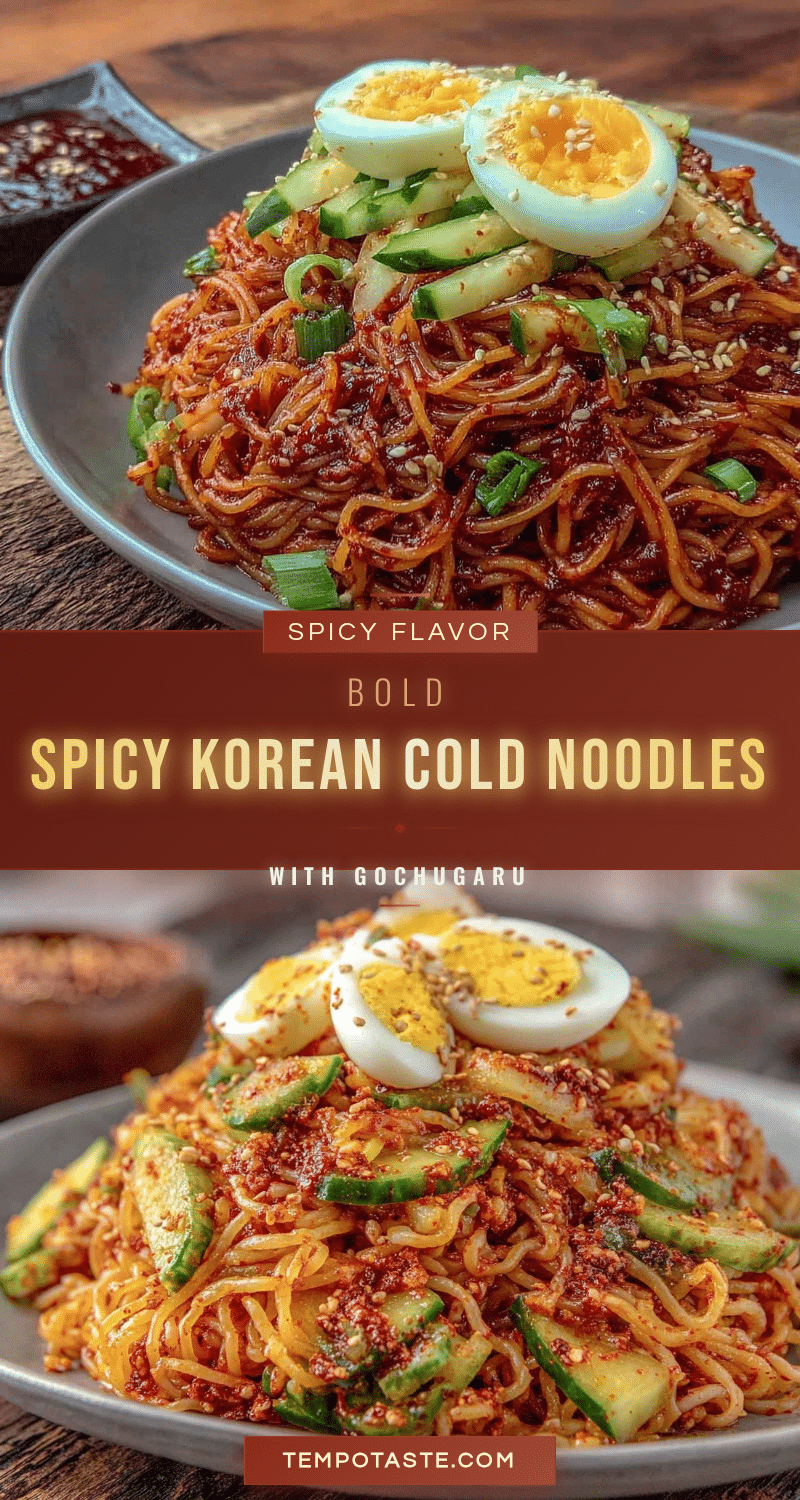
Flavorful Korean Cold Noodles Recipe with Easy Spicy Gochugaru Sauce

A refreshing and spicy Korean cold noodle dish featuring chewy noodles and a balanced gochugaru chili flake sauce with sweet, tangy, and nutty flavors. Perfect for warm weather and quick meals.
- Prep Time: 10 minutes
- Cook Time: 5 minutes
- Total Time: 15 minutes
- Yield: 2 servings 1x
- Category: Main Course
- Cuisine: Korean
Ingredients
- 1/2 pound (225g) Korean wheat noodles or somyeon (thin wheat noodles)
- Ice cubes (for chilling noodles)
- 2 tablespoons gochugaru (Korean red chili flakes)
- 2 tablespoons soy sauce
- 1 tablespoon rice vinegar
- 1 tablespoon toasted sesame oil
- 1 tablespoon honey or sugar
- 1 teaspoon minced garlic
- 1 teaspoon grated ginger (optional)
- 1 cucumber, julienned
- 2 green onions, thinly sliced
- 1 hard-boiled egg, halved (optional)
- Toasted sesame seeds
- Optional: shredded cooked chicken or tofu for protein
Instructions
- Bring a large pot of water to a rolling boil. Add the Korean wheat noodles (about 225g or 1/2 pound). Cook according to package instructions, usually 3-4 minutes, until just tender but still chewy. Avoid overcooking.
- Immediately drain noodles in a colander and rinse under cold running water to stop cooking. Transfer noodles to a large bowl filled with ice water (or add ice cubes) to cool completely.
- In a small bowl, whisk together 2 tablespoons gochugaru, 2 tablespoons soy sauce, 1 tablespoon rice vinegar, 1 tablespoon toasted sesame oil, 1 tablespoon honey, 1 teaspoon minced garlic, and 1 teaspoon grated ginger. Adjust sweetness or spice to taste.
- Once chilled, drain noodles thoroughly to avoid watery sauce. Transfer to a serving bowl.
- Pour the spicy gochugaru sauce over the cold noodles. Toss gently but thoroughly to coat every strand evenly.
- Top noodles with julienned cucumber, sliced green onions, halved hard-boiled egg, and a sprinkle of toasted sesame seeds. Add shredded chicken or tofu if desired.
- Serve immediately while noodles are cool and sauce is vibrant. Refrigerate leftovers covered for up to one day, stirring with a splash of cold water or sesame oil before serving.
Notes
Reserve some noodle cooking water to loosen the sauce if it becomes too thick. Avoid overcooking noodles to maintain chewy texture. Use toasted sesame oil for best flavor. Adjust gochugaru amount to control spice level. Refrigerate leftovers up to 24 hours; stir before serving.
Nutrition
- Serving Size: 1 bowl (approximatel
- Calories: 350
- Sugar: 8
- Sodium: 900
- Fat: 10
- Saturated Fat: 1.5
- Carbohydrates: 55
- Fiber: 3
- Protein: 9
Keywords: Korean cold noodles, gochugaru sauce, spicy noodles, summer recipe, easy Korean recipe, cold noodle salad