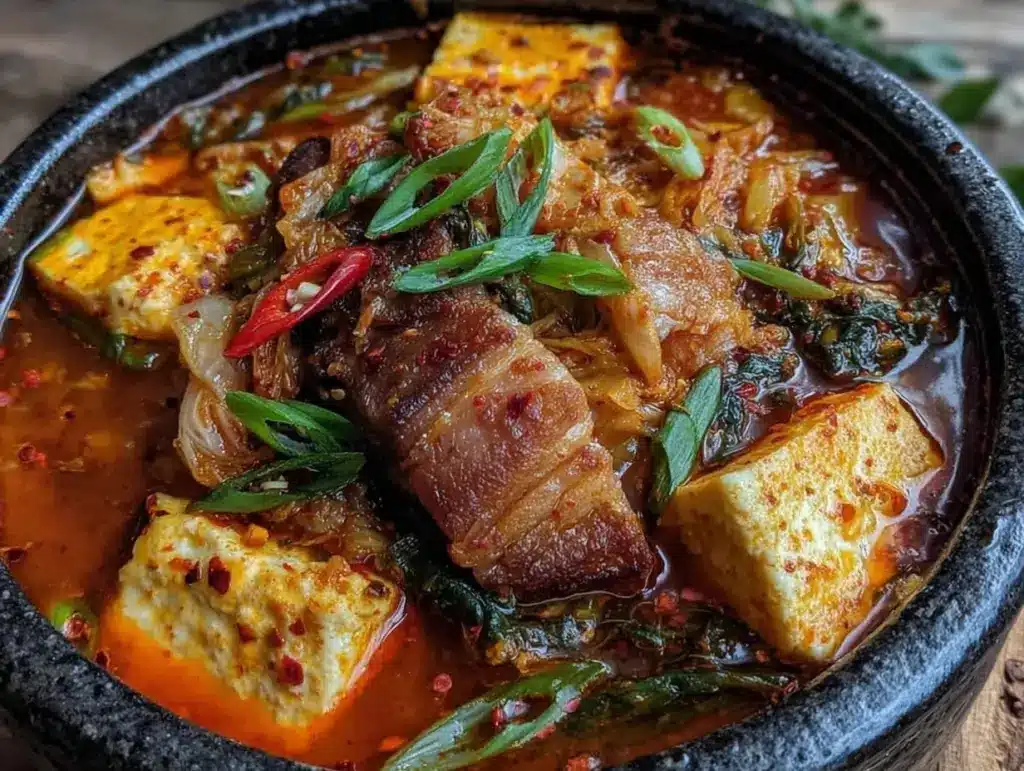
“You’re not making kimchi jjigae right if you don’t hear that sizzle the moment the pork belly hits the pot,” my friend Jin told me one chilly evening. Honestly, I’d always thought kimchi stew was just a spicy soup you ordered at Korean restaurants, nothing too special. But when Jin invited me over and whipped up her version with silky tofu and thick, fatty pork belly, I was hooked after just one spoonful. That rich, bubbling stew with the fermented tang of aged kimchi and the gentle creaminess of silken tofu was unlike anything I’d expected.
It was a rainy night, and the warmth from the stew felt like a hug I didn’t realize I needed. The layers of flavor—spicy, sour, savory—hit all at once, but the tofu softened the heat just right. I found myself craving it several times over the next week, tweaking the recipe here and there to make it my own. Let’s just say, kimchi jjigae with pork belly and silken tofu became my go-to comfort dish for gloomy days and quick dinners alike.
There’s something quietly satisfying about a pot that simmers itself into a hearty meal while you catch up on a favorite show or just sit back with a warm cup of tea. It’s not fancy, but it’s honest and full of soul. That’s why this flavorful spicy kimchi jjigae stew recipe stuck with me—and I think it might just find a permanent spot in your kitchen rotation, too.
Why You’ll Love This Recipe
This flavorful spicy kimchi jjigae stew with silken tofu and pork belly isn’t just another Korean stew recipe—it’s a tried-and-true favorite that I’ve tested for weeks to get just right. Here’s what makes it stand out:
- Quick & Easy: Ready in under 45 minutes, it’s perfect for busy weeknights or when you want something comforting but fuss-free.
- Simple Ingredients: Most of what you need are pantry staples or easily found at your local Asian market. The magic really comes from the kimchi and pork belly combo.
- Perfect for Cozy Nights: This stew hits the spot on cold or rainy evenings, making your kitchen smell like a warm Korean home.
- Crowd-Pleaser: Whether you’re feeding family or friends, expect requests for seconds—kids and adults alike tend to love this stew’s bold flavors balanced by silky tofu.
- Unbelievably Delicious: The pork belly’s fatty richness melds perfectly with the tang of kimchi and the smooth texture of silken tofu, creating a stew that feels both hearty and delicate.
What sets this recipe apart is the layering of flavors with a simple technique: sautéing the pork belly until crisp before adding the kimchi and broth. This step builds a deep, savory base that you don’t get if you just dump everything in the pot. Plus, using silken tofu instead of firmer varieties adds a melt-in-your-mouth texture that tones down the heat just enough without losing the stew’s spicy kick.
Honestly, this isn’t just food—it’s a comforting ritual that warms you from the inside out, perfect for when you want a little culinary hug without too much effort.
What Ingredients You Will Need
This recipe uses simple, wholesome ingredients to deliver bold flavor and satisfying texture without the fuss. Most of these are pantry staples, with the kimchi being the star that’s worth seeking out fresh or homemade if you can.
- Pork Belly: 8 ounces (225 grams), sliced into bite-sized pieces. I prefer a well-marbled cut from my local butcher for the best flavor.
- Kimchi: 1 cup (240 grams), preferably well-fermented for that tangy punch. Homemade is ideal, but store-bought works fine.
- Silken Tofu: 1 block (about 12 ounces or 340 grams), gently drained and cut into large cubes. Use soft or silken tofu to get that silky texture.
- Gochugaru (Korean Red Chili Flakes): 1 to 2 tablespoons, depending on your spice tolerance. I recommend Chung Jung One brand for consistent heat.
- Garlic: 3 cloves, minced. Fresh garlic gives that sharp aroma that wakes up the stew.
- Ginger: 1 teaspoon, minced or grated for a subtle warmth.
- Green Onions: 2 stalks, chopped for garnish and flavor.
- Soy Sauce: 1 tablespoon for umami depth. Low sodium works well to keep saltiness balanced.
- Sesame Oil: 1 teaspoon, toasted if possible, for a nutty finish.
- Water or Anchovy Broth: 3 cups (720 ml). Anchovy broth adds authenticity, but water works too if you’re short on time.
- Optional: 1 teaspoon sugar to balance acidity if your kimchi is very sour, and a handful of sliced mushrooms for extra texture.
Feel free to swap the pork belly with pork shoulder if you prefer a leaner cut, or even tofu-only for a vegetarian twist. For a gluten-free version, double-check your soy sauce or use tamari instead.
Equipment Needed
- Heavy-Bottomed Pot or Dutch Oven: A 4 to 5-quart pot works best to evenly distribute heat and prevent burning during simmering.
- Sharp Knife and Cutting Board: For slicing pork belly and chopping ingredients safely.
- Measuring Cups and Spoons: To keep seasoning balanced, especially with chili flakes and soy sauce.
- Wooden Spoon or Heat-Resistant Spatula: For stirring without scratching your pot.
- Strainer or Slotted Spoon: Optional, handy if you want to remove excess fat from pork belly after rendering.
If you don’t have a Dutch oven, a thick-bottomed saucepan will do, but watch the heat carefully to avoid scorching. I’ve found that a well-seasoned cast iron pot also adds a subtle depth to the stew’s flavor.
Preparation Method
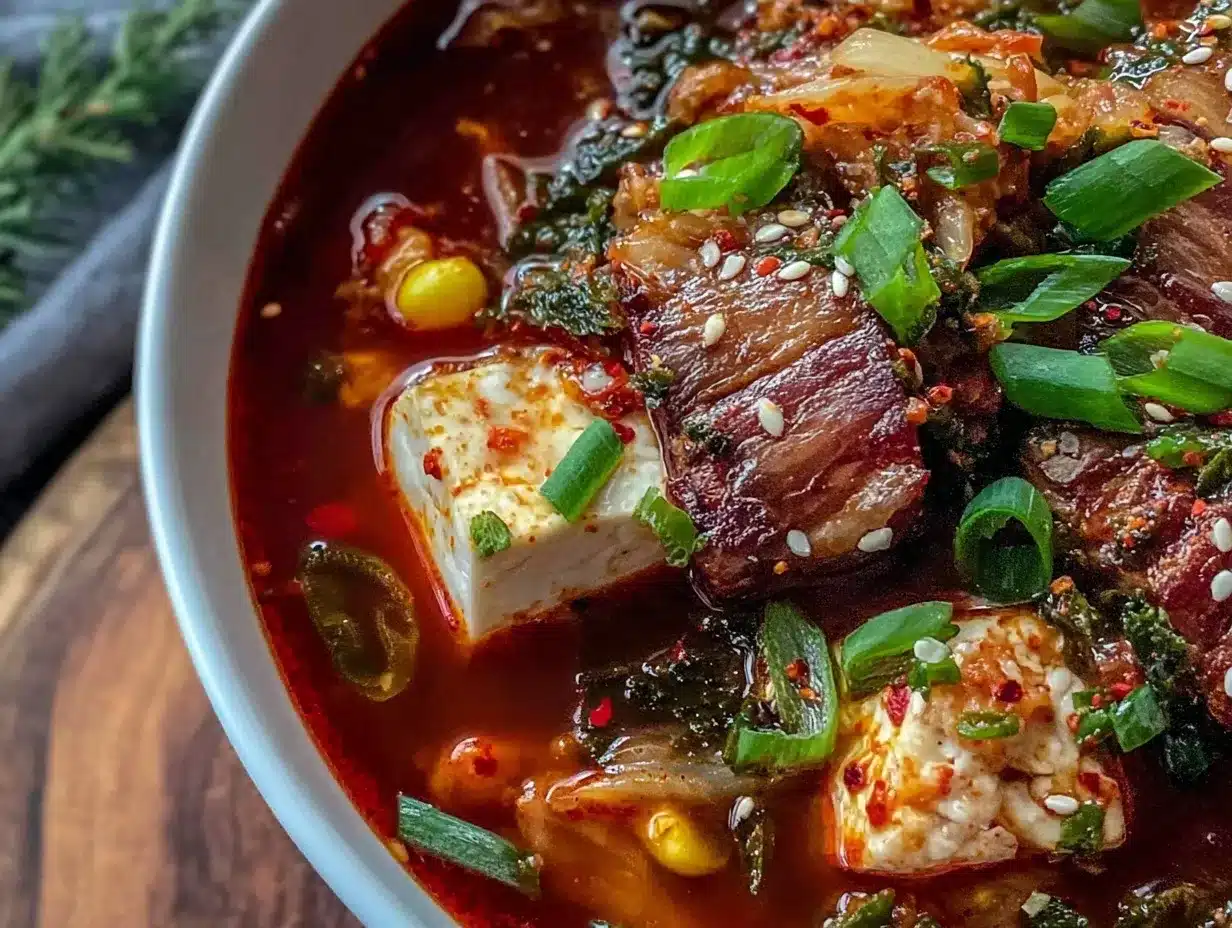
- Prepare the Pork Belly: Slice 8 ounces (225 grams) of pork belly into bite-sized pieces. Pat dry to reduce splatter. Heat your pot over medium heat and add pork belly pieces. Cook for about 5-7 minutes, stirring occasionally, until the fat renders and the edges start to crisp. This step builds the stew’s base flavor—don’t rush it!
- Add Aromatics: Toss in 3 minced garlic cloves and 1 teaspoon minced ginger. Sauté for another minute until fragrant, careful not to burn the garlic.
- Incorporate Kimchi: Add 1 cup (240 grams) of well-fermented kimchi, stirring it into the pork and aromatics. Cook for 3-4 minutes to soften and deepen the kimchi’s flavor.
- Season the Stew: Sprinkle in 1 to 2 tablespoons of gochugaru (Korean chili flakes), 1 tablespoon soy sauce, and optional 1 teaspoon sugar if your kimchi is too sour. Stir well to combine.
- Add Broth: Pour in 3 cups (720 ml) of water or anchovy broth. Bring to a boil, then reduce heat to a gentle simmer. Let it cook uncovered for 15-20 minutes to marry the flavors.
- Add Silken Tofu: Gently slide in the cubed block of silken tofu (about 12 ounces or 340 grams). Simmer for another 5 minutes, being careful not to break the tofu apart. The tofu should be warm and silky, soaking in the spicy broth.
- Final Touches: Drizzle 1 teaspoon toasted sesame oil and sprinkle chopped green onions on top. Give a gentle stir and remove from heat.
- Serve Immediately: Ladle the stew into bowls with steamed rice on the side. The longer it sits, the more the flavors meld, but enjoy it fresh for the best tofu texture.
Pro tip: If you notice the stew getting too salty or spicy, a splash of water or extra tofu cubes can help balance it out. And if the broth tastes flat, a pinch more soy sauce or a dash of fish sauce can wake it up quickly.
Cooking Tips & Techniques
To get this kimchi jjigae just right, I learned a few things the hard way. First, don’t skip rendering the pork belly fat. That crispy, browned pork adds a smoky richness that no broth alone can mimic.
Use ripe, well-fermented kimchi for a deeper tang. If your kimchi is too young or mild, the stew will taste bland. I once tried this with fresh kimchi and it ended up tasting like a spicy cabbage soup—not quite the same cozy effect.
When adding silken tofu, handle it gently. It’s delicate and can fall apart easily, so stir with care or just let it warm in the simmering broth without disturbing it too much.
Timing matters too—letting the stew simmer uncovered helps concentrate the flavors. Also, don’t rush the chili flakes; add them gradually and taste as you go to find your perfect heat level.
Multitasking tip: While the stew simmers, you can prepare simple cold sides or whip up a fresh salad, like the fresh shaved fennel and orange salad, which pairs beautifully with the richness of the stew.
Variations & Adaptations
This recipe is super flexible, so you can adjust it to suit your taste or dietary needs.
- Vegetarian Version: Skip the pork belly and use mushroom broth with extra mushrooms like shiitake or oyster for umami. Add firm tofu instead of silken for a meatier bite.
- Seafood Twist: Add small clams or shrimp in the last 5 minutes of cooking for a briny kick that complements the spicy broth.
- Low-Sodium Option: Use low-sodium soy sauce and reduce gochugaru for a milder stew. Substitute pork belly with lean pork loin to cut fat.
- Seasonal Swap: In summer months, I like to add fresh zucchini or summer squash for a lighter feel. It’s also great to serve alongside cold dishes like fresh cold sesame noodles with creamy peanut sauce.
- Spice Level: For a less spicy stew, reduce chili flakes and add a bit more tofu or broth. For a fiery version, toss in some fresh sliced chili or extra gochujang paste.
I once tried swapping pork belly for bacon when I was in a pinch, and while not traditional, it gave the stew a smoky edge that my family surprisingly loved.
Serving & Storage Suggestions
This kimchi jjigae is best served hot and fresh, ideally with a bowl of steamed white rice to soak up the spicy broth. Garnish with extra green onions or a sprinkle of sesame seeds for a simple, pretty presentation.
For a full Korean-style meal, serve with small banchan (side dishes) like pickled radish or creamy homemade hummus and veggies for contrasting flavors and textures.
To store, let the stew cool completely, then refrigerate in an airtight container for up to 3 days. Reheat gently on the stovetop to avoid breaking the tofu apart. The flavors develop beautifully overnight, though the tofu may soften further.
If freezing, remove tofu first (to preserve texture), freeze the broth and pork separately, then thaw and combine before serving.
Nutritional Information & Benefits
Each serving of this flavorful spicy kimchi jjigae stew roughly contains:
| Calories | 350-400 kcal |
|---|---|
| Protein | 20-25 grams |
| Fat | 25 grams (mostly from pork belly) |
| Carbohydrates | 10-15 grams |
Kimchi is rich in probiotics, which support gut health, while pork belly provides satisfying protein and fat for energy. The garlic and ginger offer anti-inflammatory properties, and tofu adds plant-based protein and calcium.
Diet-wise, this stew is naturally gluten-free if you use tamari instead of soy sauce and is low in carbs, making it suitable for various eating plans. Just keep in mind the sodium content from kimchi and soy sauce if you’re watching salt intake.
Conclusion
If you’re looking for a stew that’s bold, comforting, and deceptively simple, this flavorful spicy kimchi jjigae with silken tofu and pork belly fits the bill. It’s a dish that makes you feel good, whether you’re warming up after a cold day or craving a taste of something familiar yet new.
Don’t hesitate to make it your own—adjust the spice, swap ingredients, or pair it with bright salads like the fresh grilled halloumi salad with pomegranate for a lovely balance.
For me, this stew is a little reminder that sometimes the best meals come from simple ingredients, a bit of patience, and a lot of heart. If you try it, I’d love to hear how you make it yours.
Happy cooking, and here’s to many cozy bowls ahead!
FAQs
What can I substitute for pork belly in kimchi jjigae?
You can use pork shoulder for a leaner option or tofu for a vegetarian version. Some even use bacon for a smoky twist.
Can I make kimchi jjigae without fermented kimchi?
Fresh kimchi won’t give the same depth of flavor. If you can’t find fermented kimchi, try adding a bit of vinegar and letting it sit overnight to mimic the tang.
How spicy is this stew usually?
The heat level depends on the amount of gochugaru you add. Start with 1 tablespoon for mild heat and increase if you like it hotter.
Can I prepare kimchi jjigae in advance?
Yes! It tastes even better the next day after the flavors meld. Just reheat gently to preserve the tofu texture.
What side dishes go well with kimchi jjigae?
Steamed rice is classic, but you can also serve it with Korean banchan or lighter salads like the fresh shaved fennel and orange salad for contrast.
Pin This Recipe!
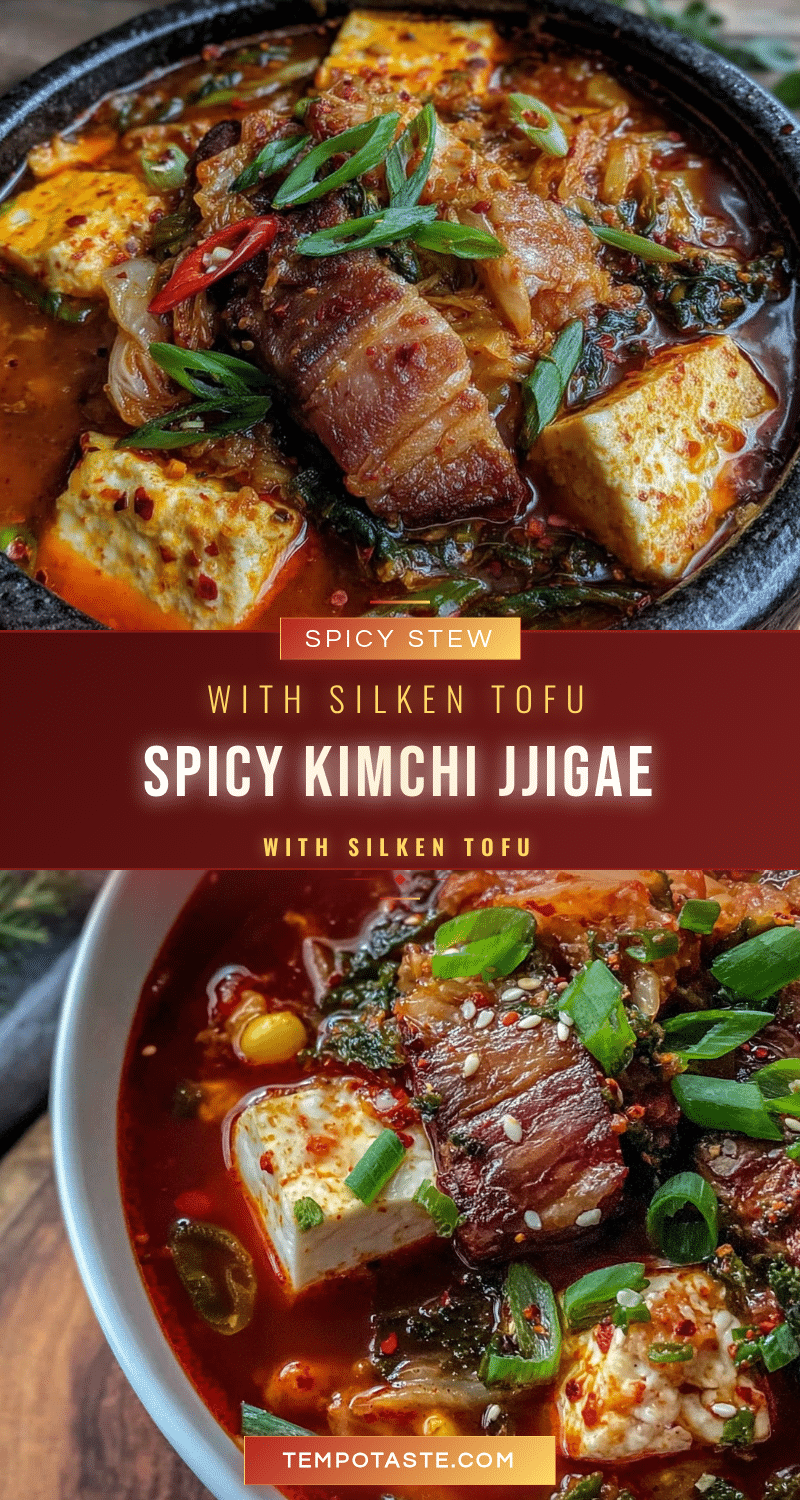
Flavorful Spicy Kimchi Jjigae Stew with Silken Tofu and Pork Belly

A comforting Korean stew featuring crispy pork belly, well-fermented kimchi, and silky tofu simmered in a spicy, savory broth. Perfect for cozy nights and quick dinners.
- Prep Time: 10 minutes
- Cook Time: 30 minutes
- Total Time: 40 minutes
- Yield: 4 servings 1x
- Category: Main Course
- Cuisine: Korean
Ingredients
- 8 ounces pork belly, sliced into bite-sized pieces
- 1 cup kimchi (240 grams), preferably well-fermented
- 1 block silken tofu (about 12 ounces or 340 grams), drained and cut into large cubes
- 1 to 2 tablespoons gochugaru (Korean red chili flakes)
- 3 cloves garlic, minced
- 1 teaspoon ginger, minced or grated
- 2 stalks green onions, chopped
- 1 tablespoon soy sauce (low sodium recommended)
- 1 teaspoon toasted sesame oil
- 3 cups water or anchovy broth (720 ml)
- Optional: 1 teaspoon sugar
- Optional: handful of sliced mushrooms
Instructions
- Slice pork belly into bite-sized pieces and pat dry.
- Heat a heavy-bottomed pot over medium heat and add pork belly pieces. Cook for 5-7 minutes, stirring occasionally, until fat renders and edges crisp.
- Add minced garlic and ginger; sauté for 1 minute until fragrant.
- Add kimchi and cook for 3-4 minutes to soften and deepen flavor.
- Sprinkle in gochugaru, soy sauce, and optional sugar; stir well.
- Pour in water or anchovy broth and bring to a boil. Reduce heat and simmer uncovered for 15-20 minutes.
- Gently add silken tofu cubes and simmer for another 5 minutes without breaking tofu.
- Drizzle toasted sesame oil and sprinkle chopped green onions on top. Stir gently and remove from heat.
- Serve immediately with steamed rice.
Notes
Render pork belly fat thoroughly for best flavor. Use well-fermented kimchi for depth. Handle silken tofu gently to avoid breaking. Adjust spice level gradually. For vegetarian version, omit pork and use mushroom broth with firm tofu. For gluten-free, use tamari instead of soy sauce.
Nutrition
- Serving Size: 1 bowl of stew with
- Calories: 350400
- Sugar: 3
- Fat: 25
- Saturated Fat: 8
- Carbohydrates: 1015
- Fiber: 2
- Protein: 2025
Keywords: kimchi jjigae, spicy stew, Korean stew, pork belly, silken tofu, comfort food, gochugaru, fermented kimchi