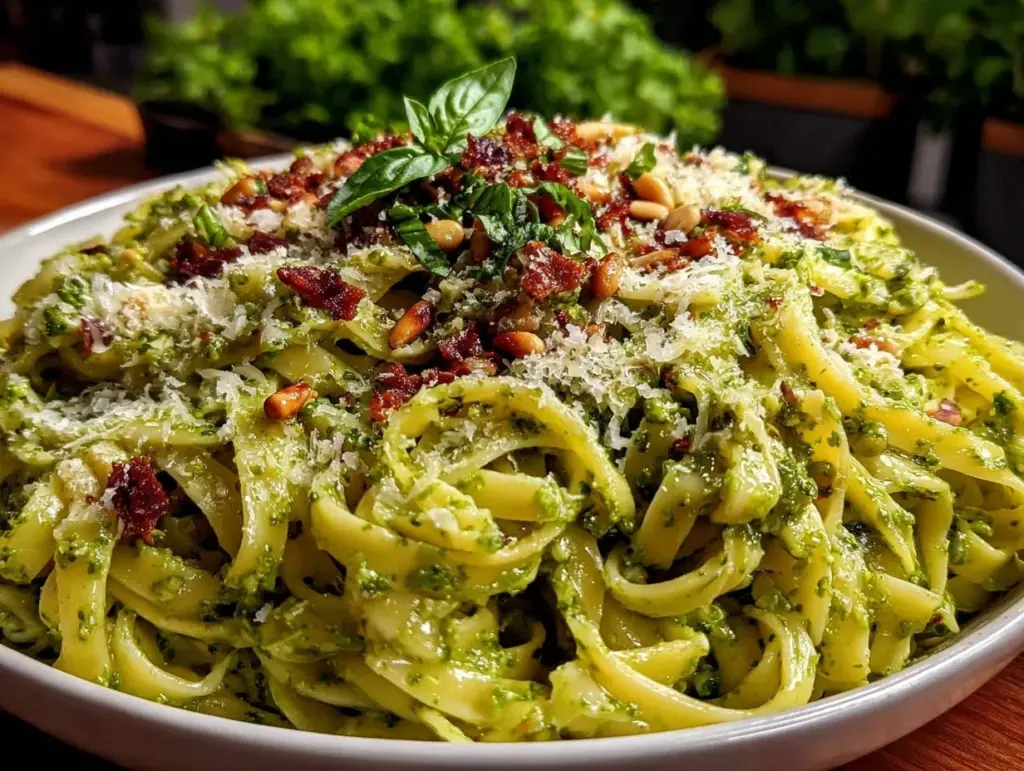
Early June, and the kitchen windows are cracked open just enough to catch the faint scent of dew on the garden herbs. The morning light spills in soft and golden, hitting the wooden countertop where a bundle of fresh garlic scapes sits quietly beside a bowl of ripe cherry tomatoes. It’s that particular moment when the summer harvest begins to whisper its arrival — not thunderous or flashy, but a gentle promise of fresh flavors. And the only thing I want is the bright, grassy punch of fresh garlic scape pesto tossed through warm, tender pasta.
There’s something slow and satisfying about this ritual — the quiet chopping of these curly green stalks, the rhythmic pulse of the blender bringing them together with nuts and cheese, the subtle steam rising as the pasta boils. It’s not a recipe I reach for when the clock’s racing. Instead, it’s the kind of meal that asks me to pause and savor the season’s fleeting gifts in a simple, honest way. Honestly, that fresh garlic scape pesto pasta is a little like summer itself — unpretentious, lush, and fleeting enough to make it feel like a secret shared between the cook and the day.
I first stumbled onto garlic scapes at a farmers market a few years back, intrigued by their unusual spirals and fresh aroma. That first batch transformed an ordinary pasta night into something quietly magical. Since then, the recipe has stuck — not because it’s flashy, but because it feels like a small celebration of the season’s best, every time. This pasta has a way of making me slow down, breathe, and appreciate how a few fresh ingredients can sing together with just a bit of care. It’s a humble pleasure that somehow feels like summer on a plate.
Why You’ll Love This Recipe
This fresh garlic scape pesto pasta recipe is one of those simple, honest meals that feels like a gentle hug after a long day. From my many attempts and tweaks over the summers, here’s why it’s become a staple in my kitchen:
- Quick & Easy: You can whip this up in under 30 minutes, perfect for those warm summer nights when you don’t want to spend forever in the kitchen.
- Simple Ingredients: It calls for just a handful of fresh, easy-to-find ingredients—most are pantry staples or seasonal finds, so no last-minute grocery runs.
- Perfect for Summer: Light, fresh, and herbaceous, it’s ideal for summer dinners when heavy sauces just feel wrong.
- Crowd-Pleaser: Every time I’ve served it, both kids and adults have asked for seconds—the garlic scape’s mild garlic flavor is approachable but interesting.
- Unbelievably Delicious: The combination of fresh pesto, nutty parmesan, and al dente pasta creates a texture and flavor that feels both comforting and exciting.
What sets this garlic scape pesto apart from other pesto recipes is the unique flavor garlic scapes bring — a softer, greener, and a bit sweeter garlic note without the harsh bite of raw garlic. Plus, blending in toasted walnuts instead of pine nuts gives it an earthy depth. Honestly, it’s the kind of recipe that makes you close your eyes after the first bite and just appreciate the moment. It’s not just a meal; it’s a way to celebrate summer’s quiet abundance without fuss or fanfare.
What Ingredients You Will Need
This fresh garlic scape pesto pasta recipe uses simple, wholesome ingredients to deliver bold flavor and satisfying texture without the fuss. Most of these are kitchen staples or easy seasonal additions if you catch garlic scapes at your local market. Here’s what you’ll need, grouped for clarity:
- For the Pesto:
- Fresh garlic scapes, roughly chopped (about 1 cup packed) — these are the star, offering a bright, mild garlic flavor
- Toasted walnuts (1/3 cup) — swap pine nuts or almonds if preferred, but walnuts add a lovely earthiness
- Grated Parmesan cheese (1/2 cup) — I recommend a good-quality Parmigiano-Reggiano for best flavor
- Extra virgin olive oil (1/2 cup) — use a fruity, fresh-tasting oil to complement the pesto’s brightness
- Fresh lemon juice (1 tablespoon) — adds a subtle brightness that lifts the pesto
- Sea salt and freshly ground black pepper, to taste
- For the Pasta:
- Your choice of pasta (12 ounces / 340 grams) — linguine, spaghetti, or penne work beautifully; I usually pick whole wheat for extra texture
- Salt for pasta water
- Optional Garnishes:
- Cherry tomatoes, halved (adds a juicy pop and color contrast)
- Extra Parmesan for sprinkling
- Fresh basil leaves (for an added herbal note)
If garlic scapes aren’t available, young garlic leaves or mild green garlic can stand in, but the flavor won’t be quite the same. For a dairy-free version, swap Parmesan for nutritional yeast and use a good-quality olive oil. When I find fresh cherry tomatoes on sale, I toss a handful in for a fresh burst that pairs perfectly — especially after making a summery caprese pasta salad earlier in the week.
Equipment Needed
To make this garlic scape pesto pasta, you’ll want just a few basic kitchen tools. Nothing fancy, but each one helps keep the process smooth and enjoyable.
- Food processor or blender: This is key for turning garlic scapes, nuts, cheese, and oil into a luscious, creamy pesto. I’ve tried hand-chopping before — not impossible, but it takes forever and the texture isn’t as silky.
- Large pot: For boiling pasta; make sure it’s roomy enough so the pasta cooks evenly.
- Colander: To drain the pasta without losing any precious starchy water.
- Measuring cups and spoons: Precision helps balance flavors, especially with the lemon juice and cheese.
- Wooden spoon or tongs: For tossing the pasta gently with the pesto.
If you don’t have a food processor, a high-speed blender can work, but you may need to stop and scrape down the sides more frequently. For a budget-friendly alternative, small hand mixers with chopping attachments can get the job done, but it’ll take a bit longer. I keep my food processor blades sharp and clean to keep pesto bright and smooth — dull blades tend to bruise the greens, making the color duller and the flavor less vibrant.
Preparation Method
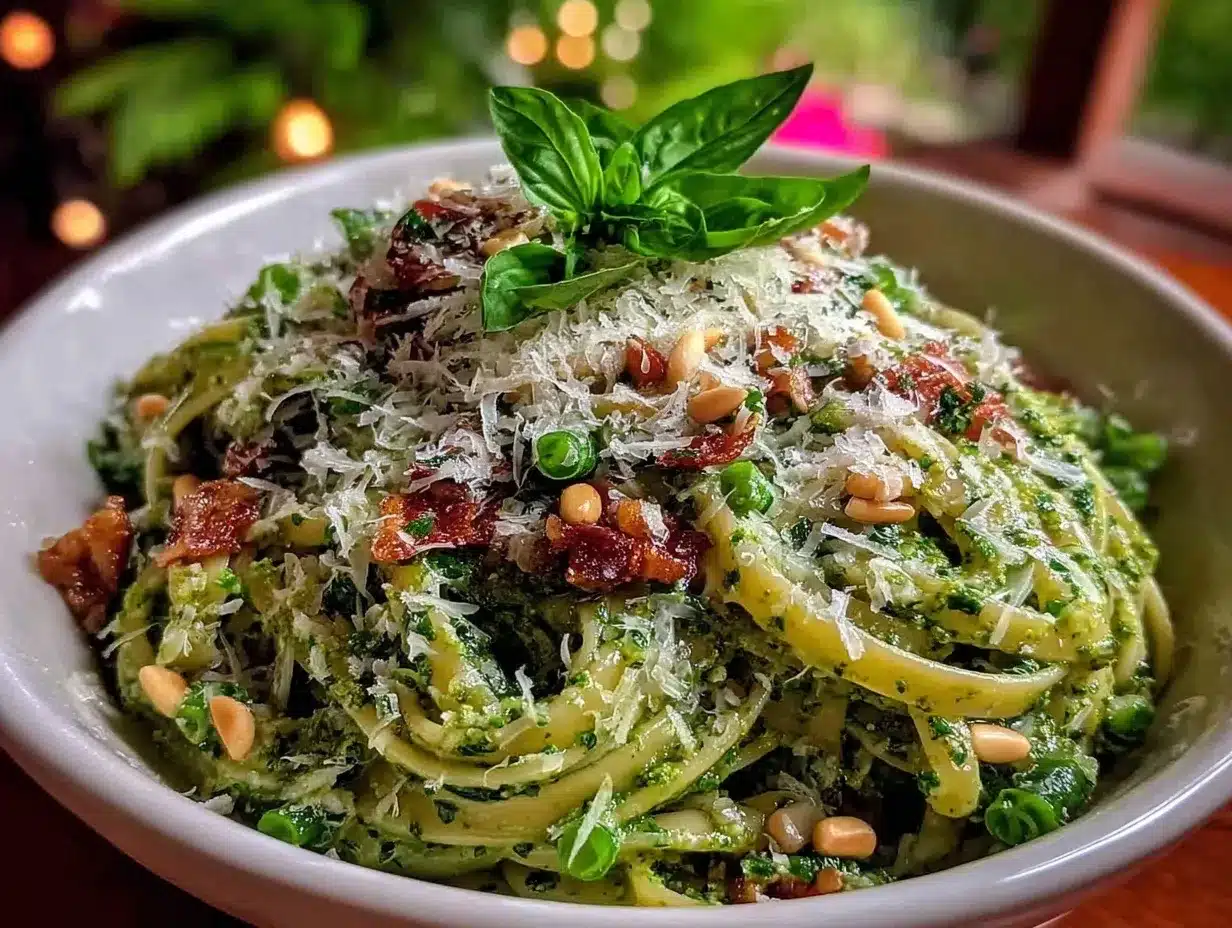
- Toast the walnuts: Heat a dry skillet over medium heat. Add 1/3 cup walnuts and toast, stirring frequently, until fragrant and slightly golden (about 3-5 minutes). Watch carefully so they don’t burn. Remove from heat and let cool.
- Prepare the garlic scapes: Rinse about 1 cup of garlic scapes and roughly chop them into 1-inch pieces. Their curly nature can be a bit tricky, but just cut through the tender parts and discard any tough ends.
- Blend the pesto: Add the garlic scapes, toasted walnuts, 1/2 cup grated Parmesan, and 1 tablespoon fresh lemon juice to your food processor. Pulse a few times to combine.
- Add olive oil: With the processor running, slowly drizzle in 1/2 cup extra virgin olive oil until the mixture is smooth but still has some texture. Stop and scrape down the sides as needed. Season with sea salt and freshly ground black pepper to taste. Remember, the Parmesan adds saltiness, so taste before adding too much salt.
- Cook the pasta: Bring a large pot of salted water to a boil (about 4 quarts / 3.8 liters water, with 1 tablespoon salt). Add 12 ounces (340 grams) of your pasta and cook until al dente, usually 8-10 minutes depending on the shape. Reserve 1 cup of pasta water before draining.
- Toss pasta with pesto: Return drained pasta to the pot or a large bowl. Add the pesto and toss to combine. Add reserved pasta water a little at a time to loosen the sauce and help it cling to the noodles. The starchy water also adds silkiness — don’t skip this step!
- Optional finishing touches: Toss in halved cherry tomatoes or sprinkle extra Parmesan and fresh basil on top, if you like. Serve immediately while warm.
A tip I’ve learned: don’t add all the pasta water at once. It’s easier to control the sauce consistency that way — sometimes a little goes a long way. Also, if your pesto seems thick or a bit dull in color, a splash of lemon juice can brighten it back up just before serving. When I make this, I like to have everything prepped before boiling pasta so the final mix is quick and seamless.
Cooking Tips & Techniques
Making fresh garlic scape pesto pasta is straightforward, but a few tricks can really make your dish sing:
- Use fresh, crisp garlic scapes: The fresher, the better. Older, limp scapes can taste bitter or woody. If you find yourself with a large bunch, blanching the scapes briefly before blending can mellow them, but I usually prefer raw for that bright punch.
- Toast your nuts carefully: Toasting walnuts brings out a deeper flavor, but burnt walnuts will ruin the pesto’s balance. Keep the heat moderate and stir often.
- Don’t over-blend: Pulsing in a food processor maintains a bit of texture and prevents the pesto from becoming a uniform paste. It should feel fresh and a little chunky.
- Reserve pasta water: This is classic Italian cooking wisdom for a reason. That starchy water helps the pesto cling and gives the sauce a silky texture.
- Balance salt carefully: Parmesan is salty, so add salt gradually. Tasting as you go will save you from oversalting.
- Timing is key: Blend the pesto right before tossing with hot pasta to keep the fresh green color vibrant and the flavors alive.
One mistake I made early on was letting the pesto sit too long before mixing with pasta — the color turns dull and the flavor flattens. Since then, I blend and toss right away. Also, if you want to multitask, prep your pesto while the pasta cooks; just don’t assemble until the noodles are drained and still hot.
Variations & Adaptations
This fresh garlic scape pesto pasta is flexible and can be customized to suit different tastes, dietary needs, or seasonal changes. Here are some ideas I’ve tried or considered:
- Nut-free version: Swap walnuts for sunflower seeds or pumpkin seeds toasted lightly. The pesto will be less rich but still flavorful.
- Dairy-free pesto: Replace Parmesan with nutritional yeast or omit it completely for a vegan version. Add a pinch of seaweed flakes for a savory umami kick.
- Different nuts: Pine nuts are traditional for pesto and add a buttery note. Cashews also make a creamy alternative.
- Seasonal twists: In early summer, toss in fresh peas or asparagus tips for texture contrast. Later in the season, stir in roasted cherry tomatoes for a sweeter edge.
- Cooking method variations: Instead of boiling pasta, try grilling thick slices of sourdough bread and spreading the pesto on top for a fresh garlic scape bruschetta.
Personally, I once swapped out the walnuts for pecans and added a touch of smoked paprika — it was unexpectedly good and added a subtle smoky warmth. When summer feels like it’s winding down, I love pairing this pasta with grilled lemon herb salmon and lightly charred asparagus for a complete meal that still feels light.
Serving & Storage Suggestions
This fresh garlic scape pesto pasta is best served immediately while the pasta is warm and the pesto’s bright flavor is at its peak. I like to plate it simply, perhaps with a scattering of fresh basil leaves and a few halved cherry tomatoes for a splash of color.
For a casual summer dinner, it pairs beautifully with crisp white wines like Pinot Grigio or a chilled sparkling water with lemon. The fresh herbal notes in the pesto brighten up any protein or veggie side — grilled chicken or a fresh green salad works beautifully.
If you have leftovers (which sometimes happens but not often), store them in an airtight container in the fridge for up to 2 days. The pesto flavor will mellow and the pasta can absorb the sauce, making it delicious cold or at room temperature for a quick lunch. To reheat, warm gently in a skillet over low heat, adding a splash of water or olive oil to loosen the sauce — avoid the microwave if you want to keep the texture fresh.
Flavors deepen slightly as the pesto rests, so this pasta can taste even better the next day if you don’t mind the sauce softening a bit. Just be sure to add fresh herbs or an extra sprinkle of Parmesan before serving again. For summer meal ideas that complement this dish, you might enjoy a fresh grilled peach dessert like the one featured in this grilled peaches with honey ricotta and pistachios recipe.
Nutritional Information & Benefits
This fresh garlic scape pesto pasta is a satisfying, moderately light meal that balances carbs, healthy fats, and protein from cheese and nuts. A typical serving (about 1 1/2 cups) provides approximately:
| Nutrient | Amount |
|---|---|
| Calories | 420-480 kcal |
| Protein | 15-18 grams |
| Fat | 22-26 grams (mostly from olive oil and walnuts) |
| Carbohydrates | 40-45 grams |
| Fiber | 4-6 grams |
Garlic scapes are a great source of vitamins A and C, plus antioxidants that support immune health. Walnuts contribute omega-3 fatty acids, which are heart-healthy, and Parmesan provides calcium for bones. This recipe is naturally gluten-free if you choose a gluten-free pasta, and can easily be made vegan with substitutions noted earlier.
From a wellness perspective, this dish feels like a nourishing, whole foods meal that’s easy on digestion, thanks to fresh ingredients and healthy fats. It’s a great way to enjoy seasonal produce without feeling weighed down.
Conclusion
Fresh garlic scape pesto pasta is the kind of recipe that feels like a quiet conversation with summer itself — simple, thoughtful, and deeply satisfying. It’s more than just a quick dinner; it’s a way to savor fleeting seasonal flavors with a touch of care and calm. Whether you’re new to garlic scapes or a longtime fan, this pasta offers a fresh, approachable way to enjoy them in all their tender, garlicky glory.
Feel free to make this your own: add your favorite nuts, toss in summer vegetables, or serve alongside grilled proteins. For me, it’s a recipe that keeps returning to the table because it’s honest, easy, and always delicious. I’d love to hear how you make it your own, so drop a comment or share your tweaks — there’s something special about swapping stories around a simple meal like this.
Here’s to slow summer nights and pasta that tastes like the season.
Frequently Asked Questions
What are garlic scapes, and where can I find them?
Garlic scapes are the curly flower stalks of garlic plants, harvested before the bulb matures. They have a mild garlic flavor and are usually available in farmers markets or specialty grocery stores in late spring and early summer.
Can I use regular garlic instead of garlic scapes?
You can, but the flavor will be stronger and more pungent. Garlic scapes provide a milder, greener taste that’s perfect for pesto. If using garlic cloves, reduce the amount to avoid overpowering the dish.
How long can I store fresh garlic scape pesto?
Stored in an airtight container in the fridge, pesto will keep for about 3-4 days. You can also freeze it in ice cube trays for longer storage and thaw small portions as needed.
What pasta types work best with garlic scape pesto?
Long strands like linguine or spaghetti work well to catch the sauce, but short shapes like penne or fusilli are great too. Whole wheat or gluten-free pastas are fine depending on your preference.
Can I make this pesto nut-free?
Yes! Substitute walnuts with toasted seeds like sunflower or pumpkin seeds. The flavor will be different but still delicious and safe for nut allergies.
Pin This Recipe!
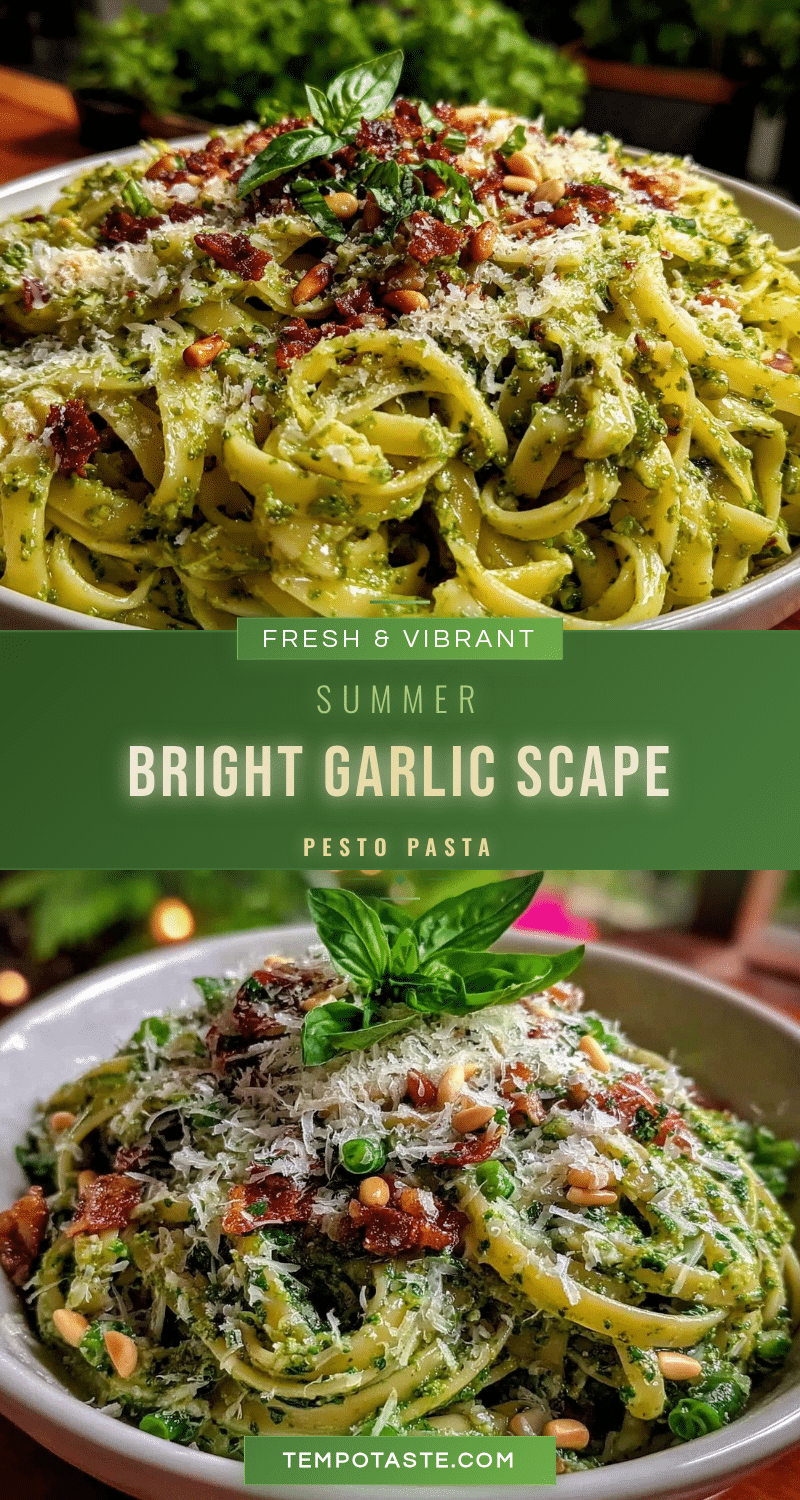
Fresh Garlic Scape Pesto Pasta Recipe Easy Perfect Summer Dinner

A simple, fresh garlic scape pesto pasta that celebrates the flavors of summer with a bright, mild garlic pesto tossed through tender pasta. Quick and easy to prepare, perfect for warm summer nights.
- Prep Time: 10 minutes
- Cook Time: 15 minutes
- Total Time: 25 minutes
- Yield: 4 servings 1x
- Category: Main Course
- Cuisine: Italian
Ingredients
- 1 cup packed fresh garlic scapes, roughly chopped
- 1/3 cup toasted walnuts (can substitute pine nuts or almonds)
- 1/2 cup grated Parmesan cheese (Parmigiano-Reggiano recommended)
- 1/2 cup extra virgin olive oil
- 1 tablespoon fresh lemon juice
- Sea salt and freshly ground black pepper, to taste
- 12 ounces (340 grams) pasta (linguine, spaghetti, or penne; whole wheat preferred)
- Salt for pasta water
- Optional garnishes: halved cherry tomatoes, extra Parmesan for sprinkling, fresh basil leaves
Instructions
- Toast the walnuts: Heat a dry skillet over medium heat. Add 1/3 cup walnuts and toast, stirring frequently, until fragrant and slightly golden (about 3-5 minutes). Remove from heat and let cool.
- Prepare the garlic scapes: Rinse about 1 cup of garlic scapes and roughly chop into 1-inch pieces, discarding any tough ends.
- Blend the pesto: Add garlic scapes, toasted walnuts, 1/2 cup grated Parmesan, and 1 tablespoon fresh lemon juice to a food processor. Pulse a few times to combine.
- Add olive oil: With the processor running, slowly drizzle in 1/2 cup extra virgin olive oil until the mixture is smooth but still has some texture. Stop and scrape down the sides as needed. Season with sea salt and freshly ground black pepper to taste.
- Cook the pasta: Bring a large pot of salted water (about 1 gallon / 4 quarts) to a boil. Add 12 ounces of pasta and cook until al dente, about 8-10 minutes depending on shape. Reserve 1 cup of pasta water before draining.
- Toss pasta with pesto: Return drained pasta to the pot or a large bowl. Add pesto and toss to combine. Add reserved pasta water a little at a time to loosen the sauce and help it cling to the noodles.
- Optional finishing touches: Toss in halved cherry tomatoes or sprinkle extra Parmesan and fresh basil on top. Serve immediately while warm.
Notes
Use fresh, crisp garlic scapes for best flavor. Toast walnuts carefully to avoid burning. Pulse pesto to keep some texture. Reserve pasta water to loosen sauce and add silkiness. Add salt gradually due to Parmesan saltiness. Blend pesto right before tossing with pasta to keep color and flavor vibrant. For dairy-free, substitute Parmesan with nutritional yeast and use olive oil. Nut-free version can use toasted seeds instead of walnuts.
Nutrition
- Serving Size: About 1 1/2 cups per
- Calories: 450
- Sugar: 2
- Sodium: 350
- Fat: 24
- Saturated Fat: 4
- Carbohydrates: 43
- Fiber: 5
- Protein: 16
Keywords: garlic scape pesto, pesto pasta, summer dinner, easy pasta recipe, fresh garlic scapes, walnut pesto, vegetarian pasta