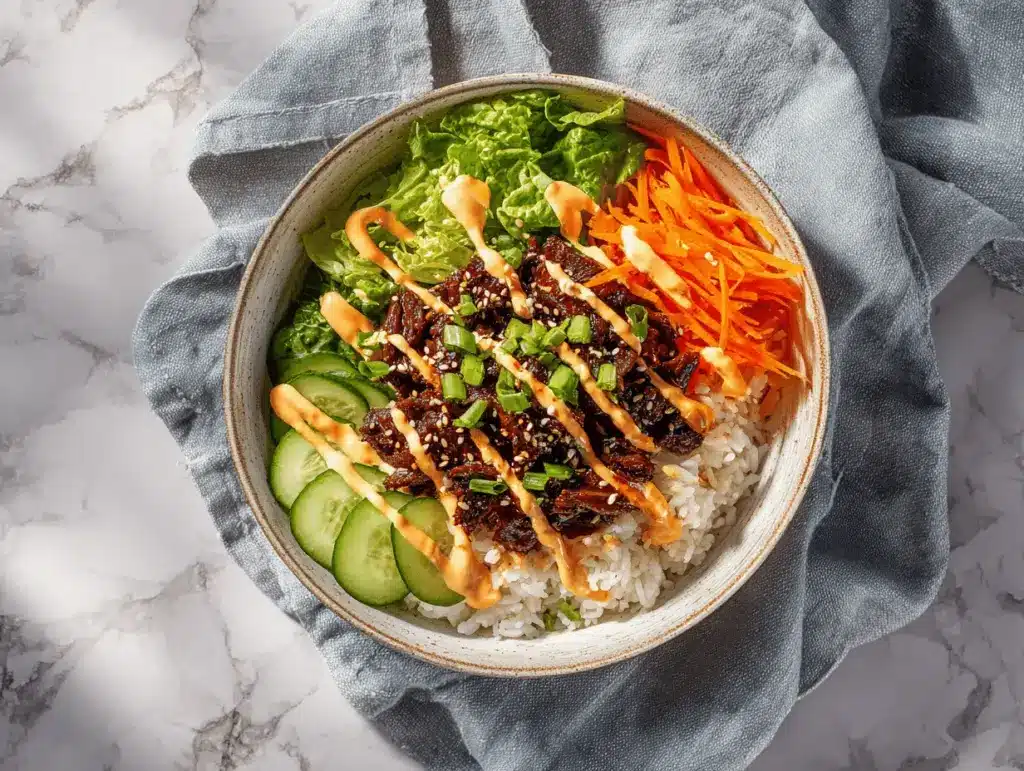
The sizzle of beef hitting a hot pan, the sweet-salty aroma of homemade bulgogi marinade, and that first bite of juicy, caramelized meat mingled with fluffy rice—honestly, that’s the moment I crave all week. My first encounter with Korean BBQ beef rice bowl was at a tiny family restaurant in Seoul (I swear you could smell the grill from two blocks away!). Since then, I’ve chased that flavor at home, determined to bottle up the magic in a simple, weeknight-friendly recipe.
Let’s face it: we all want dinners that feel like a treat but don’t need a culinary degree or a full day in the kitchen. That’s where this Korean BBQ beef rice bowl shines. It’s a speedy, flavor-packed dinner that delivers restaurant quality in thirty minutes flat. I’ve tweaked, tested, and (more than once) burned a few batches until I found my go-to version—juicy marinated beef, crisp veggies, and perfectly sticky rice, all in one bowl.
Whether you’re feeding hangry teens, impressing friends with your “better than takeout” skills, or simply craving something bold and comforting after work, this recipe has you covered. Plus, it’s easily customizable—throw in what you have on hand, adjust the heat, or make it a meal prep star. After a dozen rounds of taste-testing (and a lot of full bellies), I truly believe this Korean BBQ beef rice bowl can turn an ordinary night into something special. Let’s get cooking!
Why You’ll Love This Korean BBQ Beef Rice Bowl
After making this Korean BBQ beef rice bowl more times than I can count (and with plenty of taste-testers in my house), I can confidently say it’s a keeper. Here’s what makes it stand out from the crowd:
- Quick & Easy: Ready in 30 minutes—no kidding! Perfect for weeknights when you want big flavor, not a big mess.
- Simple Ingredients: No searching specialty markets for obscure items. Most ingredients are pantry staples or easy finds at any grocery store.
- Perfect for Any Occasion: Whether it’s a cozy family dinner, a meal prep lunch, or a casual get-together, this bowl fits right in.
- Crowd-Pleaser: Kids, teens, adults—everyone loves it. The sweet-savory beef and colorful toppings win over even picky eaters.
- Unbelievably Delicious: The balance of flavors—tender beef, tangy-sweet sauce, crisp veggies—makes every bite pop.
So, what sets this recipe apart from other versions? First, the beef gets a quick marinade with grated pear or apple, which tenderizes and adds a subtle sweetness (it’s a classic Korean trick I picked up). I blend the marinade until it’s silky-smooth, so every piece of beef gets coated evenly—no stringy bits or bland spots here. I also love adding a splash of toasted sesame oil just before serving, which dials up the aromatic finish.
This isn’t just another rice bowl—it’s the one that makes you slow down after the first bite and maybe sneak a second helping. I think of it as comfort food with a punch: bold, beautiful, and packed with feel-good flavors. And let’s not underestimate the joy of a meal that’s as pretty as it is tasty—seriously, this bowl is made for those “look what I made!” moments.
What Ingredients You Will Need
This Korean BBQ beef rice bowl relies on a handful of vibrant, reliable ingredients that come together for maximum flavor. Most are pantry staples, and you can swap or add based on what’s in your fridge.
- For the Beef & Marinade:
- 1 pound (450g) beef sirloin or ribeye, thinly sliced against the grain (flank steak works too)
- 1/4 cup (60ml) soy sauce (I use low-sodium Kikkoman for best balance)
- 2 tablespoons (30g) brown sugar (go for dark if you want extra depth)
- 1 tablespoon (15ml) honey or maple syrup (optional, for extra gloss)
- 1 medium Asian pear or sweet apple, peeled and grated (about 1/3 cup/50g; this is the secret to tender beef!)
- 3 cloves garlic, minced
- 1 tablespoon (15g) fresh ginger, grated
- 2 tablespoons (30ml) toasted sesame oil (save a little for drizzling at the end)
- 1 tablespoon (15ml) rice vinegar (adds a bright, tangy finish)
- 1/2 teaspoon black pepper
- 1 tablespoon (15g) gochujang (Korean chili paste; optional for a mild kick, or swap with sriracha)
- 2 green onions, thinly sliced (save some for garnish)
- For the Rice Bowl:
- 3 cups (600g) cooked short-grain white rice (jasmine or sushi rice is perfect, but brown rice works too)
- 1 cup (120g) shredded carrots
- 1 cup (100g) thinly sliced cucumber
- 1 cup (80g) bean sprouts (fresh or lightly blanched)
- 1 cup (80g) shredded purple cabbage (adds crunch and color)
- 1 tablespoon (8g) toasted sesame seeds, for garnish
- Extra gochujang or sriracha, to serve
- Kimchi, optional but highly recommended (adds a tangy, spicy kick!)
- Ingredient Notes & Substitutions:
- If you can’t find Asian pear, a crisp apple (like Fuji) works beautifully.
- Swap beef for thinly sliced chicken breast or extra-firm tofu for a non-beef version.
- For gluten-free, use tamari in place of soy sauce and double-check your gochujang label.
- Mix up the veggies: try sautéed spinach, bell peppers, or radish slices if you’re out of something.
- No rice vinegar? Apple cider vinegar does the trick in a pinch.
Honestly, don’t stress if you’re missing one or two veggie toppings—this bowl is all about making the most of what you have.
Equipment Needed
- Large Mixing Bowl: For tossing the beef with marinade. I use a glass bowl to avoid staining or odor (learned that the hard way with plastic!).
- Sharp Chef’s Knife: Essential for slicing beef thinly and prepping veggies. A well-honed blade makes all the difference for neat, quick cuts.
- Cutting Board: Preferably wood or bamboo for meat and veggies.
- Large Skillet or Grill Pan: Cast iron holds heat and gives the best sear, but a good nonstick pan works too. If you have an outdoor grill, go for it!
- Rice Cooker or Medium Saucepan: For perfectly cooked rice. I’m a rice cooker fan for set-it-and-forget-it convenience.
- Measuring Cups & Spoons: For accuracy in the marinade (so you get the flavor just right).
- Tongs: Great for flipping beef quickly without losing juices.
- Serving Bowls: Wide, shallow bowls make for pretty presentation and easy eating.
If you’re missing a grill pan, just use your heaviest skillet. And if you don’t have a rice cooker, stovetop rice works just fine—just keep an eye to prevent sticking. Quick tip: always wipe your skillet with a bit of oil before cooking the beef for easier cleanup (trust me, caramelized marinade can stick!).
Preparation Method
-
Prep the Beef:
Place 1 pound (450g) of thinly sliced beef in a large mixing bowl. For best results, freeze the beef for 20 minutes beforehand—makes it way easier to slice thinly. Pat dry with paper towels to help it sear, not steam. -
Make the Marinade:
In a blender or food processor, combine 1/4 cup (60ml) soy sauce, 2 tablespoons (30g) brown sugar, 1 tablespoon (15ml) honey, 1 grated Asian pear or apple, 3 minced garlic cloves, 1 tablespoon (15g) grated ginger, 2 tablespoons (30ml) sesame oil, 1 tablespoon (15ml) rice vinegar, 1/2 teaspoon black pepper, 1 tablespoon (15g) gochujang, and 2 sliced green onions. Blend until smooth. (If you don’t have a blender, whisk everything vigorously until well combined.) -
Marinate the Beef:
Pour the marinade over the sliced beef, toss to coat, and let it sit for at least 15 minutes at room temp. For richer flavor, marinate up to 2 hours in the fridge. (Don’t go overnight—pear or apple can break down the beef too much!) -
Cook the Rice:
Rinse 1.5 cups (300g) short-grain white rice under cold water until water runs clear. Cook according to package instructions (about 2.5 cups/600ml water for 1.5 cups rice). Fluff with a fork and keep warm. -
Prep the Veggies:
While the beef marinates, slice 1 cup cucumber, shred 1 cup carrots, and prepare 1 cup cabbage and 1 cup bean sprouts. If you like, lightly blanch the bean sprouts for 1 minute in boiling water and drain. -
Sear the Beef:
Heat a large skillet or grill pan over high heat. Add a drizzle of oil. Working in batches, lay the beef slices flat (don’t crowd the pan—otherwise, they’ll steam). Sear for 1-2 minutes per side until browned and caramelized. Transfer cooked beef to a plate and repeat as needed. (If you notice the pan getting sticky, wipe it with a damp paper towel between batches.) -
Assemble the Bowls:
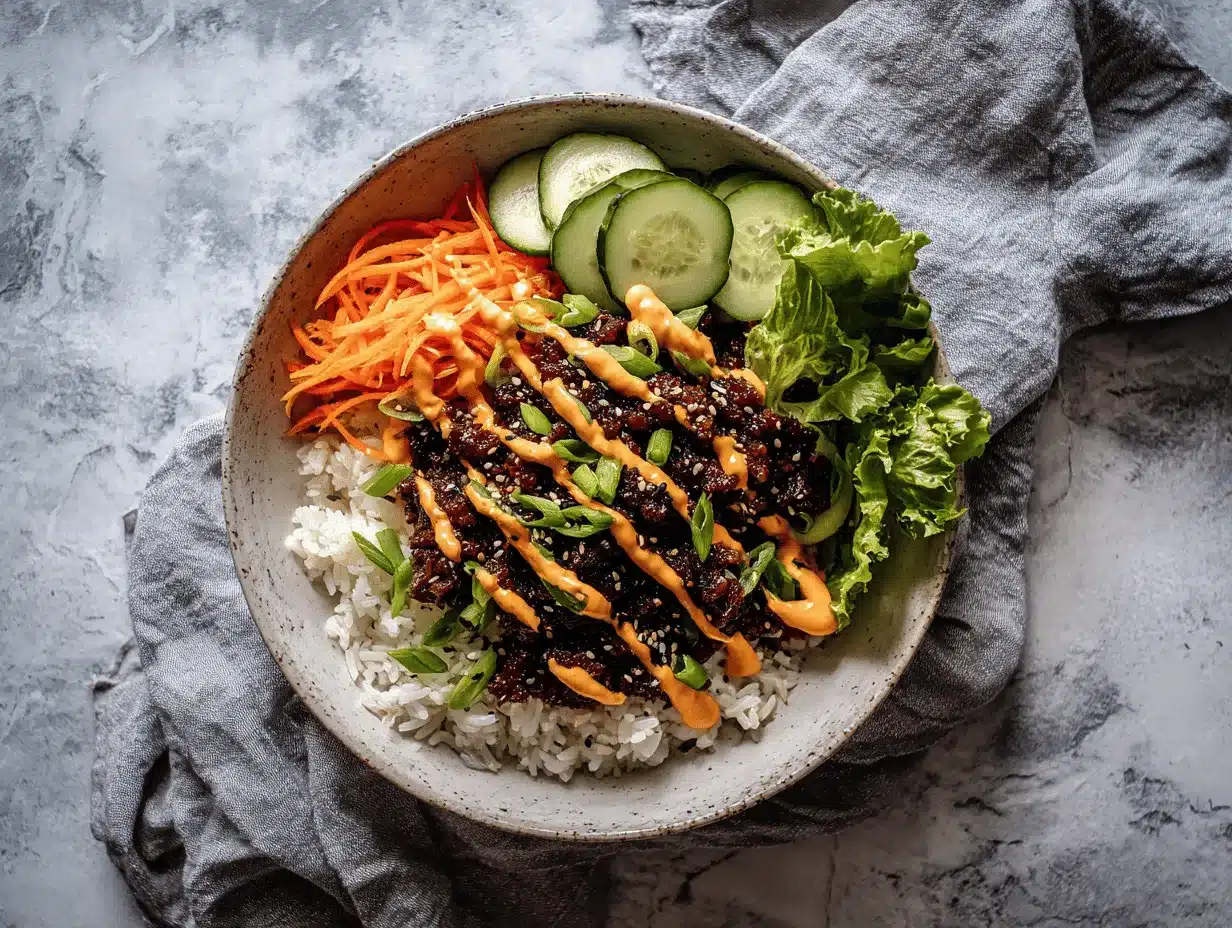
Divide the cooked rice among 4 bowls. Arrange beef, carrots, cucumber, bean sprouts, and cabbage on top. Sprinkle with sesame seeds and extra green onions. Add a spoonful of kimchi and a drizzle of sesame oil. Serve with gochujang or sriracha on the side. -
Enjoy Immediately:
Serve while everything’s hot and fresh—the contrast of warm beef and rice with crisp, cool veggies is pure magic.
Note: If you notice the beef releasing too much liquid, increase the heat and work in smaller batches. You want a deep, caramelized sear—not boiled meat! The marinade will smell absolutely heavenly as it cooks (don’t be surprised if your kitchen becomes the best-smelling room in the house).
Cooking Tips & Techniques
Cooking this Korean BBQ beef rice bowl is all about balancing flavors and textures. Here’s what I’ve learned after many trial runs (and a few kitchen mishaps!):
- Slicing Beef Thinly: The thinner the beef, the quicker and more evenly it cooks. If you’re struggling, pop the meat in the freezer for 20-30 minutes. Trust me, it makes slicing a breeze.
- Don’t Skip the Marinade Time: Even a short soak infuses major flavor. If you’re rushed, 15 minutes is fine, but a full hour is even better.
- Hot Pan, Small Batches: Crowding the pan means the beef steams instead of sears. Always cook in batches and crank up the heat. You want those caramelized bits!
- Watch Your Sugar: The marinade’s sugar content can cause sticking or burning if the heat’s too high. If your pan starts to get dark, wipe it clean between batches.
- Rice Texture Matters: For that classic sticky rice bowl, rinse your rice until the water runs clear. It removes excess starch and helps prevent gluey rice.
- Prep Ahead for Efficiency: Chop veggies and make the marinade in the morning. By dinnertime, all you need to do is cook the beef and assemble.
- Personal Fail: The first time I made this, I marinated the beef overnight—big mistake! It turned mushy. Lesson learned: stick to 15 minutes to 2 hours max.
And remember, cooking should be fun. If your beef isn’t perfectly uniform, or you improvise a veggie, it’ll still taste fantastic. With a little practice, you’ll have this down to a science—and maybe even crave it as often as I do!
Variations & Adaptations
This Korean BBQ beef rice bowl is easy to riff on. Here are some tried-and-true variations to fit your preferences or dietary needs:
- Low-Carb or Grain-Free: Swap the rice for cauliflower rice or sautéed shredded cabbage. Still totally satisfying and just as flavorful!
- Vegetarian/Vegan: Substitute thinly sliced portobello mushrooms or extra-firm tofu for the beef. Marinate and cook just like the meat. Use plant-based gochujang and tamari for a fully vegan version.
- Spicy Lovers: Double the gochujang or add sliced fresh chilies on top. Sometimes I toss in a spoonful of chili crisp oil for extra oomph.
- Seasonal Swaps: In summer, use grilled zucchini or bell peppers. In winter, stir in sautéed spinach or kale for a cozy twist.
- Allergy-Friendly: Use coconut aminos for a soy-free option, and sunflower seeds instead of sesame if sesame is an issue.
- Personal Favorite: I like to top my bowl with a soft-fried egg for breakfast—sounds odd, but the runny yolk mixes with the sauce for an insanely good bite!
Honestly, don’t be afraid to experiment. This bowl is as flexible as it is flavorful, so make it yours.
Serving & Storage Suggestions
For the best experience, serve your Korean BBQ beef rice bowl hot, right after assembling. The contrast of warm beef and rice with cool, crisp veggies is unbeatable. I love piling everything into wide, shallow bowls so you can see all those gorgeous colors and textures—it’s a feast for the eyes before you even dig in!
If you’re hosting, set everything out “bar-style” so everyone can build their own bowl. It’s fun, interactive, and perfect for picky eaters or dietary quirks.
Leftovers? Store beef and rice in airtight containers in the fridge for up to 3 days. Keep veggies and garnishes separate so they stay fresh. For reheating, microwave beef and rice together until hot (stir halfway through). The flavors actually deepen overnight, making this a killer meal prep option.
You can also freeze cooked beef for up to 1 month. Thaw overnight in the fridge, then reheat gently in a skillet. If the rice gets a little dry, splash in a bit of water before reheating.
Nutritional Information & Benefits
This Korean BBQ beef rice bowl is a balanced meal—protein from beef, plenty of veggies, and wholesome carbs from rice. Each serving (with beef, rice, and veggies) is about 550 calories, with 35g protein, 60g carbs, and 18g fat.
Key health perks:
- Beef offers iron, zinc, and B vitamins—great for energy and immunity.
- Veggies like cabbage, carrots, and sprouts bring fiber and antioxidants.
- Using brown rice bumps up the fiber and keeps you fuller longer.
For gluten-free diets, use tamari and gluten-free gochujang. Allergens to watch: soy (in marinade) and sesame (in oil/seeds). If you’re watching sodium, go for low-sodium soy sauce and add more fresh veggies. I find this bowl keeps me full for hours—and it’s so much more satisfying than takeout.
Conclusion
If you’re searching for a dinner that’s fast, flavorful, and feels like a treat, this Korean BBQ beef rice bowl is seriously tough to beat. It’s easy enough for busy nights but special enough for sharing—and honestly, it’s the kind of meal that gets people talking (and asking for seconds).
Feel free to riff on the toppings, swap the protein, or crank up the heat. That’s the beauty of this dish—it’s yours to customize, and it always delivers on taste. Personally, I love how one bowl brings together all my favorite flavors and textures—plus, it’s just fun to eat!
Give it a try, then let me know how you made it your own. Did you add a fried egg? Go all-veggie? Share your bowl in the comments or tag me online—can’t wait to see your delicious creations. Here’s to more joyful, flavor-packed dinners ahead!
FAQs About Korean BBQ Beef Rice Bowl
How thin should I slice the beef for a Korean BBQ beef rice bowl?
Slice the beef as thin as you can—about 1/8 inch (3mm) is ideal. Freezing it for 20 minutes first makes thin slicing way easier and helps with even cooking.
Can I make this recipe ahead for meal prep?
Absolutely! Cook the beef and rice, then store separately from the veggies and garnishes. Assemble just before serving for best texture. It reheats well for up to 3 days in the fridge.
What cut of beef works best for this rice bowl?
Sirloin, ribeye, or flank steak are my top picks—they’re tender and soak up the marinade beautifully. Just make sure to slice against the grain for the softest bite.
Is there a vegetarian version of this Korean BBQ beef rice bowl?
Yes! Use thinly sliced portobello mushrooms or tofu instead of beef. Marinate and cook them the same way for a savory, plant-based bowl.
What’s the best rice to use for a Korean BBQ beef rice bowl?
Short-grain white rice (like sushi or jasmine rice) works best for that classic sticky texture, but brown rice or even cauliflower rice are great alternatives if you prefer.
Pin This Recipe!
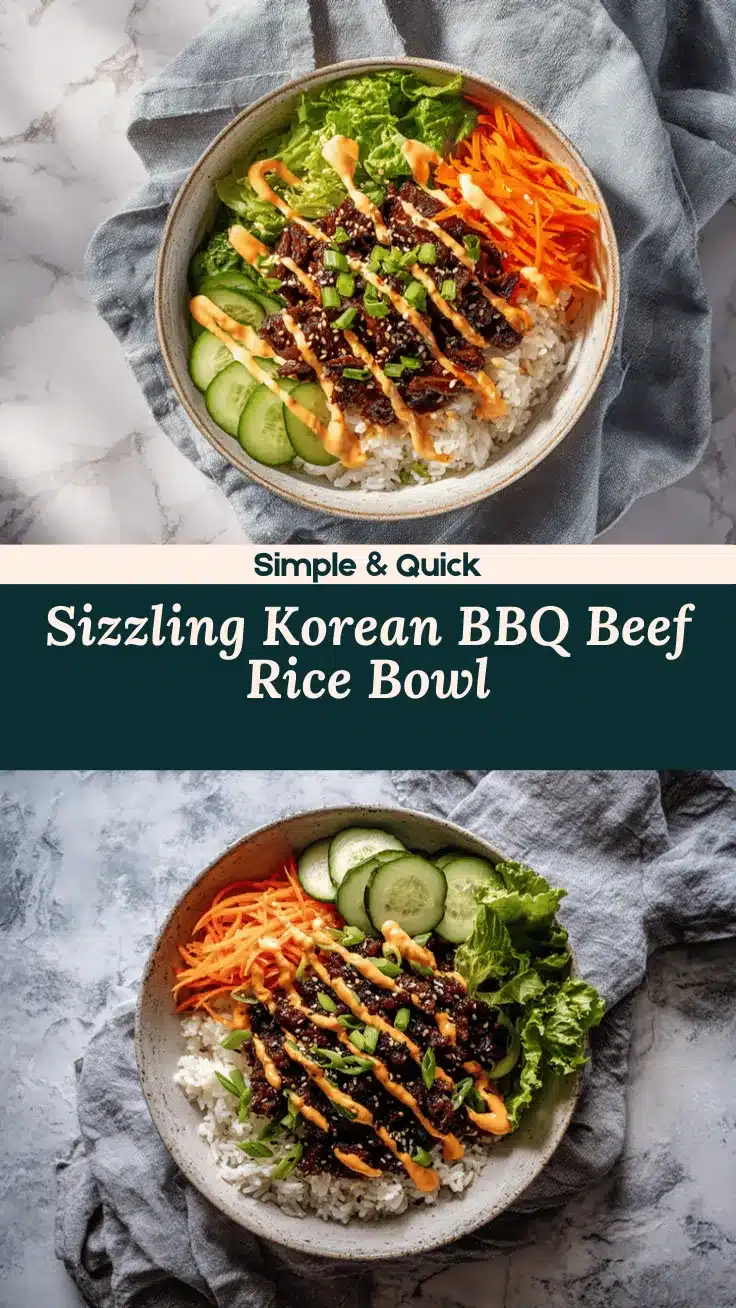
Korean BBQ Beef Rice Bowl

This Korean BBQ beef rice bowl features juicy marinated beef, crisp veggies, and perfectly sticky rice for a speedy, flavor-packed dinner ready in 30 minutes. It’s customizable, crowd-pleasing, and brings restaurant-quality Korean flavors to your weeknight table.
- Prep Time: 15 minutes
- Cook Time: 15 minutes
- Total Time: 30 minutes
- Yield: 4 servings 1x
- Category: Main Course
- Cuisine: Korean
Ingredients
- 1 pound beef sirloin or ribeye, thinly sliced against the grain (flank steak works too)
- 1/4 cup low-sodium soy sauce
- 2 tablespoons brown sugar
- 1 tablespoon honey or maple syrup (optional)
- 1 medium Asian pear or sweet apple, peeled and grated (about 1/3 cup)
- 3 cloves garlic, minced
- 1 tablespoon fresh ginger, grated
- 2 tablespoons toasted sesame oil (plus extra for drizzling)
- 1 tablespoon rice vinegar
- 1/2 teaspoon black pepper
- 1 tablespoon gochujang (Korean chili paste; optional, or substitute sriracha)
- 2 green onions, thinly sliced (plus extra for garnish)
- 3 cups cooked short-grain white rice (jasmine or sushi rice, or brown rice)
- 1 cup shredded carrots
- 1 cup thinly sliced cucumber
- 1 cup bean sprouts (fresh or lightly blanched)
- 1 cup shredded purple cabbage
- 1 tablespoon toasted sesame seeds, for garnish
- Extra gochujang or sriracha, to serve
- Kimchi, optional
Instructions
- Place thinly sliced beef in a large mixing bowl. For easier slicing, freeze beef for 20 minutes beforehand. Pat dry with paper towels.
- In a blender or food processor, combine soy sauce, brown sugar, honey, grated pear or apple, garlic, ginger, sesame oil, rice vinegar, black pepper, gochujang, and green onions. Blend until smooth.
- Pour marinade over beef, toss to coat, and let sit for at least 15 minutes at room temperature or up to 2 hours in the fridge.
- Rinse 1.5 cups short-grain white rice under cold water until water runs clear. Cook according to package instructions (about 2.5 cups water for 1.5 cups rice). Fluff and keep warm.
- While beef marinates, prep veggies: slice cucumber, shred carrots and cabbage, and prepare bean sprouts (blanch if desired).
- Heat a large skillet or grill pan over high heat and add a drizzle of oil. Working in batches, sear beef slices for 1-2 minutes per side until browned and caramelized. Transfer to a plate and repeat as needed.
- Divide cooked rice among 4 bowls. Arrange beef, carrots, cucumber, bean sprouts, and cabbage on top. Sprinkle with sesame seeds and extra green onions. Add kimchi and a drizzle of sesame oil. Serve with gochujang or sriracha on the side.
- Serve immediately while hot and fresh.
Notes
For best results, slice beef very thinly (freezing helps). Don’t marinate beef overnight—15 minutes to 2 hours is ideal. Cook beef in small batches over high heat for caramelization. Rinse rice well for best texture. Swap veggies or protein as desired. For gluten-free, use tamari and check gochujang label. Leftovers keep well for meal prep.
Nutrition
- Serving Size: 1 bowl (about 1/4 of recipe)
- Calories: 550
- Sugar: 12
- Sodium: 950
- Fat: 18
- Saturated Fat: 5
- Carbohydrates: 60
- Fiber: 4
- Protein: 35
Keywords: Korean BBQ, beef rice bowl, bulgogi, easy dinner, weeknight meal, Asian, rice bowl, meal prep, gluten-free option, spicy, customizable, healthy, quick dinner