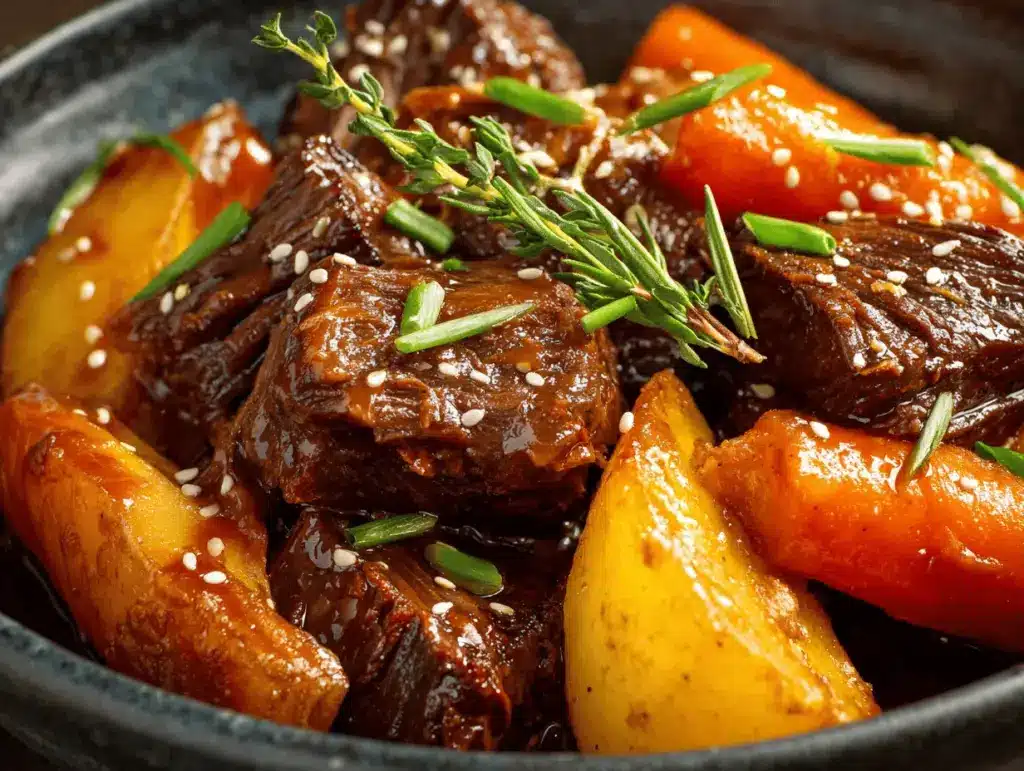
The moment my kitchen fills with the deep, savory aroma of Korean style pot roast, I know dinner is about to get exciting. There’s something magical about melding classic home-cooked comfort with the bold flavors of Korean cuisine—think soy, garlic, ginger, and just a hint of spicy gochujang. I first stumbled onto this recipe during a cold snap when regular pot roast just felt a little “meh.” I craved something heartier and more punchy, and after a little kitchen experimentation, the Korean style pot roast was born.
Honestly, it’s the kind of meal that makes people wander into the kitchen asking, “What’s cooking?” The beef turns out meltingly tender, the sauce is rich and complex, and the veggies soak up every drop. It’s like Sunday dinner meets a Korean barbecue feast! What I love most is how this dish brings everyone to the table—kids, picky eaters, and even those who say they don’t like spicy food (you can adjust the heat, promise).
If you’re a fan of cozy dinners with a twist, or you just want to shake up your weeknight routine, this Korean style pot roast recipe is for you. After making it at least two dozen times (no exaggeration), I’ve tweaked and tested every detail so you can get that perfect balance of flavor and tenderness. Whether you’re serving a hungry family or impressing friends, this pot roast never fails to spark smiles—and second helpings!
Why You’ll Love This Recipe
- Quick & Easy: Prep is a breeze—just a few steps, and most of the cooking happens hands-off in the oven or slow cooker. You can get this Korean style pot roast simmering in under 20 minutes.
- Simple Ingredients: No need to hunt for rare spices or specialty cuts. Most ingredients are pantry staples, and anything unique (like gochujang) is now pretty easy to find.
- Perfect for Family Dinners: There’s enough food to feed a crowd, and it’s hearty enough for even the hungriest teens (trust me, I have two!).
- Crowd-Pleaser: The balance of savory, sweet, and spicy flavors works for all ages. My youngest loves it with extra carrots, my partner piles on the green onions.
- Unbelievably Delicious: The beef practically falls apart, the sauce is pure umami heaven, and the veggies are never mushy—they’re full of flavor.
This isn’t just another pot roast. The Korean style pot roast recipe stands out because of a few special techniques. I blend the sauce first to emulsify the flavors (no clumps!), and I always sear the beef to lock in juices. The gochujang adds depth, but you can dial it up or down. And forget bland veggies—these carrots and potatoes soak up all that saucy goodness.
Honestly, every time I make this, someone asks for the recipe. There’s something about the combination of tender beef, savory sauce, and the hit of ginger that feels both comforting and exciting. It’s the kind of dinner that makes you pause, savor, and maybe even close your eyes after the first bite. Whether you want to impress guests or just treat yourself after a long week, this is the recipe that delivers—every single time.
What Ingredients You Will Need
This Korean style pot roast recipe uses simple, wholesome ingredients that come together for a bold, satisfying dinner. Most are pantry staples, but a couple add that signature Korean flair. Here’s what you’ll need:
- For the Pot Roast:
- Beef chuck roast (3 to 4 lbs / 1.4-1.8 kg), trimmed of excess fat (classic choice for pot roast—melts into tenderness)
- Salt and black pepper (to season the beef before searing)
- Neutral oil (2 tbsp / 30 ml, like canola or avocado oil, for searing)
- Yellow onion (1 large, sliced—adds sweetness and depth)
- Garlic cloves (6, minced—for punchy flavor)
- Fresh ginger (2-inch piece / 5 cm, peeled and grated—adds zing and warmth)
- Carrots (4 large, cut into 2-inch / 5 cm chunks—soak up the sauce)
- Yukon Gold potatoes (5 medium, quartered—hold their shape well)
- Scallions (4, sliced—used as garnish for brightness)
- For the Korean Sauce:
- Soy sauce (1/2 cup / 120 ml—umami backbone, use low-sodium if preferred)
- Gochujang (2 tbsp / 30 g—Korean chili paste for heat and depth, adjust to taste)
- Brown sugar (3 tbsp / 40 g—balances spice with sweetness)
- Rice vinegar (2 tbsp / 30 ml—for tang)
- Sesame oil (1 tbsp / 15 ml—for nutty finish)
- Beef broth (2 cups / 480 ml—keeps everything moist and flavorful)
- Pear or apple (1/2, grated—traditional Korean trick for subtle sweetness and tender meat)
- Optional Add-Ins & Substitutions:
- Mushrooms (1 cup / 100 g, sliced—add earthy flavor)
- Daikon radish (1 small, peeled and chunked—great for authentic Korean flavor)
- Red chili flakes (1-2 tsp / 3-6 g—for extra heat)
- Gluten-free soy sauce (for GF diets)
- Sweet potato or turnip (swap for regular potatoes)
- Low-sodium beef broth (if you’re watching salt)
- Coconut aminos (as a soy sauce alternative)
I always use a firm, thick-cut beef chuck for best results, and I recommend Chung Jung One gochujang if you can find it. The pear or apple is a little secret—seriously, don’t skip it if you want that authentic Korean pot roast magic. If you’re feeling adventurous, toss in a handful of mushrooms or daikon. You can make this recipe work for just about any dietary preference!
Equipment Needed
- Large Dutch oven or heavy-bottomed oven-safe pot (essential for even heat and slow cooking; I use my trusty Lodge, but any brand will do)
- Sharp chef’s knife (for prepping veggies and beef—keep it honed for easy slicing)
- Cutting board (preferably wood or plastic for easy cleanup)
- Measuring cups and spoons (accuracy matters for sauce balance)
- Wooden spoon or heat-proof spatula (for stirring sauce and veggies)
- Blender or food processor (for making the sauce ultra-smooth; if you don’t have one, whisk vigorously by hand)
- Tongs (for searing and turning the beef safely)
- Oven mitts (for moving the hot pot in/out of the oven)
- Serving platter (to present your masterpiece—any large plate works)
If you don’t own a Dutch oven, a heavy roasting pan covered tightly with foil works too. For beginners, a basic chef’s knife is fine—you don’t need anything fancy. Just keep your tools clean and dry (especially after working with raw beef), and give your Dutch oven a quick oil rub after washing to prevent rust. On a budget? Second-hand cookware shops often have great deals on sturdy pots!
Preparation Method
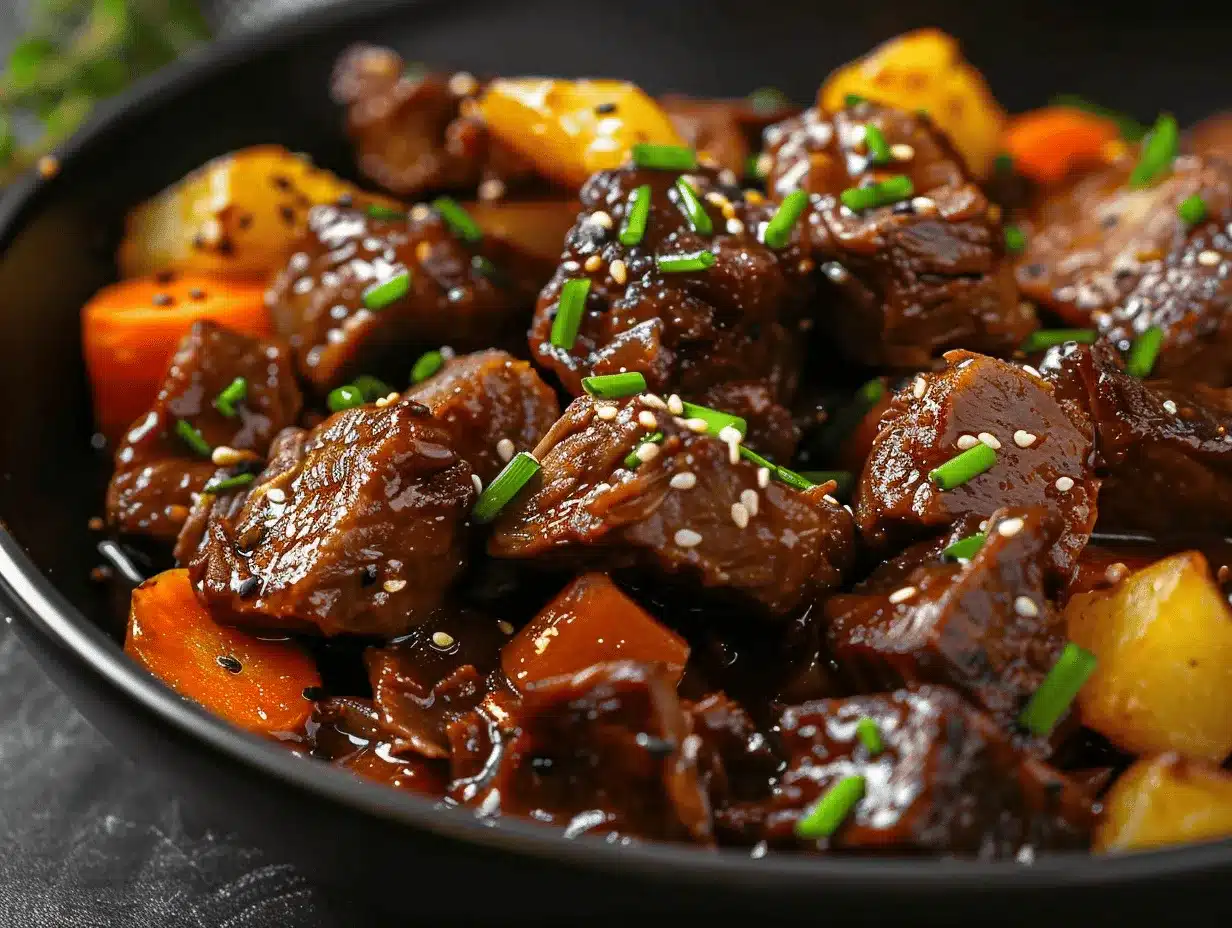
- Preheat and Prep: Preheat your oven to 325°F (165°C). Pat the beef chuck roast dry with paper towels, then season all sides generously with salt and black pepper. Let it sit out while you prep veggies.
- Chop Vegetables: Slice 1 large onion, mince 6 garlic cloves, grate a 2-inch (5 cm) piece of ginger, cut 4 carrots into 2-inch (5 cm) chunks, and quarter 5 Yukon Gold potatoes. Set aside.
- Make the Korean Sauce: In a blender or food processor, combine 1/2 cup (120 ml) soy sauce, 2 tbsp (30 g) gochujang, 3 tbsp (40 g) brown sugar, 2 tbsp (30 ml) rice vinegar, 1 tbsp (15 ml) sesame oil, 2 cups (480 ml) beef broth, and 1/2 grated pear or apple. Blend until smooth and emulsified. If whisking by hand, make sure everything is well incorporated and no lumps remain.
- Sear the Beef: Heat 2 tbsp (30 ml) neutral oil in a Dutch oven over medium-high heat. Once hot, add the seasoned beef. Sear for 3-4 minutes per side until deeply browned. Don’t rush—browning adds flavor!
- Add Aromatics and Veggies: Remove the beef briefly and set aside. Add onions to the pot and sauté for 2 minutes until just softened. Stir in garlic and ginger, cooking for another minute until fragrant. Return beef to the pot, nestling it among the onions. Arrange carrots and potatoes around the beef. If using, add mushrooms and daikon now.
- Pour Sauce and Cook: Pour the Korean sauce evenly over the beef and vegetables. Use a wooden spoon to scrape up any browned bits from the bottom (these add tons of flavor). Cover tightly with a lid.
- Braise: Transfer pot to the oven. Bake for 3 hours, flipping beef halfway through and spooning sauce over vegetables. Check after 2 hours—veggies should be tender but not mushy, and beef should shred easily. If the sauce is reducing too quickly, add a splash of broth.
- Finish and Serve: Remove pot from oven. Let beef rest for 10 minutes before slicing or shredding. Garnish with sliced scallions and (optional) extra sesame seeds. Taste and adjust seasoning if needed (sometimes a splash more soy sauce or vinegar makes it pop).
- Troubleshooting: If beef is tough after 3 hours, continue braising in 30-minute increments—it’ll get there! Sauce too salty? Add a little water or unsalted broth. Veggies too soft? Reduce oven temp next time.
- Efficiency Tip: Prep sauce and veggies while the beef sears, and clean up as you go. This makes the whole process feel way less overwhelming.
You’ll know it’s perfect when the beef falls apart with a fork, veggies are fork-tender, and the sauce is glossy and rich. If you want to save time, try making the sauce ahead—it keeps in the fridge for up to 2 days.
Cooking Tips & Techniques
Let’s face it—pot roast can be fussy if you don’t know a few tricks. Over the years, I’ve learned the hard way (like that one time I forgot to sear the beef and wondered why it tasted “meh”). Here’s what I always do for a flawless Korean style pot roast:
- Sear, Don’t Skip: Browning the beef makes all the difference. It locks in juices and creates a deep, savory base for the sauce.
- Blending the Sauce: Blending (rather than whisking) gives a silky, lump-free finish and helps the flavors meld. If you’re whisking, add the gochujang last so it dissolves better.
- Layer Flavor: Sautéing onions, garlic, and ginger before adding the beef gives a sweet, fragrant undertone. Don’t rush this step!
- Keep Veggies Chunky: Cut carrots and potatoes into big pieces so they don’t turn to mush during the long braise.
- Don’t Overcrowd: If your pot is small, roast the beef and veggies separately, then combine with sauce at the end. This prevents steaming instead of roasting.
- Taste as You Go: The sauce can be strong—if it’s too salty or spicy, balance it with a splash of water or a little honey.
- Timing: Start prepping veggies while the beef sears. Multitasking makes cleanup easier and speeds up dinner.
- Rest Before Serving: Let the beef sit for 10 minutes after cooking. This helps it stay juicy when sliced or shredded.
Personal lesson? Don’t be afraid to tweak. I once doubled the ginger by accident and discovered it’s even better with a little extra zing. If your sauce looks thin, simmer on the stove for a few minutes after braising. And if you’re short on time, a slow cooker (on low for 8 hours) works beautifully too!
Variations & Adaptations
One of the best things about Korean style pot roast is how easy it is to customize. Here are a few of my favorite twists:
- Dietary Adaptations: For a gluten-free version, use tamari or coconut aminos instead of regular soy sauce. You can also swap regular potatoes for sweet potatoes or turnips (honestly, sweet potatoes add a great caramelized note).
- Seasonal Variations: In summer, add chunks of zucchini or bell peppers. In winter, try parsnips or extra root vegetables. Fresh herbs like cilantro or parsley work as a bright garnish.
- Flavor Twists: For extra spice, toss in a few dried Korean chilies or a spoonful of chili crisp. Not a fan of heat? Use less gochujang and skip the chili flakes. Add mushrooms or daikon for an earthier, more traditional Korean vibe.
- Alternative Cooking Methods: Use a slow cooker on low for 8 hours or a pressure cooker (50 minutes at high pressure, natural release) if you’re short on time. Both methods work great!
- Personal Favorite: I once added a splash of pineapple juice to the sauce—totally not authentic, but the sweetness was awesome with the spicy beef. Highly recommend for adventurous eaters!
- Allergen Substitutions: For soy allergies, coconut aminos is your best bet. Skip sesame oil if needed—use avocado oil for a similar richness.
Whether you’re cooking for picky eaters or want to experiment, don’t be afraid to mix it up. The Korean style pot roast recipe is forgiving, and every tweak brings out new flavors!
Serving & Storage Suggestions
Serve your Korean style pot roast piping hot, straight from the Dutch oven, on a large serving platter. I love piling the beef in the center and arranging veggies all around—makes it look like a feast! Sprinkle with sliced scallions and a pinch of sesame seeds for that extra wow factor.
Pair with steamed white rice, kimchi, or a simple cucumber salad for the full Korean dinner experience. If you want something cozy, serve with crusty bread to soak up every last bit of sauce. For drinks? A cold beer or sparkling water with lime hits the spot.
To store leftovers, let everything cool to room temperature. Refrigerate in airtight containers for up to 4 days. The flavors actually deepen overnight, so day-two pot roast is even better. For freezing, slice the beef and portion with veggies and sauce in freezer bags—keeps for up to 3 months. To reheat, thaw overnight, then gently warm in a covered pot over low heat or microwave in short bursts. If the sauce thickens, add a splash of water or broth to loosen.
Honestly, I’ve packed leftovers for work lunches and even made Korean-style tacos with the beef. Don’t be afraid to get creative!
Nutritional Information & Benefits
Per hearty serving, this Korean style pot roast recipe offers about 450 calories, 30g protein, 18g fat, and 42g carbs (give or take, depending on your veggie choices and portion size). It’s packed with vitamins from carrots and potatoes, plus iron and zinc from the beef.
Gochujang and ginger both have anti-inflammatory benefits, and the slow-cooked beef is a good source of protein for active families. It’s naturally dairy-free and can be made gluten-free with simple swaps. Be mindful of potential allergens—soy and sesame are common triggers, so substitute if needed.
From a wellness perspective, I love that this dish feels comforting but not heavy. The sauce is so flavorful that you don’t need to pile on extras, and you get a balanced meal in every bite.
Conclusion
If you’re craving something bold, satisfying, and just a little different, this Korean style pot roast recipe is totally worth your time. It’s become a staple in my kitchen because it’s easy, forgiving, and makes even an ordinary night feel special. You can tweak the heat, swap the veggies, and make it your own.
Personally, I love how this recipe brings my family together—there’s nothing like seeing everyone reach for seconds! Give it a try, and don’t forget to share your own twist in the comments below. Pin it, save it, and make it part of your cozy dinner rotation.
Let’s face it, comfort food should never be boring. With this Korean style pot roast, you get all the warmth and flavor you could ask for. Happy cooking!
Frequently Asked Questions
Can I make Korean style pot roast in a slow cooker?
Absolutely! Just sear the beef first, then add everything to your slow cooker and cook on low for about 8 hours. The flavors meld beautifully and the beef turns out super tender.
How spicy is this dish?
It’s pretty mild as written—gochujang adds depth more than heat. For less spice, use less gochujang or skip chili flakes. Want it hotter? Add extra gochujang or a few dried chilies.
What can I use instead of gochujang?
You can substitute with a mix of miso paste and a little sriracha or chili paste. It won’t be exactly the same, but you’ll still get a nice kick and umami flavor.
Can I freeze leftovers?
Yes! Slice the beef and store with veggies and sauce in freezer bags. Thaw overnight and reheat gently—tastes just as good, maybe better!
Is the Korean style pot roast recipe gluten-free?
It can be! Just use gluten-free soy sauce or coconut aminos, and double-check your gochujang (some brands may contain wheat). All other ingredients are naturally gluten-free.
Pin This Recipe!
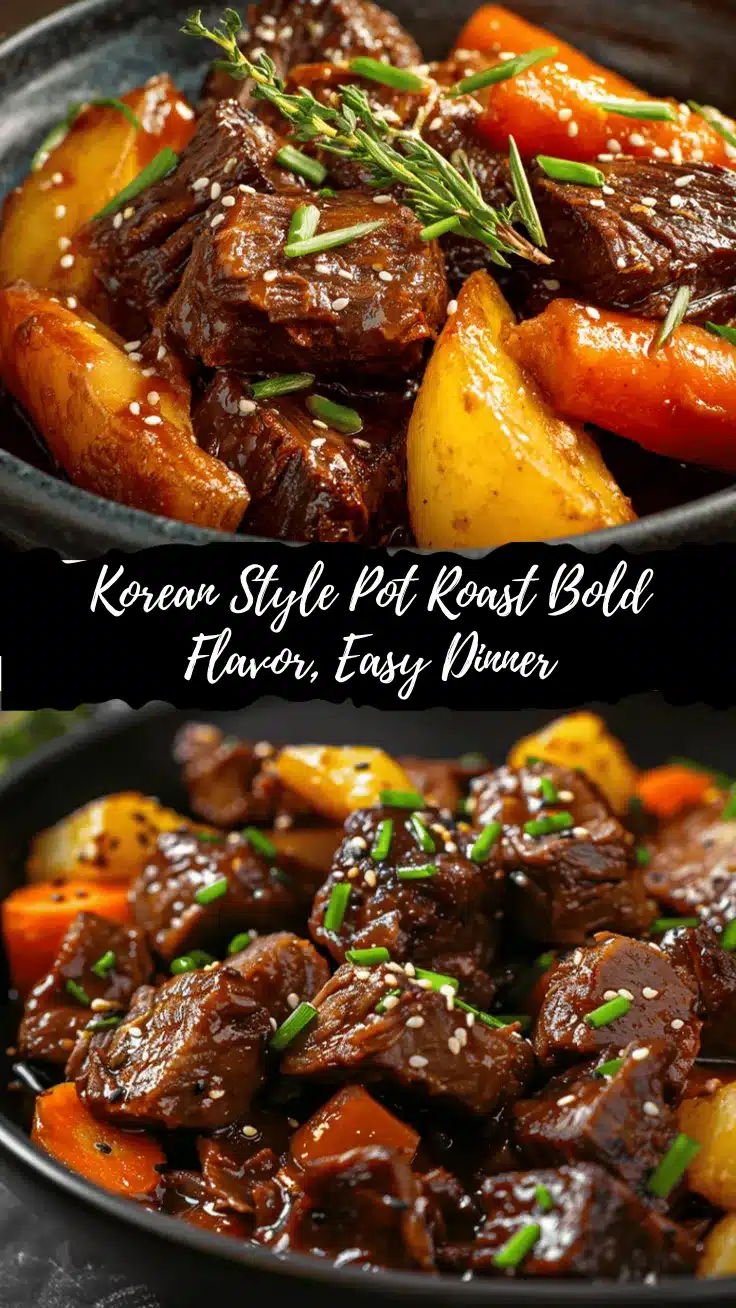
Korean Style Pot Roast

This Korean style pot roast combines classic comfort food with bold Korean flavors like soy, garlic, ginger, and gochujang. The beef turns meltingly tender, the sauce is rich and complex, and the veggies soak up every drop—perfect for family dinners or impressing guests.
- Prep Time: 20 minutes
- Cook Time: 3 hours
- Total Time: 3 hours 20 minutes
- Yield: 6 servings 1x
- Category: Main Course
- Cuisine: Korean
Ingredients
- 3 to 4 lbs beef chuck roast, trimmed of excess fat
- Salt and black pepper, to taste
- 2 tbsp neutral oil (canola or avocado oil)
- 1 large yellow onion, sliced
- 6 garlic cloves, minced
- 2-inch piece fresh ginger, peeled and grated
- 4 large carrots, cut into 2-inch chunks
- 5 medium Yukon Gold potatoes, quartered
- 4 scallions, sliced (for garnish)
- 1/2 cup soy sauce (use low-sodium if preferred)
- 2 tbsp gochujang (Korean chili paste, adjust to taste)
- 3 tbsp brown sugar
- 2 tbsp rice vinegar
- 1 tbsp sesame oil
- 2 cups beef broth
- 1/2 pear or apple, grated
- Optional: 1 cup mushrooms, sliced
- Optional: 1 small daikon radish, peeled and chunked
- Optional: 1-2 tsp red chili flakes
- Optional: gluten-free soy sauce or coconut aminos
- Optional: sweet potato or turnip (swap for regular potatoes)
- Optional: low-sodium beef broth
Instructions
- Preheat oven to 325°F (165°C). Pat beef dry and season all sides with salt and black pepper. Let sit while prepping veggies.
- Slice onion, mince garlic, grate ginger, cut carrots into 2-inch chunks, and quarter potatoes. Set aside.
- In a blender or food processor, combine soy sauce, gochujang, brown sugar, rice vinegar, sesame oil, beef broth, and grated pear or apple. Blend until smooth and emulsified.
- Heat neutral oil in a Dutch oven over medium-high heat. Sear beef for 3-4 minutes per side until deeply browned. Remove beef and set aside.
- Add onions to the pot and sauté for 2 minutes until just softened. Stir in garlic and ginger, cooking for another minute until fragrant.
- Return beef to the pot, nestling it among the onions. Arrange carrots and potatoes (and optional mushrooms/daikon) around the beef.
- Pour the Korean sauce evenly over the beef and vegetables. Scrape up any browned bits from the bottom. Cover tightly with a lid.
- Transfer pot to the oven. Bake for 3 hours, flipping beef halfway through and spooning sauce over vegetables. Check after 2 hours—veggies should be tender but not mushy, and beef should shred easily. Add a splash of broth if sauce reduces too quickly.
- Remove pot from oven. Let beef rest for 10 minutes before slicing or shredding. Garnish with sliced scallions and optional sesame seeds. Taste and adjust seasoning if needed.
- If beef is tough after 3 hours, continue braising in 30-minute increments. If sauce is too salty, add a little water or unsalted broth. If veggies are too soft, reduce oven temp next time.
Notes
Sear the beef for maximum flavor and always blend the sauce for a silky finish. Cut veggies into large chunks to prevent them from getting mushy. For a gluten-free version, use tamari or coconut aminos. The recipe is easily adaptable—add mushrooms, daikon, or swap potatoes for sweet potatoes. Leftovers taste even better the next day and freeze well.
Nutrition
- Serving Size: About 1/6 of recipe (approx. 8 oz beef with vegetables and sauce)
- Calories: 450
- Sugar: 12
- Sodium: 1100
- Fat: 18
- Saturated Fat: 6
- Carbohydrates: 42
- Fiber: 5
- Protein: 30
Keywords: Korean pot roast, beef, family dinner, gochujang, comfort food, braised beef, easy pot roast, oven pot roast, gluten-free option, dairy-free, slow cooker, Dutch oven