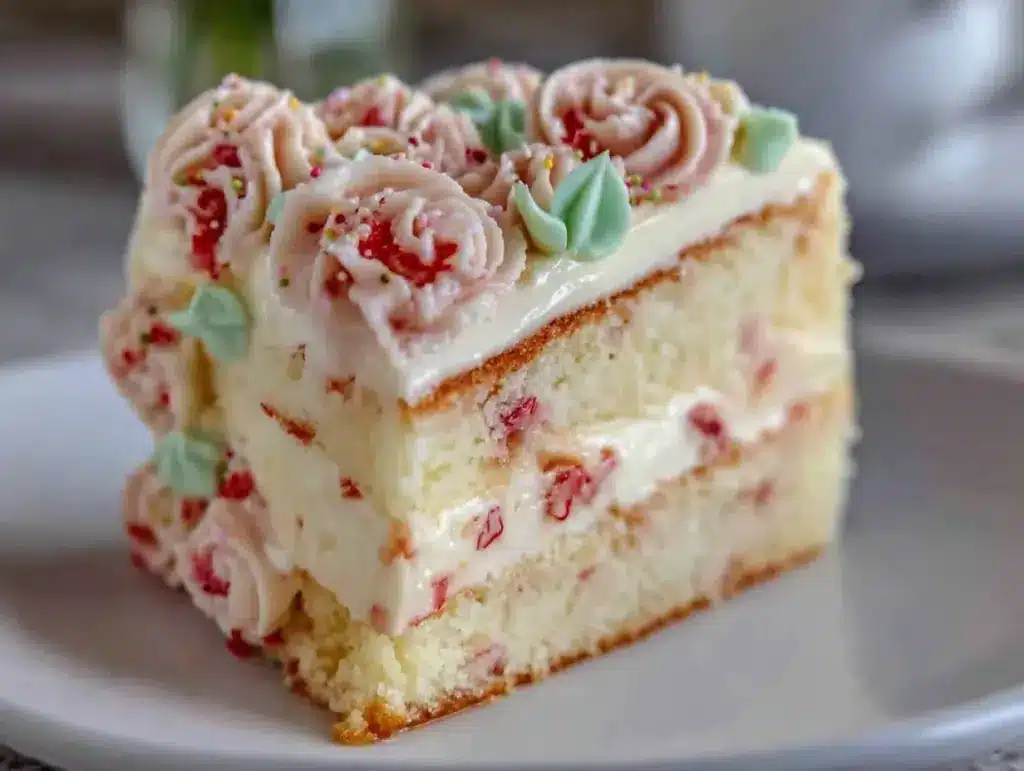
“You’ve got to try this cake,” my friend texted me one chilly evening, right after a small get-together where she brought along a slice of something I’d never seen before. It was a delicate rose-shaped cake with the faintest shimmer of champagne in every bite, crowned with buttery blooms that looked almost too pretty to eat. Honestly, I was skeptical—champagne in cake? Buttercream flowers? Isn’t that a bit much for a casual night?
But as soon as I tasted it, all doubts melted away. The cake was light and airy, with a subtle sparkle that whispered celebration without shouting it. The buttercream flowers weren’t just decoration—they brought a creamy, velvety contrast that made the whole thing feel like a little party on my palate. I found myself making this Perfect Rose Champagne Cake with Buttercream Flowers again and again, not for fancy occasions only, but for moments when I just needed a little lift.
There’s something quietly special about this recipe. It came from a friend who knows how to make simple celebrations feel magical, and that’s why it stuck with me. It’s not about perfection or pressure—just about creating something elegant that anyone can pull off at home. And if you ask me, that’s the sweetest kind of celebration.
Why You’ll Love This Recipe
This Perfect Rose Champagne Cake with Buttercream Flowers isn’t just a showstopper—it’s a recipe that feels approachable, even when you’re juggling a million things. Here’s why it quickly became a favorite in my kitchen:
- Quick & Easy: Ready in under 90 minutes from start to finish, it fits perfectly into busy days or last-minute celebration plans.
- Simple Ingredients: No need for fancy or hard-to-find items—most are pantry staples or easy-to-source from any grocery store.
- Perfect for Elegant Celebrations: Whether it’s a bridal shower, anniversary, or a chic birthday party, this cake adds that graceful touch.
- Crowd-Pleaser: Both kids and adults have raved about this—probably because it’s light, flavorful, and not overly sweet.
- Unbelievably Delicious: The champagne flavor is subtle but distinctive, balanced by the richness of the buttercream flowers that melt in your mouth.
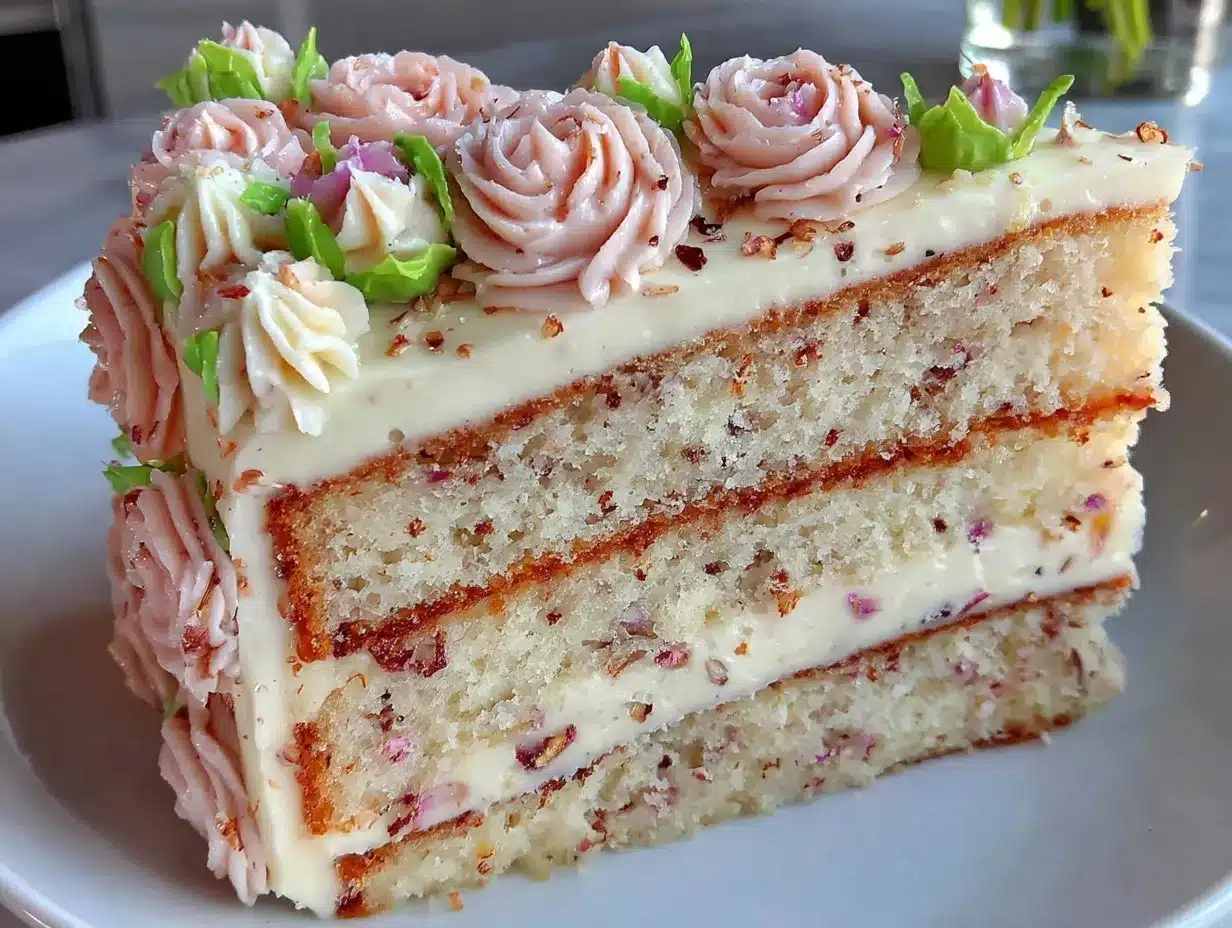
What sets this cake apart is the buttercream flower technique. I’ve tried a few tutorials before, but this one creates petals with a softness and dimension that look professionally done without needing fancy tools. Also, the cake’s texture is uniquely fluffy, achieved by folding in whipped egg whites gently—a little trick I picked up from my time experimenting with sponge cakes. It’s comfort food dressed in its Sunday best, and honestly, I love that contrast.
Trust me, this isn’t just another celebration cake recipe you tuck away. It’s the kind that makes you pause for a moment, savoring each bite like you’re marking something truly special. And that’s why it keeps finding its way to my table.
What Ingredients You Will Need
This recipe relies on simple, wholesome ingredients that come together to create bold flavors and a satisfying texture without fuss. You might already have many of these in your pantry, which makes it even sweeter to whip up when the mood strikes.
- For the Cake Batter:
- All-purpose flour, 2 ½ cups (320g) – provides the cake’s structure; I prefer King Arthur brand for consistent results
- Baking powder, 2 ½ teaspoons – gives the cake its lovely rise
- Salt, ½ teaspoon – balances the sweetness
- Unsalted butter, ¾ cup (170g), softened – adds richness and tenderness
- Granulated sugar, 1 ¾ cups (350g) – sweetens without overpowering
- Large eggs, 4, room temperature – for moisture and binding
- Champagne (or sparkling wine), ¾ cup (180ml) – the star ingredient that gives delicate flavor and moisture; if you want a sweeter note, try a demi-sec champagne
- Vanilla extract, 1 ½ teaspoons – enhances overall flavor
- Whole milk, ¼ cup (60ml), room temperature – keeps the batter smooth
- For the Buttercream Flowers:
- Unsalted butter, 1 cup (225g), softened – the base for smooth, creamy petals
- Powdered sugar, 4 cups (480g), sifted – for sweetness and structure
- Heavy cream, 2-3 tablespoons – adjusts consistency
- Vanilla extract, 1 teaspoon – adds depth
- Gel food coloring (pink, red, and green) – to tint the buttercream for beautiful rose petals and leaves; I like AmeriColor gels for vibrant colors without watering down the cream
Substitution tips: For a gluten-free option, swap the all-purpose flour with a 1-to-1 gluten-free flour blend. If you need a dairy-free version, use coconut oil instead of butter and a plant-based milk alternative. The champagne flavor is lovely, but if you prefer non-alcoholic, sparkling white grape juice works well too.
Equipment Needed
- Two 8-inch (20cm) round cake pans – I recommend aluminum pans for even baking; if you don’t have these, two 9-inch pans can work but watch baking time closely.
- Electric mixer (stand or handheld) – essential for creaming butter and whipping egg whites; a stand mixer speeds things up, but a good handheld works fine.
- Mixing bowls – at least two, one for dry ingredients and one for wet.
- Rubber spatulas – for folding and scraping down the bowl.
- Piping bags and petal piping tips (e.g., Wilton 104) – if you want to make those elegant buttercream flowers; if you’re new to piping, disposable bags are great for practice.
- Offset spatula – for smoothing frosting layers.
- Wire cooling racks – to let cakes cool completely before frosting.
- Kitchen scale (optional) – for precise measurement; I find this especially helpful with flour and sugar for consistent results.
Maintenance tip: Keep your piping tips clean by soaking immediately after use, which prevents buttercream from hardening inside. On a budget? You can skip the piping tips and use a small round tip or even practice with a zip-top bag with a tiny hole cut in the corner.
Preparation Method
- Preheat and Prep: Preheat your oven to 350°F (175°C). Grease two 8-inch round cake pans and line the bottoms with parchment paper for easy release. This should take about 10 minutes.
- Mix Dry Ingredients: In a medium bowl, sift together 2 ½ cups (320g) all-purpose flour, 2 ½ teaspoons baking powder, and ½ teaspoon salt. Set aside. Sifting avoids lumps and ensures a light crumb.
- Cream Butter and Sugar: Using your mixer, beat ¾ cup (170g) softened unsalted butter with 1 ¾ cups (350g) granulated sugar until pale and fluffy—about 4 to 5 minutes. This step is key for a tender cake texture.
- Add Eggs: Beat in eggs one at a time, making sure each is fully incorporated before adding the next. This prevents curdling and builds structure.
- Combine Wet Ingredients: In a small bowl, mix ¾ cup (180ml) champagne, ¼ cup (60ml) whole milk, and 1 ½ teaspoons vanilla extract.
- Alternate Adding Dry and Wet: With mixer on low, add the dry ingredients in three parts alternating with the champagne mixture in two parts, beginning and ending with flour. Mix just until combined. Overmixing can make the cake tough.
- Whip Egg Whites: In a clean bowl, beat 4 egg whites until stiff peaks form. This takes about 3 minutes. Gently fold the egg whites into the batter using a spatula, preserving as much air as possible to keep the cake light.
- Bake: Divide batter evenly between pans and bake for 30-35 minutes, or until a toothpick inserted comes out clean. The edges should be lightly golden and the cake springs back when touched.
- Cool Completely: Let the cakes rest in pans 10 minutes, then turn out onto wire racks to cool fully before frosting. This prevents the buttercream from melting.
- Make Buttercream: Beat 1 cup (225g) softened butter until creamy. Gradually add 4 cups (480g) sifted powdered sugar, mixing on low. Add 2-3 tablespoons heavy cream and 1 teaspoon vanilla, beating until fluffy. Adjust cream for piping consistency.
- Tint Buttercream: Divide buttercream into separate bowls and tint with gel food coloring for roses (pinks/reds) and leaves (green). Use sparingly—a little goes a long way.
- Assemble & Decorate: Place one cake layer on your serving plate. Spread a thin layer of buttercream on top, then add the second layer. Apply a crumb coat and chill 15 minutes. Finally, pipe buttercream flowers using a petal tip, starting with petals and finishing with leaves.
Pro tip: When folding egg whites, use a light hand and a wide spatula, folding from bottom to top to keep that airy texture. Also, chilling the crumb coat makes it easier to pipe flowers without smudging the base layer.
Cooking Tips & Techniques
Making the Perfect Rose Champagne Cake with Buttercream Flowers is mostly about gentle handling and patience. Here are some tips I’ve learned the hard way:
- Don’t skip sifting: It really helps with the cake’s delicate crumb and prevents clumps in the batter.
- Room temperature ingredients: Eggs, butter, and milk at room temp blend better, leading to smoother batter and better rise.
- Champagne choice matters: Brut or demi-sec champagne works best. Avoid overly sweet or cheap sparkling wines, which can throw off the flavor.
- Whip egg whites just right: Underwhipping means the cake won’t lift; overwhipping can break the structure. Look for stiff peaks that hold shape but aren’t dry.
- Buttercream consistency: Too stiff and it’s hard to pipe; too soft and flowers lose shape. Adjust with cream or powdered sugar for that perfect balance.
- Practice piping on parchment: Before decorating your cake, try a few flowers on parchment paper to get a feel for pressure and angle.
- Use an offset spatula: It makes spreading frosting layers evenly so much easier, avoiding tears in the cake.
Once, I rushed the folding of egg whites and ended up with a dense cake that felt more like a brick than a cloud. Lesson learned: patience is the secret ingredient. Also, multitask by prepping your buttercream while the cake bakes, saving precious minutes and keeping your kitchen flow smooth.
Variations & Adaptations
This rose champagne cake shines as is, but it’s also flexible for different tastes and occasions.
- Dietary Variation: For a gluten-free version, swap all-purpose flour with a 1:1 gluten-free blend. The texture stays lovely, just avoid overmixing.
- Flavor Twist: Replace champagne with sparkling rosé for a pink-hued, fruitier note that pairs beautifully with the rose theme.
- Seasonal Adaptation: Add fresh raspberries or strawberries between layers for a burst of summer freshness, similar to the fruity lift in the caramel apple cake I love in fall.
- Cooking Method: You can bake this cake in a 9×13-inch pan for a simpler sheet cake version; just adjust baking time to 35-40 minutes.
- Buttercream Swap: Try cream cheese frosting for tangy richness if you want a less sweet option. Just add a bit less powdered sugar to balance.
One variation I tried was piping tiny rosebuds instead of full flowers, which made for a delicate, whimsical look perfect for bridal showers. It’s fun to tweak the colors too—pale lavender or peach buttercream can give the cake a fresh personality.
Serving & Storage Suggestions
Serve this cake at room temperature to let the champagne flavor blossom and the buttercream soften just enough for the perfect bite. Presentation-wise, a simple white cake stand and fresh rose petals around the base add a charming touch.
Pair it with a glass of chilled bubbly or a light, floral tea to complement the flavors. For a cozy pairing, a cup of lavender-infused coffee or even a creamy hot chocolate can be surprisingly delightful.
Store leftover cake in an airtight container in the refrigerator for up to 4 days. If you want to keep it longer, wrap tightly with plastic wrap and foil, then freeze for up to 2 months. Thaw overnight in the fridge before serving.
Reheating isn’t usually recommended for frosted cakes, but if you want to warm a slice slightly, use a microwave for 10-15 seconds. The flavors actually deepen after a day or two, so if you can wait, that’s even better.
Nutritional Information & Benefits
Each slice of this rose champagne cake is a treat with an estimated 350-400 calories, depending on slice size. The cake offers moderate protein from eggs and butter, along with carbohydrates from flour and sugar.
Champagne adds no significant calories but contributes a subtle fruity aroma and antioxidants from the grapes. Butter provides vitamin A and fat for satiety, while the eggs bring choline and healthy fats.
This recipe can be adapted for gluten-free or dairy-free diets to accommodate allergen sensitivities. It’s not low-carb, but if you’re interested in keto baking, you might enjoy the crispy keto recipes featured on this site for savory alternatives.
From a wellness perspective, this cake is a reminder that treats can be part of balanced eating—especially when made thoughtfully and enjoyed mindfully.
Conclusion
This Perfect Rose Champagne Cake with Buttercream Flowers captures the spirit of celebration without fuss or fancy fussiness. It’s a recipe that invites you to slow down, enjoy the process, and delight in the results—whether it’s a milestone event or simply a day that needs a little sparkle.
Feel free to make it your own: play with colors, flavors, and decorations to suit your style. I keep coming back to this cake not just for its taste but for the joy it brings to any table.
If you try it, I’d love to hear how your buttercream flowers bloom or what champagne you picked. Let’s keep making memories one slice at a time!
Frequently Asked Questions
What champagne can I use if I don’t want alcohol?
You can substitute sparkling white grape juice or a non-alcoholic sparkling wine to keep the festive fizz without alcohol.
Can I make the buttercream flowers ahead of time?
Yes! You can pipe the flowers onto parchment paper and freeze them. Once firm, transfer to an airtight container and store in the freezer until ready to decorate.
How do I prevent my buttercream from melting while piping flowers?
Work in a cool room and chill the buttercream slightly if it feels too soft. Also, keep your piping bags chilled between uses.
Can I use a different frosting instead of buttercream?
Cream cheese frosting is a great alternative, especially if you prefer a tangier flavor. However, it may not hold flower shapes as well as buttercream.
How do I store leftover cake without it drying out?
Store the cake in an airtight container or tightly wrapped in plastic wrap in the fridge. This keeps moisture in and prevents drying.
Pin This Recipe!
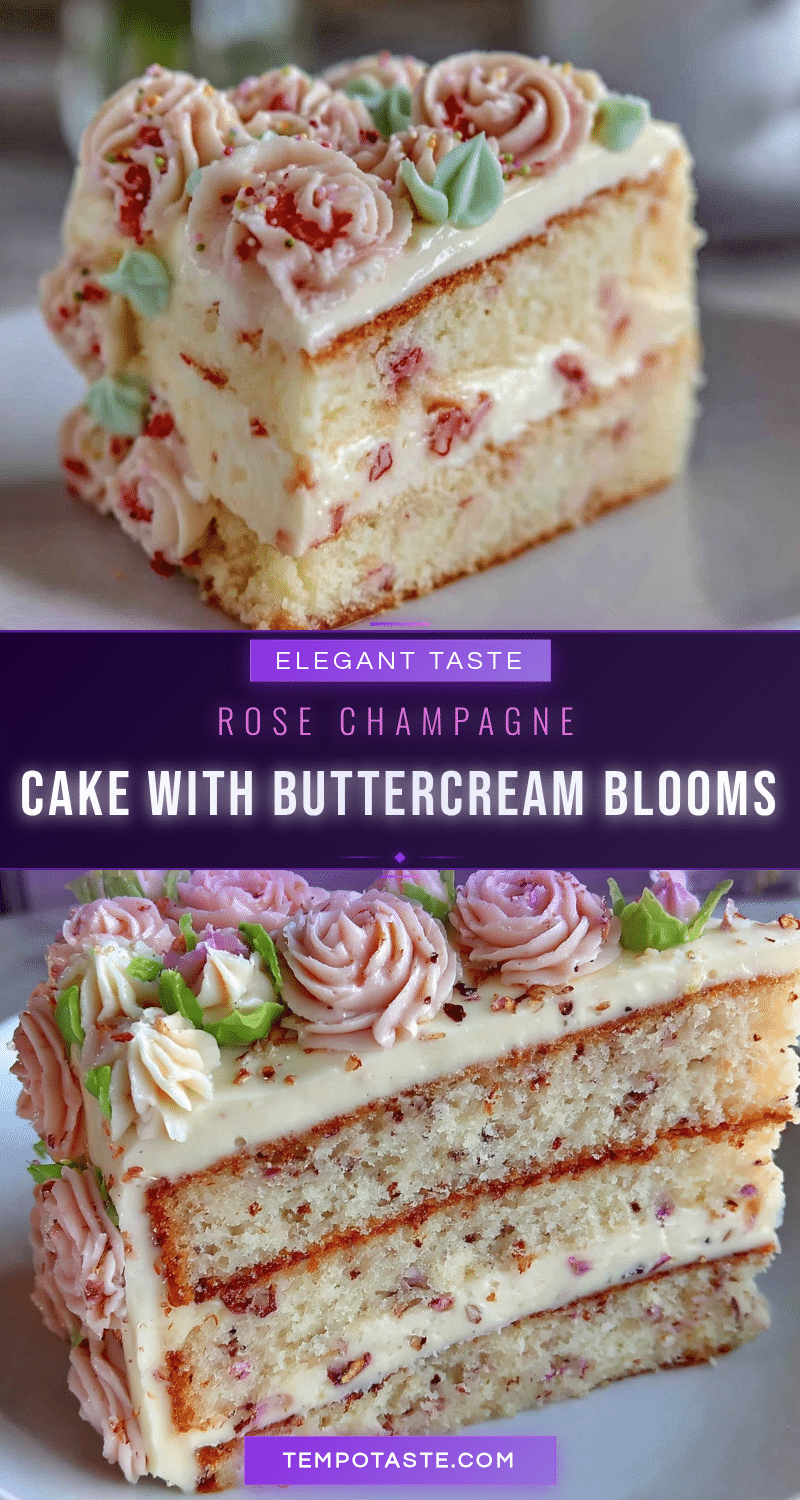
Perfect Rose Champagne Cake with Buttercream Flowers

A light and airy rose-shaped cake with a subtle champagne flavor, topped with creamy buttercream flowers, perfect for elegant celebrations.
- Prep Time: 20 minutes
- Cook Time: 35 minutes
- Total Time: 55 minutes
- Yield: 12 servings 1x
- Category: Dessert
- Cuisine: American
Ingredients
- 2 ½ cups (320g) all-purpose flour
- 2 ½ teaspoons baking powder
- ½ teaspoon salt
- ¾ cup (170g) unsalted butter, softened
- 1 ¾ cups (350g) granulated sugar
- 4 large eggs, room temperature
- ¾ cup (180ml) champagne or sparkling wine
- 1 ½ teaspoons vanilla extract
- ¼ cup (60ml) whole milk, room temperature
- 1 cup (225g) unsalted butter, softened (for buttercream)
- 4 cups (480g) powdered sugar, sifted
- 2–3 tablespoons heavy cream
- 1 teaspoon vanilla extract (for buttercream)
- Gel food coloring (pink, red, and green)
Instructions
- Preheat oven to 350°F (175°C). Grease two 8-inch round cake pans and line bottoms with parchment paper.
- Sift together flour, baking powder, and salt in a medium bowl; set aside.
- Beat ¾ cup softened butter with granulated sugar until pale and fluffy, about 4-5 minutes.
- Add eggs one at a time, beating well after each addition.
- In a small bowl, mix champagne, milk, and vanilla extract.
- With mixer on low, alternately add dry ingredients in three parts and champagne mixture in two parts, beginning and ending with flour. Mix just until combined.
- Beat egg whites in a clean bowl until stiff peaks form, about 3 minutes. Gently fold into batter to keep it light and airy.
- Divide batter evenly between pans and bake 30-35 minutes or until a toothpick comes out clean.
- Let cakes rest in pans 10 minutes, then turn out onto wire racks to cool completely.
- For buttercream, beat 1 cup softened butter until creamy. Gradually add powdered sugar, mixing on low.
- Add heavy cream and vanilla extract, beat until fluffy. Adjust cream for piping consistency.
- Divide buttercream into bowls and tint with gel food coloring for roses and leaves.
- Assemble cake by placing one layer on plate, spreading thin buttercream layer, then second layer.
- Apply crumb coat and chill 15 minutes.
- Pipe buttercream flowers using petal piping tips, starting with petals and finishing with leaves.
Notes
Use a light hand when folding egg whites to keep the cake airy. Chill crumb coat before piping flowers to prevent smudging. For non-alcoholic version, substitute champagne with sparkling white grape juice. Buttercream flowers can be piped ahead and frozen.
Nutrition
- Serving Size: 1 slice (1/12th of c
- Calories: 375
- Sugar: 38
- Sodium: 220
- Fat: 18
- Saturated Fat: 11
- Carbohydrates: 52
- Fiber: 1
- Protein: 4
Keywords: champagne cake, rose cake, buttercream flowers, celebration cake, elegant cake, easy cake recipe