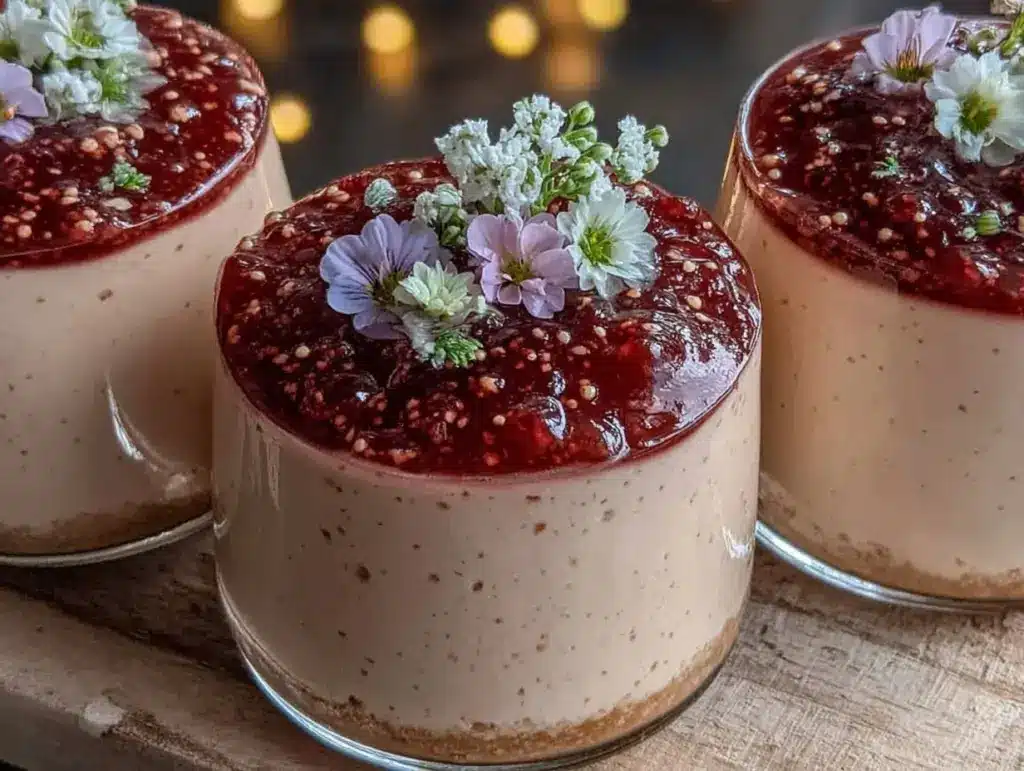
The moment I first tasted this silky rose water panna cotta with fresh raspberry coulis, it was late—too late, honestly—for anything too fussy. I was rummaging through the fridge, half-expecting to give up and order dessert from somewhere, when the idea just kind of landed. Rose water? Sure, why not. I’d always been a bit skeptical about floral flavors in desserts—it seemed like something too perfumed, almost cloying. But that night, with the gentle hum of the city outside my window and a half-empty bottle of rose water staring me down, I gave it a shot.
It took just a few simple ingredients and a bit of patience, but the texture was unlike anything I’d managed before—silky, almost melt-in-your-mouth smooth, with that subtle, fragrant hint of rose that wasn’t overpowering but felt like a secret whispered through the cream. The fresh raspberry coulis on top? It cut through the softness with a bright, tart punch that balanced everything perfectly.
Since then, I’ve found myself making this panna cotta again and again—sometimes after a long day when I just want a little calm, sometimes when I have friends stopping by unexpectedly. It’s elegant enough to impress but easy enough that it never feels like a chore. And honestly, every time it comes together, I’m reminded that simple things can be quietly extraordinary.
What’s stuck with me is how this dessert manages to be both delicate and satisfying, a little floral daydream with a fresh fruity snap. If you’re curious about something different but approachable, this silky rose water panna cotta with fresh raspberry coulis might just be your new favorite way to end the day.
Why You’ll Love This Silky Rose Water Panna Cotta with Fresh Raspberry Coulis
Having made this panna cotta recipe several times, I can confidently say it’s a winner for anyone who appreciates subtle flavors and smooth textures. Here’s why it’s stood the test of time in my kitchen:
- Quick & Easy: This dessert comes together in about 20 minutes of active prep, with a few hours chilling time, making it perfect for last-minute dinner guests or an indulgent treat after a long day.
- Simple Ingredients: No need to hunt down exotic items. Apart from rose water (which is widely available now), everything else is pantry or fridge staples—heavy cream, sugar, gelatin, fresh raspberries.
- Perfect for Special Occasions: Whether it’s a romantic dinner, a spring brunch, or a holiday treat, panna cotta’s elegant look and delicate flavor fit any occasion.
- Crowd-Pleaser: I’ve served this to friends who usually shy away from floral desserts, and it’s always met with surprise and delight. Kids and adults alike find the raspberry coulis irresistible.
- Unbelievably Delicious: The silky smooth cream infused lightly with rose water contrasts beautifully with the tart and fresh raspberry coulis, creating a layered flavor experience.
What sets this panna cotta apart is the balance. The rose water isn’t just sprinkled in for show; it’s the kind of subtlety that requires tuning your palate but rewards it with a floral note that feels fresh and not overdone. The raspberry coulis isn’t just a garnish — it’s a vibrant partner, made from fresh raspberries, bringing brightness and a natural sweetness that lifts the entire dessert.
If you’ve ever wondered how to make a panna cotta that doesn’t feel heavy or cloying, this is it. It’s dessert with personality, a gentle touch of luxury, and a refreshing finish all at once. Plus, if you’re a fan of fruity, creamy desserts like the creamy lemon posset with raspberry coulis, you’ll find this panna cotta hits all the right notes with a floral twist.
What Ingredients You Will Need
This silky rose water panna cotta recipe leans on simple, wholesome ingredients to create that luxurious texture and delicate flavor. Most of these are everyday staples, with a splash of rose water to give it its signature aroma. Here’s what you’ll need:
- Heavy cream (2 cups / 480 ml): The base of the panna cotta, providing richness and creaminess. I prefer a brand like Organic Valley for its freshness and texture.
- Whole milk (1 cup / 240 ml): Added to lighten the cream slightly for a perfect balance.
- Granulated sugar (1/3 cup / 65 grams): Sweetens the panna cotta just enough without overpowering the floral notes.
- Unflavored gelatin powder (2 teaspoons / about 6 grams): This sets the panna cotta to that perfect silky firmness—look for Knox or a trusted local brand.
- Rose water (1 1/2 teaspoons): The star ingredient—choose a high-quality, natural rose water without any artificial additives. A little goes a long way here.
- Vanilla extract (1 teaspoon): Adds a warm undertone that complements the rose beautifully.
For the fresh raspberry coulis:
- Fresh raspberries (1 1/2 cups / 225 grams): I always try to use ripe, seasonal berries for the brightest flavor.
- Powdered sugar (2 tablespoons / 15 grams): To gently sweeten the coulis without making it syrupy.
- Fresh lemon juice (1 tablespoon): A little acidity to brighten the coulis and balance the sweetness.
You can swap the milk for a dairy-free alternative like oat or almond milk if needed, though it’ll alter the texture slightly. Likewise, if you want to skip the rose water, a touch of orange blossom water or a vanilla bean infusion can work, but honestly, the rose water is what makes this special.
Equipment Needed
- Medium saucepan: For gently heating the cream mixture. A heavy-bottomed pan helps prevent scorching.
- Small bowl: To bloom the gelatin powder in cold water before adding to the cream.
- Whisk: Essential for mixing the cream and sugar smoothly and evenly.
- Fine mesh sieve: To strain the raspberry coulis, removing seeds for a silky finish (optional but recommended).
- Ramekins or small serving glasses: For setting the panna cotta. I like using glass jars or pretty ceramic ramekins for presentation.
- Measuring cups and spoons: Accurate measurements make a huge difference in texture and flavor.
If you don’t have ramekins, small mason jars or even sturdy teacups can work well. For gelatin, if you only have sheets, 2 sheets will roughly equal 2 teaspoons of powder. Blooming gelatin properly is key—if you’ve never done it before, soaking the powder in cold water for about 5 minutes until it blooms is a small step that pays off big.
Preparation Method
- Bloom the gelatin: Sprinkle 2 teaspoons (about 6 grams) of gelatin powder over 3 tablespoons (45 ml) of cold water in a small bowl. Let it sit for 5 minutes until it swells and becomes jelly-like.
- Heat the cream mixture: In a medium saucepan, combine 2 cups (480 ml) heavy cream, 1 cup (240 ml) whole milk, and 1/3 cup (65 grams) granulated sugar. Warm over medium heat, whisking occasionally, until the sugar dissolves and the mixture is hot but not boiling (about 175°F/80°C). You should see steam rising but no bubbles forming.
- Add the gelatin: Remove the cream mixture from heat. Stir in the bloomed gelatin until fully dissolved. This step is crucial for a smooth panna cotta—if gelatin isn’t fully dissolved, you’ll notice lumps.
- Flavor the panna cotta: Stir in 1 1/2 teaspoons rose water and 1 teaspoon vanilla extract. Taste carefully—rose water is potent, so you want a whisper of floral, not a shout.
- Strain the mixture: Pour the cream through a fine mesh sieve into a large measuring cup or bowl with a spout. This catches any undissolved bits or foam for a perfect silky texture.
- Pour into molds: Divide the mixture evenly among 6 ramekins or serving glasses. Let them cool briefly at room temperature before covering with plastic wrap.
- Chill: Refrigerate for at least 4 hours, preferably overnight, until the panna cotta is set but still jiggles gently when moved.
- Make the raspberry coulis: While panna cotta chills, blend 1 1/2 cups (225 grams) fresh raspberries with 2 tablespoons (15 grams) powdered sugar and 1 tablespoon fresh lemon juice until smooth. Strain through a fine sieve to remove seeds for a smooth sauce.
- Serve: Spoon fresh raspberry coulis over each panna cotta just before serving. Garnish with a few whole raspberries or edible rose petals if you’re feeling fancy.
Quick tip: If your gelatin doesn’t set properly, it’s usually because it wasn’t fully dissolved or the cream mixture was too hot when gelatin was added. Always avoid boiling the cream after adding gelatin.
This dessert pairs beautifully with a light cup of tea or even a refreshing cocktail like the lavender gin fizz, if you’re in the mood for something special.
Cooking Tips & Techniques
Getting panna cotta to that silky, melt-in-your-mouth texture isn’t magic—it’s about some simple techniques I’ve picked up after a few early kitchen mishaps.
- Bloom your gelatin properly: Never add gelatin powder directly to hot liquid. Always bloom in cold water first to avoid clumps and ensure it dissolves evenly.
- Heat gently: Warm your cream mixture slowly and keep it below boiling. High heat can break down gelatin and curdle your cream.
- Strain for smoothness: Straining the cream mixture right before pouring helps remove any bits of undissolved gelatin or foam, leaving your panna cotta perfectly smooth.
- Chill enough: Don’t rush the setting process. Panna cotta needs at least 4 hours to set properly, though overnight is best for firm, sliceable results.
- Balance the rose water: Rose water can be overpowering if you go overboard. Start with less and add more if needed after tasting.
- Fresh coulis is key: Making a fresh raspberry coulis not only adds color but also a vibrant tartness that balances the creamy panna cotta. Avoid using store-bought syrups—they’re usually too sweet and artificial.
- Make ahead: Panna cotta is a great make-ahead dessert. You can prepare it the day before and keep it refrigerated until serving.
I remember the first time I skipped straining the mixture; the texture was grainy and just not right. Lesson learned. Now it’s my non-negotiable step. Also, I like to prepare a batch of Thai iced tea for sipping alongside this panna cotta—it’s an unexpectedly perfect combo.
Variations & Adaptations
This rose water panna cotta recipe is a blank canvas that invites a few playful tweaks depending on your mood or dietary needs.
- Dietary swaps: Use coconut cream and a plant-based milk to make a vegan version; substitute agar agar for gelatin, but note this changes texture a bit (firmer and less creamy).
- Flavor twists: Try adding a splash of cardamom or a few crushed pink peppercorns to the cream for a spicy floral note that pairs beautifully with raspberry coulis.
- Seasonal fruits: Swap the raspberry coulis for strawberry, blueberry, or even a tangy passionfruit sauce for a fresh seasonal take.
- Alcohol infusion: For a grown-up version, add a teaspoon of rose liqueur or a splash of elderflower cordial to the cream mixture before setting.
- Texture play: Fold in a handful of toasted pistachios or slivered almonds on top just before serving for a little crunch contrast.
Personally, I once tried a lavender-infused panna cotta with a honey drizzle, which was delightful but a bit more intense than the rose version. If you enjoy floral flavors, you might also want to try the lemon posset with raspberry coulis for a citrusy twist on the same concept.
Serving & Storage Suggestions
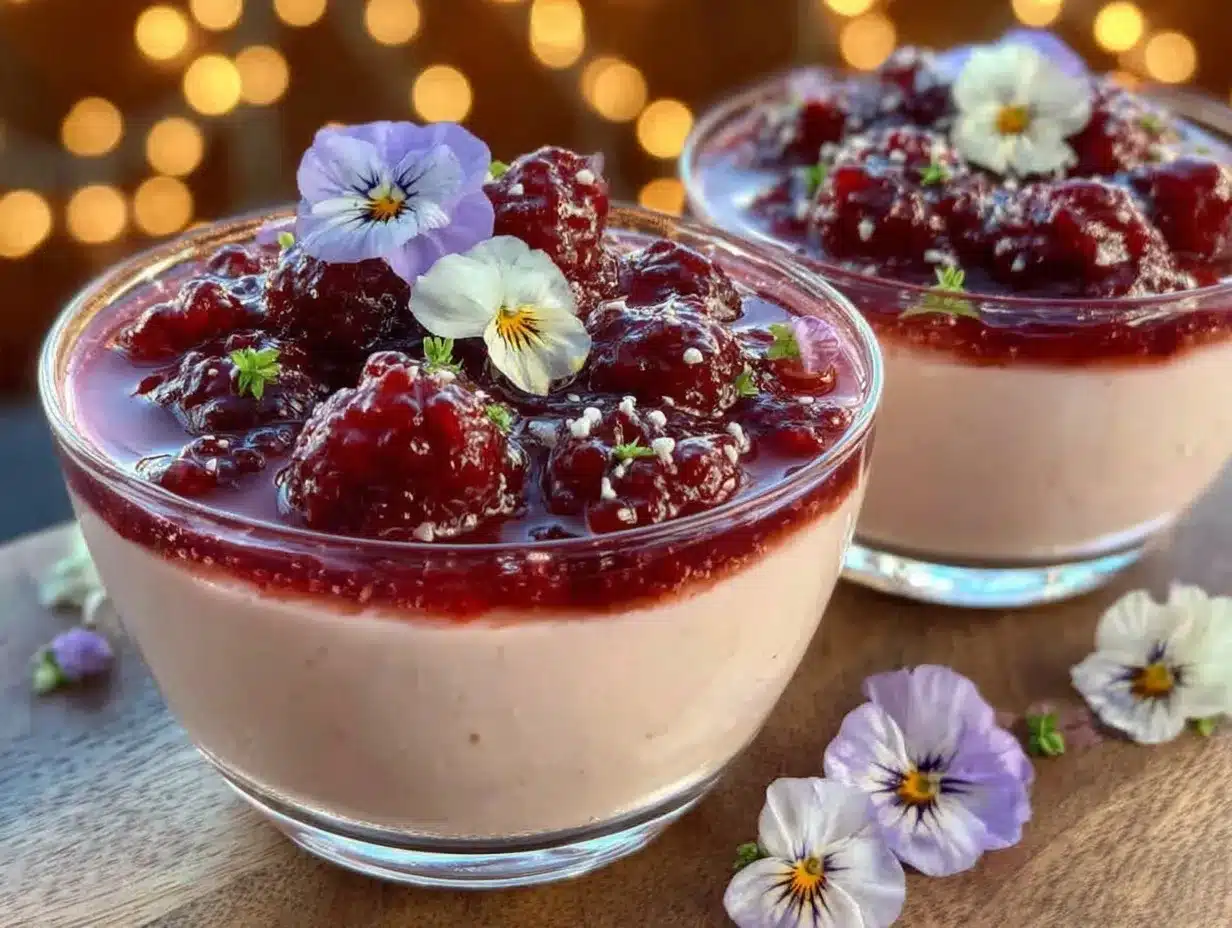
Serve your silky rose water panna cotta chilled, straight from the fridge. The texture is best enjoyed cold and creamy, with the raspberry coulis spooned generously on top. A few fresh raspberries or edible flowers add a lovely finishing touch.
This dessert pairs well with light, floral teas or sparkling wine. If you’re serving it at a gathering, small portions in pretty glasses or jars make for an elegant presentation.
For storage, panna cotta keeps well in the refrigerator covered with plastic wrap or in airtight containers for up to 3 days. The texture might firm up slightly but remains creamy. The raspberry coulis can be made ahead and stored separately in the fridge for up to 2 days.
When reheating (if you prefer it slightly less chilled), let it sit at room temperature for 10 minutes but avoid microwaving, which can ruin the texture.
Interestingly, the flavors of the rose water and raspberry tend to deepen after a day or so in the fridge, making leftovers a quiet treat all on their own.
Nutritional Information & Benefits
This silky rose water panna cotta is a moderately rich dessert, with each serving packing approximately 250-300 calories depending on portion size. The heavy cream provides a good dose of calcium and fat-soluble vitamins, while the fresh raspberry coulis adds antioxidants, vitamin C, and fiber.
Rose water itself is low in calories and is sometimes noted for its soothing digestive properties and mild anti-inflammatory benefits. Using fresh fruit instead of sugary syrups keeps the dessert lighter and more natural.
For those watching carbs, this dessert is moderate due to the sugar content but can be adjusted by reducing sugar or using sugar substitutes. It’s naturally gluten-free, making it suitable for many dietary needs.
Personally, I find desserts like this strike a balance between indulgence and mindfulness—small portions, made with quality ingredients, and lots of fresh fruit make for a treat that feels satisfying without overdoing it.
Conclusion
Silky rose water panna cotta with fresh raspberry coulis is one of those desserts that feels fancy without fuss, floral without being overpowering, and creamy with a bright pop of fruit. It’s a simple recipe that’s become a quiet favorite in my kitchen, whether I’m winding down solo or sharing a special moment with friends.
Feel free to tweak the rose water intensity, swap the coulis for your favorite seasonal fruit, or add a sprinkle of nuts for texture. This panna cotta is forgiving and welcoming to personalization—just like a good friend in dessert form.
I hope you enjoy making and savoring this recipe as much as I have. And when you do, I’d love to hear how you put your own spin on it—leave a comment or share your experience. Here’s to sweet, simple moments of joy!
Frequently Asked Questions About Silky Rose Water Panna Cotta
Can I make this panna cotta ahead of time?
Absolutely. It actually tastes better after chilling overnight, allowing the flavors to meld and the texture to set perfectly.
What if I don’t have rose water?
You can replace rose water with orange blossom water, vanilla extract, or even a small amount of lavender extract for a different floral note.
How do I know if the gelatin is fully dissolved?
After adding the bloomed gelatin to the warm cream, stir gently until no granules or lumps remain. Straining the mixture helps catch any undissolved bits.
Can I use frozen raspberries for the coulis?
Yes, but thaw and drain excess liquid first to avoid a watery coulis. Fresh raspberries yield the best flavor and texture.
Is there a dairy-free version of this panna cotta?
Yes, use coconut cream and plant-based milk, and replace gelatin with agar agar powder, adjusting the amount according to package instructions to achieve a similar set.
Pin This Recipe!
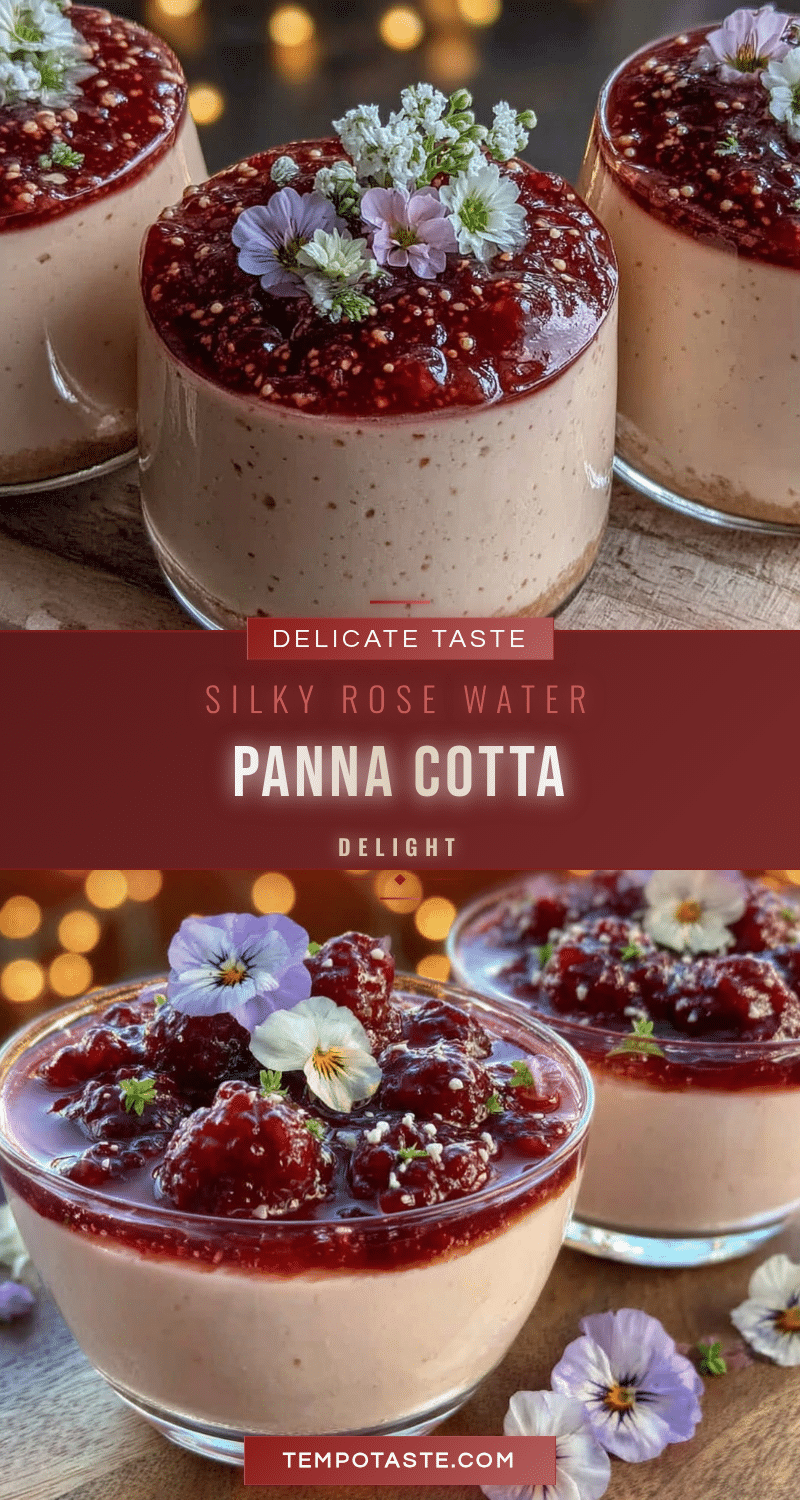
Silky Rose Water Panna Cotta with Fresh Raspberry Coulis

A delicate and silky panna cotta infused with subtle rose water, topped with a bright and tart fresh raspberry coulis. This elegant dessert is easy to prepare and perfect for special occasions or a simple indulgence.
- Prep Time: 20 minutes
- Cook Time: 10 minutes
- Total Time: 4 hours 30 minutes
- Yield: 6 servings 1x
- Category: Dessert
- Cuisine: Italian
Ingredients
- 2 cups (480 ml) heavy cream
- 1 cup (240 ml) whole milk
- 1/3 cup (65 grams) granulated sugar
- 2 teaspoons (about 6 grams) unflavored gelatin powder
- 1 1/2 teaspoons rose water
- 1 teaspoon vanilla extract
- 1 1/2 cups (225 grams) fresh raspberries
- 2 tablespoons (15 grams) powdered sugar
- 1 tablespoon fresh lemon juice
- 3 tablespoons (45 ml) cold water (for blooming gelatin)
Instructions
- Bloom the gelatin: Sprinkle 2 teaspoons of gelatin powder over 3 tablespoons of cold water in a small bowl. Let it sit for 5 minutes until it swells and becomes jelly-like.
- Heat the cream mixture: In a medium saucepan, combine 2 cups heavy cream, 1 cup whole milk, and 1/3 cup granulated sugar. Warm over medium heat, whisking occasionally, until the sugar dissolves and the mixture is hot but not boiling (about 175°F/80°C).
- Add the gelatin: Remove the cream mixture from heat. Stir in the bloomed gelatin until fully dissolved.
- Flavor the panna cotta: Stir in 1 1/2 teaspoons rose water and 1 teaspoon vanilla extract. Taste carefully to ensure a subtle floral note.
- Strain the mixture: Pour the cream through a fine mesh sieve into a large measuring cup or bowl to remove any undissolved bits or foam.
- Pour into molds: Divide the mixture evenly among 6 ramekins or serving glasses. Let them cool briefly at room temperature before covering with plastic wrap.
- Chill: Refrigerate for at least 4 hours, preferably overnight, until set but still gently jiggly.
- Make the raspberry coulis: Blend 1 1/2 cups fresh raspberries with 2 tablespoons powdered sugar and 1 tablespoon fresh lemon juice until smooth. Strain through a fine sieve to remove seeds.
- Serve: Spoon fresh raspberry coulis over each panna cotta just before serving. Garnish with whole raspberries or edible rose petals if desired.
Notes
Bloom gelatin in cold water before adding to warm cream to avoid lumps. Do not boil the cream mixture after adding gelatin. Strain the mixture for a silky smooth texture. Chill for at least 4 hours or overnight for best results. Fresh raspberry coulis is preferred over store-bought syrups for natural sweetness and tartness.
Nutrition
- Serving Size: 1 ramekin (approxima
- Calories: 275
- Sugar: 13
- Sodium: 45
- Fat: 22
- Saturated Fat: 14
- Carbohydrates: 15
- Fiber: 2
- Protein: 4
Keywords: panna cotta, rose water, raspberry coulis, floral dessert, creamy dessert, easy dessert, elegant dessert