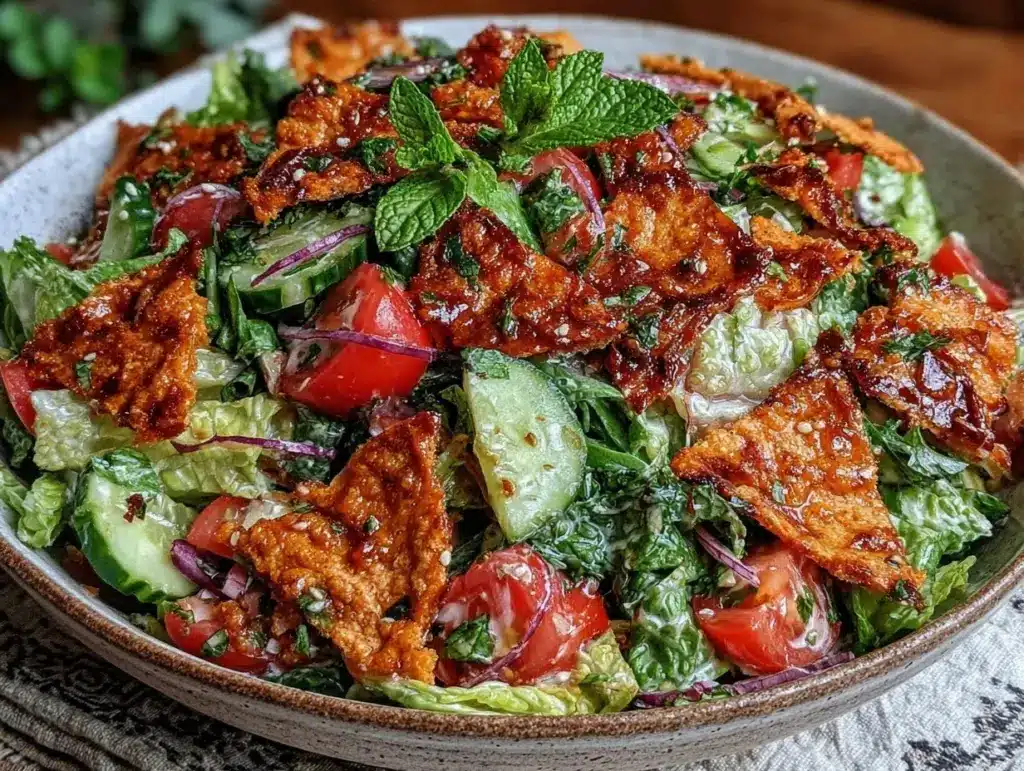
The crunch of toasted pita, the zing of sumac, and the burst of fresh herbs—Lebanese fattoush salad has a way of waking up your taste buds like nothing else. Honestly, the first time I made this vibrant Lebanese fattoush salad recipe, I was hooked instantly. It’s like summer on a plate, with every bite delivering a lively mix of textures and flavors that feels both light and satisfying. You know when a salad just feels right? This one does that, without any fuss.
I discovered fattoush while traveling through Beirut years ago, and it quickly became my go-to for a quick, fresh meal that still feels special. Over time, I’ve tweaked the dressing and ingredient ratios to perfect that balance of bright, tangy, and savory notes. This vibrant Lebanese fattoush salad recipe is a real crowd-pleaser, whether you’re serving it as a side or a light lunch.
What I love most is how this fresh flavor boost is so easy to pull together with everyday ingredients. It’s perfect for busy weeknights, weekend gatherings, or whenever you need a refreshing break from heavy meals. Plus, it’s naturally vegan and gluten-free if you skip the pita or use gluten-free bread. After making this salad dozens of times, I’m confident you’ll find it as delightful and versatile as I do.
Why You’ll Love This Recipe
- Quick & Easy: Ready in under 20 minutes, making it perfect for busy days or last-minute meals.
- Simple Ingredients: No need for specialty stores—fresh veggies, herbs, and pantry staples are all you need.
- Perfect for Any Occasion: Whether it’s a picnic, potluck, or casual dinner, fattoush always impresses.
- Crowd-Pleaser: Kids and adults alike love the crispy pita and zesty dressing combo.
- Unbelievably Delicious: That hint of sumac and lemon juice lifts every bite into something fresh and memorable.
This isn’t just another salad recipe—it has character. The secret is in the toasted pita pieces that stay crunchy, even when tossed with the dressing. Adding sumac gives it that unique tang that you won’t find in your average green salad. Plus, the fresh herbs like parsley and mint bring a garden-fresh aroma that really makes this vibrant Lebanese fattoush salad a standout. Honestly, after trying this, you’ll want to make it again and again.
What Ingredients You Will Need
This vibrant Lebanese fattoush salad recipe relies on fresh, crisp veggies and a tangy dressing to deliver its signature punch. The ingredients are straightforward and easy to find, making it a breeze to whip up any time.
- Pita Bread: 2 pieces, cut into small squares and toasted until golden and crispy (adds delightful crunch).
- Romaine Lettuce: 1 large head, washed and chopped (provides a crunchy, fresh base).
- Tomatoes: 2 medium, diced (ripe and juicy for sweetness).
- Cucumber: 1 medium, peeled and chopped (adds refreshing coolness).
- Radishes: 5-6, thinly sliced (for peppery bite).
- Green Onions: 3 stalks, sliced (mild onion flavor).
- Fresh Parsley: ½ cup, chopped (classic herb flavor).
- Fresh Mint: ¼ cup, chopped (bright and aromatic).
- Sumac: 2 teaspoons (essential Lebanese spice giving a lemony tang).
- Lemon Juice: ¼ cup freshly squeezed (adds fresh acidity).
- Olive Oil: ⅓ cup extra virgin (for richness and body).
- Garlic: 1 clove, minced (adds subtle warmth).
- Salt: To taste (balances flavors).
- Black Pepper: Freshly ground, to taste (adds mild heat).
For best results, I like to use good-quality extra virgin olive oil like Colavita or California Olive Ranch. The sumac is non-negotiable here—if you can find a Middle Eastern or specialty spice store, grab the freshest you can; it really lifts the dressing. If you prefer, you can swap the pita for gluten-free bread or even crunchy baked tortillas for a twist. And if fresh herbs aren’t available, a teaspoon of dried mint and parsley can work in a pinch, but fresh is definitely better.
Equipment Needed
- Large Salad Bowl: To toss all ingredients without spills.
- Sharp Knife: For chopping vegetables and herbs precisely.
- Cutting Board: Preferably sturdy and easy to clean.
- Small Mixing Bowl: To whisk the dressing ingredients together.
- Whisk or Fork: For combining lemon juice, olive oil, and garlic smoothly.
- Baking Sheet or Skillet: For toasting pita pieces until crisp.
If you don’t have a baking sheet handy, a dry skillet works great to toast the pita on the stovetop—just watch closely to avoid burning. I’ve used both methods and honestly, the skillet toasting gives a slightly smokier flavor that I love. For chopping, a good chef’s knife makes the job faster and safer. Nothing fancy needed here, but keeping your tools sharp makes a big difference. I keep a small whisk specifically for dressings; it’s a game-changer for smooth emulsions.
Detailed Preparation Method
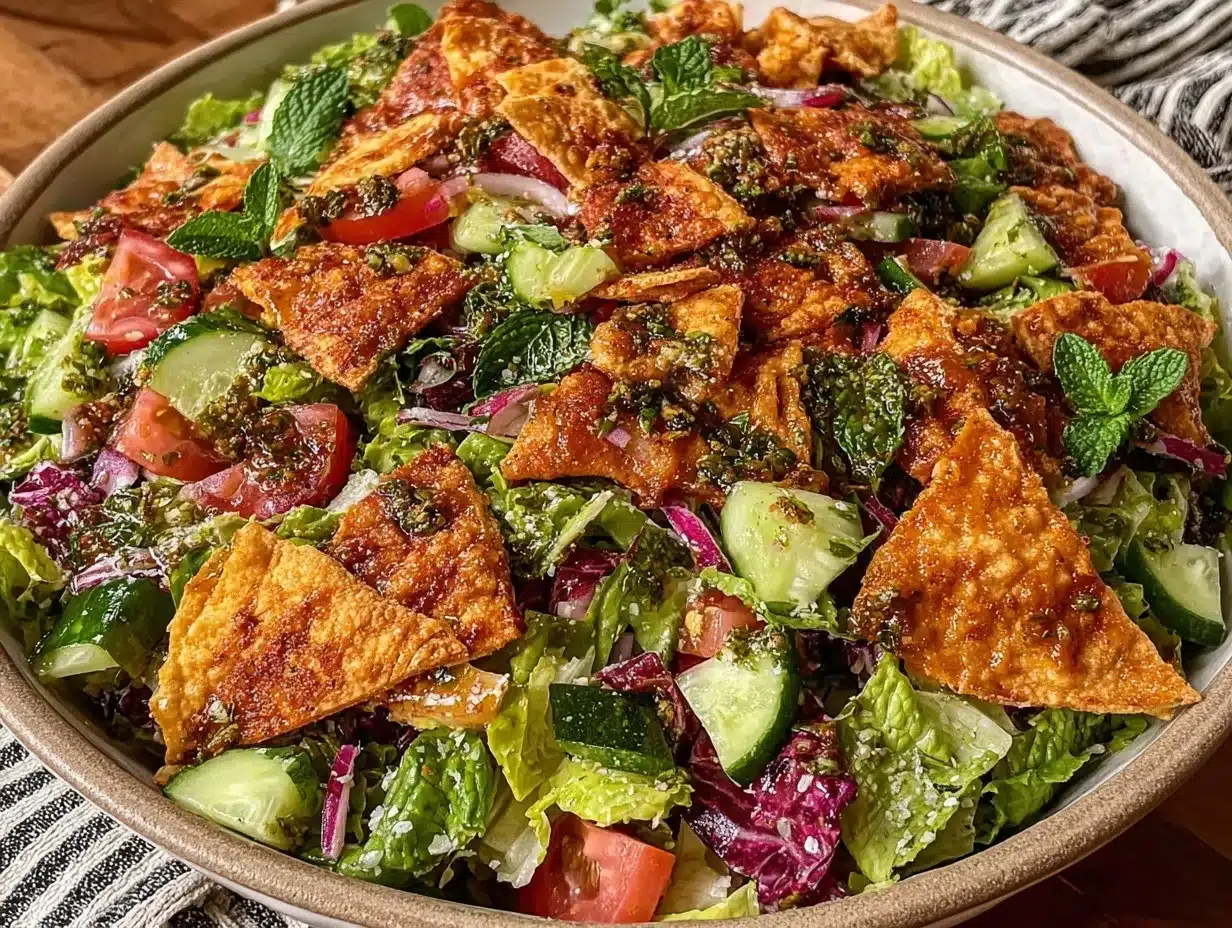
- Prepare the Pita Croutons (10 minutes): Preheat your oven to 375°F (190°C). Cut pita bread into small 1-inch (2.5 cm) squares. Spread them evenly on a baking sheet. Lightly brush or spray with olive oil and sprinkle a pinch of salt. Toast in the oven for about 8-10 minutes, shaking the pan halfway through to ensure even crisping. They should be golden and crunchy but not burnt. Remove and set aside to cool.
- Wash and Chop the Vegetables (10 minutes): Rinse the romaine lettuce, tomatoes, cucumber, radishes, green onions, parsley, and mint thoroughly. Chop the lettuce into bite-sized pieces and dice tomatoes and cucumber into roughly ½-inch (1.25 cm) cubes. Thinly slice the radishes and green onions. Finely chop the parsley and mint. Combine all in a large salad bowl.
- Make the Dressing (5 minutes): In a small bowl, whisk together ¼ cup (60 ml) lemon juice, ⅓ cup (80 ml) extra virgin olive oil, minced garlic, 2 teaspoons sumac, salt, and freshly ground black pepper. Taste and adjust seasoning if needed. The dressing should be bright, tangy, and slightly garlicky.
- Assemble the Salad (5 minutes): Pour the dressing over the chopped vegetables and herbs. Toss gently but thoroughly to coat everything evenly. Add the toasted pita croutons last, tossing lightly just to combine. This keeps the pita from getting soggy.
- Serve Immediately: Fattoush is best enjoyed fresh when the pita is still crunchy. You’ll notice the vibrant colors and fresh aromas come alive on the plate, making it a feast for all senses.
Pro tip: If you want to prep ahead, toast the pita in advance and store in an airtight container. Keep the dressing separate and toss everything together right before serving. If the pita softens, pop it back in the oven for a few minutes to refresh the crunch.
Cooking Tips & Techniques
One thing I learned the hard way: don’t add the pita croutons too early. Tossing them with the dressing and veggies and then letting the salad sit will leave you with soggy bread instead of that satisfying crunch. Always add pita last, just before serving.
When chopping herbs like parsley and mint, remember to remove tough stems and only use the tender leaves for the best texture and flavor. Also, rough chopping works better than fine mincing here—adds to the rustic vibe.
Balancing acidity is key. If your lemons are super tart, add a pinch of sugar or a drizzle of honey to mellow the dressing. Conversely, if it tastes flat, a splash more lemon juice or sumac can brighten it up.
For an even fresher flavor, chill the vegetables before assembling the salad. This makes the whole dish feel crisp and refreshing. I usually prep my veggies in the morning and toss them with dressing just before dinner.
Variations & Adaptations
- Grain Boost: Add cooked bulgur, quinoa, or couscous for a heartier salad perfect for lunch or dinner.
- Protein Punch: Toss in grilled chicken, shrimp, or falafel to turn this into a full meal.
- Seasonal Spin: Swap out radishes for spring peas or add pomegranate seeds in fall for a pop of sweetness.
- Allergen-Friendly: Use gluten-free pita or crispy chickpea crackers instead of traditional pita to keep it gluten-free.
- Spicy Kick: Add a pinch of Aleppo pepper or finely chopped fresh chili to the dressing for some heat.
Personally, I’ve tried swapping the pita for toasted naan when I ran out, and it was surprisingly delicious. The naan added a softer chew but still soaked up the dressing nicely. Another time, I blended the dressing with a little tahini for a creamier twist—totally different vibe but still great!
Serving & Storage Suggestions
Serve this vibrant Lebanese fattoush salad chilled or at room temperature. It pairs beautifully with grilled meats, roasted veggies, or even as a fresh side to heavier Middle Eastern dishes like shawarma or kebabs. For drinks, a cold mint lemonade or light white wine complements the salad’s bright flavors nicely.
If you have leftovers (rare but possible!), store the salad and pita croutons separately in airtight containers in the fridge. The salad keeps well for 1-2 days, but the pita will lose its crunch. Re-toast the pita in a hot oven for 3-4 minutes to bring back that satisfying texture.
Interestingly, the flavors in fattoush deepen a bit after a few hours as the dressing melds with the herbs and veggies, though the pita crunch is best fresh. So if you want the best of both worlds, toss just before serving!
Nutritional Information & Benefits
This vibrant Lebanese fattoush salad is naturally low in calories and packed with fiber, vitamins, and antioxidants thanks to its fresh vegetables and herbs. The olive oil provides heart-healthy monounsaturated fats, and the lemon juice adds a vitamin C boost.
Because it’s plant-based and gluten-free (without the pita or with gluten-free bread), it fits well into many diets including vegan, paleo (with modifications), and whole30. Just watch the pita if you’re gluten-sensitive.
Sumac, a key spice here, is rich in antioxidants and has anti-inflammatory properties, which is a nice bonus. From my experience as someone who cares about nourishing food, this salad offers a fresh, wholesome way to enjoy a vibrant mix of flavors without guilt or fuss.
Conclusion
There you have it—a vibrant Lebanese fattoush salad recipe that’s easy, fresh, and bursting with flavor. It’s the kind of salad that feels both nostalgic and exciting, perfect for any occasion or just a simple weeknight meal. I love how it’s packed with fresh veggies, herbs, and that signature sumac tang, all tied together by crisp toasted pita.
Feel free to tweak the ingredients to suit your taste or dietary needs—you really can’t go wrong with this one. If you try it, I’d love to hear how you made it your own or what variations you liked best. Drop a comment below, share your photos, or let me know your favorite way to enjoy fattoush. Happy cooking and here’s to fresh, flavorful meals that make your day a little brighter!
FAQs
What is fattoush salad?
Fattoush is a traditional Lebanese salad made with fresh vegetables, herbs, and toasted or fried pieces of pita bread, dressed with a tangy lemon and sumac dressing.
Can I make fattoush salad ahead of time?
You can prep the vegetables and dressing in advance, but it’s best to add the pita croutons right before serving to keep them crunchy.
What can I use instead of sumac?
If you don’t have sumac, a mix of lemon zest and a little paprika can approximate the tangy flavor, but sumac is highly recommended for authenticity.
Is fattoush salad gluten-free?
Traditional fattoush uses pita bread, which contains gluten. You can make it gluten-free by using gluten-free pita or crackers instead.
How do I keep the pita croutons crispy?
Toast the pita until golden and store separately from the salad. Add them just before serving, or re-toast briefly if they soften.
Pin This Recipe!

Vibrant Lebanese Fattoush Salad

A fresh and vibrant Lebanese fattoush salad featuring toasted pita, sumac, and fresh herbs for a lively mix of textures and flavors. Perfect as a light lunch or side dish, this salad is quick, easy, and naturally vegan and gluten-free if you skip or substitute the pita.
- Prep Time: 15 minutes
- Cook Time: 10 minutes
- Total Time: 25 minutes
- Yield: 4 servings 1x
- Category: Salad
- Cuisine: Lebanese
Ingredients
- 2 pieces pita bread, cut into small squares and toasted until golden and crispy
- 1 large head romaine lettuce, washed and chopped
- 2 medium tomatoes, diced
- 1 medium cucumber, peeled and chopped
- 5–6 radishes, thinly sliced
- 3 stalks green onions, sliced
- ½ cup fresh parsley, chopped
- ¼ cup fresh mint, chopped
- 2 teaspoons sumac
- ¼ cup freshly squeezed lemon juice
- ⅓ cup extra virgin olive oil
- 1 clove garlic, minced
- Salt, to taste
- Freshly ground black pepper, to taste
Instructions
- Preheat oven to 375°F (190°C). Cut pita bread into 1-inch squares. Spread on a baking sheet, lightly brush or spray with olive oil, sprinkle with a pinch of salt. Toast for 8-10 minutes, shaking pan halfway through until golden and crunchy. Remove and cool.
- Rinse and chop romaine lettuce into bite-sized pieces. Dice tomatoes and cucumber into ½-inch cubes. Thinly slice radishes and green onions. Finely chop parsley and mint. Combine all in a large salad bowl.
- In a small bowl, whisk together lemon juice, olive oil, minced garlic, sumac, salt, and black pepper. Adjust seasoning to taste.
- Pour dressing over the chopped vegetables and herbs. Toss gently but thoroughly to coat evenly.
- Add toasted pita croutons last and toss lightly to combine, keeping them crunchy.
- Serve immediately for best texture and flavor.
Notes
Add pita croutons just before serving to keep them crunchy. If prepping ahead, store toasted pita separately and re-toast before serving if needed. Fresh herbs are preferred over dried for best flavor. Adjust acidity with a pinch of sugar or honey if lemons are very tart. Chilling vegetables before assembling enhances freshness.
Nutrition
- Serving Size: 1 serving (about 1/4
- Calories: 180
- Sugar: 4
- Sodium: 250
- Fat: 14
- Saturated Fat: 2
- Carbohydrates: 12
- Fiber: 3
- Protein: 3
Keywords: fattoush, Lebanese salad, sumac, pita salad, fresh herbs, vegan salad, gluten-free option, healthy salad, Middle Eastern salad