Wednesday afternoon, three o’clock, and the kitchen counter is covered in a mess of berries, cubed cheese, and wooden skewers. My four-year-old is standing on a step stool, carefully threading a strawberry onto a stick with the kind of intense focus usually reserved for brain surgery. She holds it up, triumphant, and says, “Mama, it’s a rainbow.” And honestly? That’s the exact moment this whole kabob thing clicked for me.
I wasn’t trying to be clever or Pinterest-perfect that day. I was just desperate for a snack that would actually get eaten—something that didn’t involve negotiating over a plate of separated apple slices. The rainbow fruit and cheese kabobs idea came from a place of pure exhaustion. I grabbed whatever was in the fridge: some cheddar cubes, a handful of grapes, a couple of strawberries, and a sad little container of blueberries. I handed my daughter a skewer and let her go to town.
She ate every single piece. No whining, no bargaining, no “I don’t like that.” Just quiet, happy chewing. And I sat there thinking, why haven’t I been doing this all along?
These easy rainbow fruit and cheese kabobs kids love aren’t fancy. They’re not complicated. But they solve a very real problem: how to get kids to eat fruit and protein without a fight. The colors do the heavy lifting—kids are naturally drawn to bright, organized food. And the act of building their own kabob gives them a sense of control that turns snack time from a chore into a game.
This recipe stuck because it’s not really a recipe. It’s more of a strategy. A way to make snack time work for everyone, including the tired parent who just needs ten minutes of peace. And honestly, that’s the kind of win I’ll take any day of the week.
Why You’ll Love This Recipe
Let me tell you why these kabobs have become a staple in my kitchen—and why they’ll probably become one in yours too.
- Quick & Easy: These come together in under 10 minutes. Seriously. No cooking, no heating, no complicated steps. Just wash, cut, and thread. Perfect for that witching hour before dinner when everyone is hungry and you need something fast.
- Simple Ingredients: You don’t need a specialty grocery store for this. Cubed cheese, whatever fruit you have on hand, and some skewers. That’s it. I’ve made these with everything from fancy gouda to basic mozzarella balls, and they work every time.
- Perfect for Picky Eaters: This is the snack that finally got my nephew to eat a blueberry. There’s something about the presentation—the colors, the stick, the fun factor—that makes kids forget they’re eating “healthy” food. It’s a total game-changer for picky eaters.
- Crowd-Pleaser: I’ve brought these to playdates, birthday parties, and even a grown-up brunch (without the skewers, just arranged on a platter). Kids and adults alike go for them. They’re the first thing to disappear from the snack table.
- Unbelievably Customizable: The rainbow theme is just a starting point. You can swap in whatever fruit is in season, use different cheeses, or even add a drizzle of honey for extra sweetness. It’s a template, not a rulebook.
What makes these different from every other fruit-and-cheese platter? It’s the hands-on element. Kids love building their own kabobs. It gives them ownership over their food, which makes them way more likely to actually eat it. Plus, the rainbow pattern turns snack time into a visual treat. My daughter calls them “happy sticks,” and honestly, I can’t argue with that.
This isn’t just a snack—it’s the kind that makes you feel like a good parent without actually having to try that hard. And that, my friends, is the real win.
What Ingredients You Will Need
This recipe uses simple, everyday ingredients to create a snack that’s as beautiful as it is delicious. The magic is in the variety of colors and textures, not in anything fancy or hard to find.
- Fresh strawberries, halved or quartered (depending on size) — These give you that bright, vibrant red. Look for berries that are firm and deep red all the way through. If they’re too soft, they’ll slide right off the skewer.
- Cheddar cheese, cubed — I use sharp cheddar for its bold flavor and firm texture. It holds up well on the skewer and doesn’t get mushy at room temperature. I personally like Tillamook or Cabot for consistent quality.
- Fresh pineapple, cubed — The golden yellow adds a pop of color and a sweet-tart contrast to the cheese. Canned pineapple works in a pinch, but fresh has much better texture and won’t make the kabobs soggy.
- Green grapes — These bring the green element and a burst of juicy sweetness. Seedless grapes are a must. I usually keep them whole because they’re the perfect size for little hands.
- Fresh blueberries — For the blue/purple section of your rainbow. They’re small, easy to thread, and packed with antioxidants. No prep needed—just rinse and go.
- Mozzarella pearls or cubed mozzarella — The white component. Mozzarella pearls are perfect because they’re already bite-sized. If you can’t find them, just cube a fresh mozzarella ball. They add a mild, creamy counterpoint to the sharper cheddar.
- Colored wooden skewers — These are optional but add to the fun factor. You can find them at most craft stores or online. Regular wooden skewers work just fine too. Just break off the sharp tips if you’re serving these to very young children.
Ingredient Selection Tips: For the best results, choose fruit that’s ripe but still firm. Overripe fruit will be too soft to stay on the skewer and will make a mess. For the cheese, go with blocks you cube yourself rather than pre-shredded or pre-sliced—you’ll get cleaner, more uniform cubes that look better and hold up better.
Substitution Guidance: Feel free to swap in whatever fruit is in season or what you have on hand. Raspberries for red, mango for orange-yellow, kiwi for green, blackberries for dark purple. For the cheese, gouda, colby jack, or even small cubes of pepper jack (for older kids who like a little kick) all work beautifully.
To make these dairy-free: Skip the cheese entirely and double up on the fruit. The kabobs will still be colorful and delicious. You can also use dairy-free cheese alternatives, though they tend to be softer and may not hold their shape as well on the skewer.
Equipment Needed
You don’t need much for this recipe, which is part of what makes it so great. Here’s what you’ll want to have on hand:
- Wooden skewers — Standard 8-10 inch skewers work perfectly. You can find them at any grocery store. If you’re making these for very young children, consider snapping the skewers in half or using short cocktail picks instead. I’ve also used reusable metal skewers, but the colorful wooden ones add to the rainbow theme.
- Cutting board — A sturdy cutting board makes prep fast and safe. I prefer a large wooden board because it gives me plenty of space to work.
- Sharp knife — You’ll need a good chef’s knife for cubing the cheese and cutting the fruit. A paring knife works too for smaller, more precise cuts.
- Small cookie cutters (optional) — If you want to get really fancy, you can use mini star or heart-shaped cookie cutters to cut the cheese. My daughter loves this extra touch, and it makes the kabobs even more special for parties.
- Serving platter — A large, flat platter or wooden board works best for arranging the finished kabobs. I like to use a white platter because it makes the colors pop.
Tool Tips: I’ve made these with everything from fancy bamboo skewers to plain toothpicks. Honestly, the skewers don’t matter much—just use what you have. If you’re making these for a party, the colored skewers add a nice touch, but plain ones work just fine for everyday snacking.
Budget-Friendly Options: Skip the fancy skewers and cookie cutters. A basic knife, cutting board, and plain wooden skewers will get the job done perfectly. I’ve made dozens of batches with just those three tools, and they always turn out great.
Preparation Method
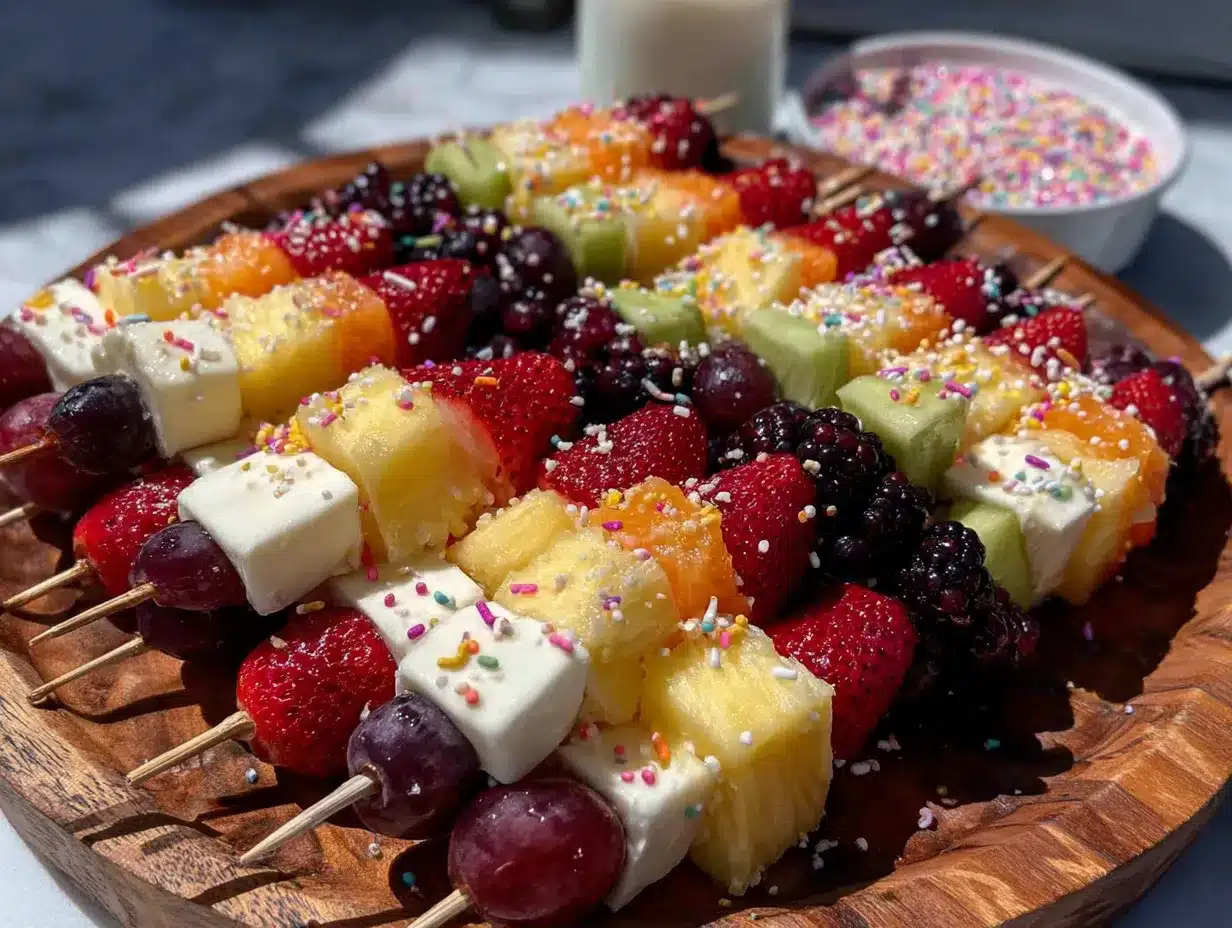
This is where the fun begins. The process is simple enough that kids can help with almost every step, which is honestly half the point of this recipe.
- Wash and dry all your fruit. Rinse the strawberries, grapes, and blueberries under cool water, then pat them dry with a clean kitchen towel or paper towels. This step is important—wet fruit will make the skewers slippery and harder to thread. Plus, excess moisture can make the cheese soggy if they sit for a while. (About 2 minutes)
- Prep the strawberries. Remove the green tops and any leaves. For large strawberries, cut them in half lengthwise. For extra-large ones, cut them into quarters. You want pieces that are roughly the same size as your cheese cubes—about 1-inch chunks. If the strawberries are small, you can leave them whole. (About 3 minutes)
- Cube the cheddar cheese. Cut the block of cheddar into 1/2-inch to 3/4-inch cubes. Try to make them as uniform as possible—this makes the kabobs look more polished and ensures each bite has a balanced mix of flavors. I usually get about 20-24 cubes from an 8-ounce block. (About 3 minutes)
- Cube the pineapple. If you’re using fresh pineapple, cut off the skin, remove the core, and cut the flesh into 1/2-inch chunks. Canned pineapple chunks can be used straight from the can—just drain them well and pat them dry. (About 3 minutes)
- Drain the mozzarella pearls. If you’re using fresh mozzarella pearls, drain them from the liquid and pat them dry with a paper towel. If you’re using a larger mozzarella ball, cut it into cubes similar in size to the cheddar. (About 1 minute)
- Now for the fun part—assembling the rainbow kabobs. Lay out all your prepped ingredients in rows on your cutting board, organized by color. This makes it easy for little hands to grab what they need. (About 1 minute)
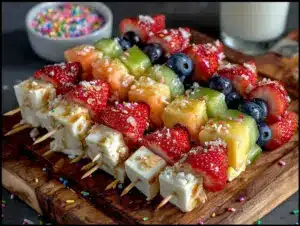
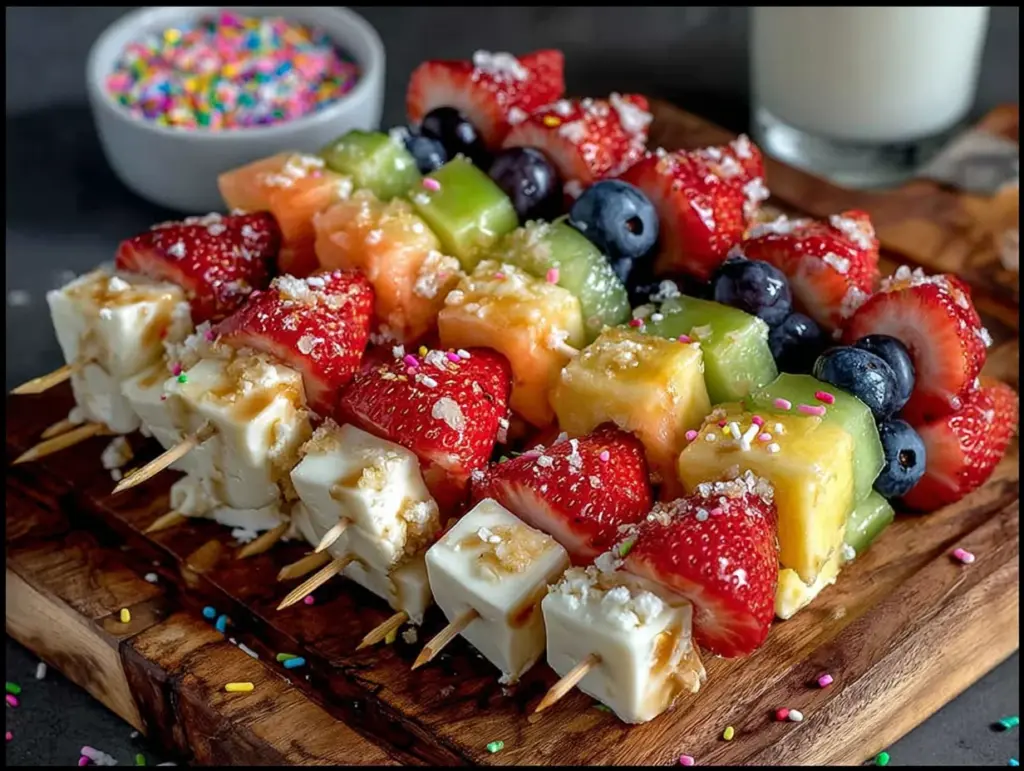
- Thread the skewers in rainbow order. Start with a strawberry piece (red), then a cheddar cube (orange), then a pineapple chunk (yellow), then a green grape (green), then a blueberry (blue), and finally a mozzarella pearl (purple/white). Repeat the pattern if your skewer is long enough. For shorter skewers, just do one round of the rainbow. (About 2-3 minutes per kabob)
- Place the finished kabobs on a serving platter. Arrange them in a neat row or fan them out for a pretty presentation. If you’re making these ahead of time, cover the platter with plastic wrap and refrigerate until ready to serve. (About 1 minute)
Pro Tip from My Kitchen: I learned the hard way that threading fruit too close to the end of the skewer makes it fall off. Leave about half an inch of empty skewer at the bottom so little hands have something to hold onto. Also, if you’re using colored skewers, double-check that the dye is food-safe—some cheap ones can bleed color onto the fruit.
Making It a Kid Activity: For my daughter, I set up a “kabob station” with bowls of each ingredient and let her build her own. She’s four, so she needs some help with the threading, but she loves choosing the order and seeing her creation come together. It’s a great fine motor skill activity disguised as snack time.
Sensory Cues: The strawberries should feel firm but give slightly when pressed. The cheese cubes should hold their shape without crumbling. When you thread the skewer, you should feel a slight resistance as it goes through each piece—if it slides through too easily, your fruit might be too soft.
Cooking Tips & Techniques
I’ve made these kabobs dozens of times, and I’ve definitely learned a few things the hard way. Here are my best tips for kabob success:
Keep pieces uniform in size. This is the number one tip I give everyone. If your fruit and cheese pieces are all different sizes, the kabobs look messy and some pieces will be harder to eat than others. Aim for 1/2-inch to 3/4-inch cubes for everything. It takes a little extra time, but the result is worth it.
Don’t overstuff the skewers. I know it’s tempting to pack in as much as possible, but leaving a little space between each piece makes the kabobs easier to eat and looks more visually appealing. Plus, it prevents the fruit from getting squished together.
Use room-temperature cheese. Cold cheese straight from the fridge is harder to cube cleanly and can be brittle. Let it sit on the counter for 10-15 minutes before cutting. Not so long that it gets soft, just long enough to take the chill off.
Pat everything dry. This might seem fussy, but it makes a real difference. Wet fruit and cheese are slippery and hard to thread. Plus, excess moisture can make the kabobs soggy if they sit out for a while. A quick pat with a paper towel solves both problems.
Make ahead strategy. You can prep all the ingredients up to a day in advance. Store the cut fruit and cheese separately in airtight containers in the fridge. Assemble the kabobs just before serving for the freshest look and texture. If you assemble them too far ahead, the fruit can start to release juice and make everything messy.
My biggest failure: The first time I made these for a playdate, I used pre-sliced cheese from a bag. It was a disaster. The slices were too thin to cube properly, they broke apart on the skewer, and the whole thing looked like a sad, melted mess. Never again. Block cheese all the way.
Multitasking tip: While the kids are washing the fruit, you can be cubing the cheese. Or vice versa. It’s a great way to involve them in the process without slowing things down too much.
Variations & Adaptations
One of the best things about this recipe is how easy it is to change up. Here are some of my favorite variations:
Seasonal Rainbow: In the summer, swap in watermelon for red, mango for yellow, and kiwi for green. In the fall, try apple slices (tossed in lemon juice to prevent browning) for red, and pear for green. Winter? Pomegranate seeds for red, and canned mandarin oranges for yellow. The rainbow concept works with whatever fruit is at its peak.
Protein-Packed Version: Add small cubes of cooked chicken or turkey sausage for older kids who need more protein. Just make sure the meat is firm enough to hold its shape on the skewer. I’ve also used hard-boiled egg quarters for a breakfast version.
Dairy-Free Adaptation: Skip the cheese entirely and use extra fruit. Or try dairy-free cheese alternatives—just know that many of them are softer and may not cube as cleanly. I’ve had good luck with Follow Your Heart brand for firmness.
Sweet Treat Version: For a dessert twist, use marshmallows, banana slices, and strawberries, with a drizzle of melted chocolate. My daughter calls these “dessert sticks” and they’re a huge hit at birthday parties.
Savory Snack Version: Swap the fruit for cherry tomatoes, cucumber chunks, and bell pepper pieces, paired with cheddar or mozzarella. This is great for older kids who prefer savory snacks over sweet ones.
Personal Variation I Love: I sometimes add a small basil leaf between the mozzarella and tomato on each skewer. It adds a fresh, aromatic note that takes the whole thing from kid snack to something you’d serve at a grown-up gathering. My husband thinks I’m crazy, but I swear it works.
Serving & Storage Suggestions
These kabobs are best served fresh, but they’re pretty forgiving. Here’s what I’ve learned about serving and storing them:
Serving Temperature: Serve the kabobs chilled or at room temperature. If you’re serving them at a party, keep them on a platter with a small bowl of ice underneath to keep everything cool. The cheese stays firmer when it’s cold, and the fruit stays crisp.
Presentation Ideas: Arrange the kabobs in a rainbow pattern on a large white platter—it makes the colors really pop. For a party, I like to stand them upright in a short glass or mason jar filled with a few ice cubes. It looks festive and keeps them cool. You can also arrange them in a fan pattern on a wooden board for a more rustic look.
Complementary Dishes: These kabobs pair beautifully with a simple yogurt dip (plain Greek yogurt mixed with a little honey and vanilla). They’re also great alongside peanut butter energy balls for a balanced snack plate. For a lunchbox, pack them with a small container of grapes and a cheese stick for a complete meal.
Storage Instructions: If you have leftovers (unlikely, but possible), remove any fruit that’s starting to get soft and store the rest in an airtight container in the refrigerator for up to 24 hours. The cheese will keep fine, but the fruit may start to release juice and get mushy after that. I don’t recommend freezing these—the texture of both the fruit and cheese will suffer.
Reheating: These are served cold or at room temperature, so no reheating needed. If they’ve been in the fridge, just let them sit at room temperature for 10 minutes before serving to take the chill off.
How Flavors Develop: Honestly, these are best eaten within a few hours of assembly. The flavors don’t really “develop” like a stew or a casserole. But if you let them sit for 30 minutes or so, the fruit juices can slightly soak into the cheese, which some people actually like. It’s a subtle effect, not a major flavor change.
Nutritional Information & Benefits
These kabobs are a nutritional win, especially for kids who might be picky about eating fruit or cheese on their own. Here’s a rough breakdown per kabob (assuming one full rainbow pattern):
- Calories: Approximately 120-150 per kabob
- Protein: 6-8 grams (from the cheese)
- Carbohydrates: 12-15 grams (from the fruit)
- Fat: 7-9 grams (from the cheese)
- Fiber: 2-3 grams (from the fruit)
- Sugar: 8-10 grams (natural fruit sugars)
Health Benefits: The fruit provides a range of vitamins and antioxidants—vitamin C from the strawberries, bromelain from the pineapple (which aids digestion), and anthocyanins from the blueberries (great for brain health). The cheese adds calcium and protein, which are essential for growing kids. It’s a balanced snack that covers multiple food groups in one fun package.
Dietary Considerations: This recipe is naturally vegetarian. To make it gluten-free, just use gluten-free skewers (most wooden ones are, but check the label). It’s also low in added sugars—the sweetness comes entirely from the fruit. For a lower-fat option, use part-skim mozzarella instead of cheddar.
Potential Allergens: Dairy (from the cheese). If you’re serving these at a school or party, be aware that some kids may have dairy allergies. The dairy-free variation mentioned above works well as an alternative.
My Wellness Perspective: I love that these kabobs make healthy eating feel like a treat. My daughter doesn’t see them as “good for her”—she sees them as a fun activity that tastes great. That’s the kind of win-win I can get behind. Plus, they’re portion-controlled, so it’s easy to manage how much the kids are eating without being the food police.
Conclusion
These easy rainbow fruit and cheese kabobs kids love have saved my sanity more times than I can count. They’re quick, they’re fun, and they actually get eaten—which, let’s be honest, is the whole point of making snacks for kids.
What I love most about this recipe is how adaptable it is. You can make it with whatever fruit is in season, whatever cheese you have in the fridge, and whatever skewers you can find in the back of your pantry. It’s not about following a strict set of rules—it’s about making snack time work for your family, in your kitchen, on your schedule.
I’d love to hear how these turn out for you. Did your kids help build their own kabobs? Did you try a fun variation? Drop a comment below and let me know—I read every single one, and your ideas might just inspire my next batch. And if you’re looking for more kid-friendly snack ideas, check out our healthy high-protein snack box for more balanced lunch ideas.
Go make some rainbows. Your kids will thank you.
Frequently Asked Questions
Can I make these kabobs ahead of time for a party?
Yes, but I recommend prepping the ingredients up to 24 hours in advance and assembling the kabobs no more than 2-3 hours before serving. The fruit can release juice and make the cheese soggy if they sit assembled for too long. Store the cut fruit and cheese separately in airtight containers in the fridge until you’re ready to put them together.
What’s the best cheese for these kabobs?
Firm cheeses work best. Sharp cheddar, gouda, colby jack, and mozzarella pearls are my top picks. Avoid soft cheeses like brie or goat cheese—they won’t hold their shape on the skewer. Pre-shredded cheese is also a no-go; it’s too small and crumbly.
How do I keep the fruit from browning?
For fruits that brown quickly (like apples or pears), toss them in a little lemon juice or pineapple juice before threading. But honestly, the fruits I recommend for this recipe—strawberries, pineapple, grapes, blueberries—don’t brown easily, so it’s usually not an issue.
Can I use frozen fruit?
Frozen fruit will be too soft and watery once it thaws. It won’t hold its shape on the skewer and will make everything messy. Stick with fresh fruit for the best results. If you only have frozen fruit, thaw it completely, drain off the excess liquid, and pat it very dry before using.
Are these safe for toddlers?
Yes, with a few modifications. For toddlers under 3, I recommend cutting the fruit into very small pieces and serving them in a bowl instead of on skewers. The skewers themselves can be a choking hazard or a poking hazard. For older toddlers, you can use short cocktail picks or break the skewers in half. Always supervise young children while they’re eating.
Pin This Recipe!
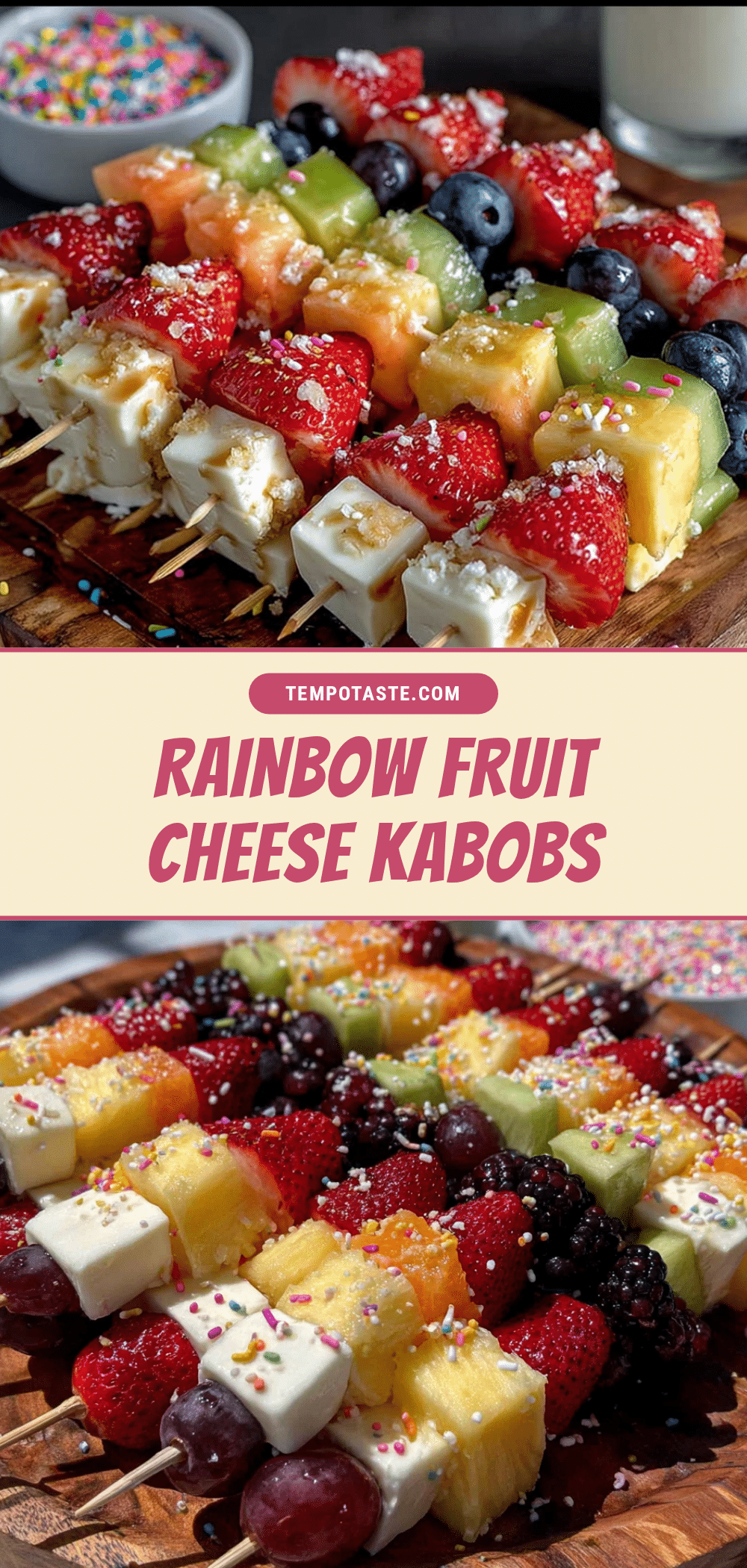
Easy Rainbow Fruit and Cheese Kabobs Kids Love

These colorful fruit and cheese kabobs are a fun, no-cook snack that kids love to build and eat. Perfect for picky eaters, they combine fresh fruit and cheese on skewers for a healthy, customizable treat.
- Prep Time: 10 minutes
- Cook Time: 0 minutes
- Total Time: 10 minutes
- Yield: 4 servings
- Category: Snack
- Cuisine: American
Ingredients
- Fresh strawberries, halved or quartered
- Cheddar cheese, cubed
- Fresh pineapple, cubed
- Green grapes
- Fresh blueberries
- Mozzarella pearls or cubed mozzarella
- Colored wooden skewers (optional)
Instructions
- Wash and dry all your fruit.
- Prep the strawberries: remove tops and cut into 1-inch chunks.
- Cube the cheddar cheese into 1/2-inch to 3/4-inch cubes.
- Cube the pineapple into 1/2-inch chunks.
- Drain the mozzarella pearls and pat dry.
- Lay out all prepped ingredients in rows by color.
- Thread the skewers in rainbow order: strawberry (red), cheddar (orange), pineapple (yellow), grape (green), blueberry (blue), mozzarella (purple/white). Repeat if skewer is long enough.
- Place finished kabobs on a serving platter. Cover and refrigerate if making ahead.
Notes
For toddlers, cut fruit into very small pieces and serve in a bowl instead of on skewers. Use room-temperature cheese for easier cubing. Pat all fruit dry to prevent sogginess. Leave half an inch of empty skewer at the bottom for little hands to hold.
Nutrition
- Serving Size: 1 kabob
- Calories: 135
- Sugar: 9
- Sodium: 180
- Fat: 8
- Saturated Fat: 5
- Carbohydrates: 13
- Fiber: 2
- Protein: 7
Keywords: rainbow kabobs, fruit and cheese kabobs, kid-friendly snack, easy snack, no-cook snack, healthy snack for kids